The campaign
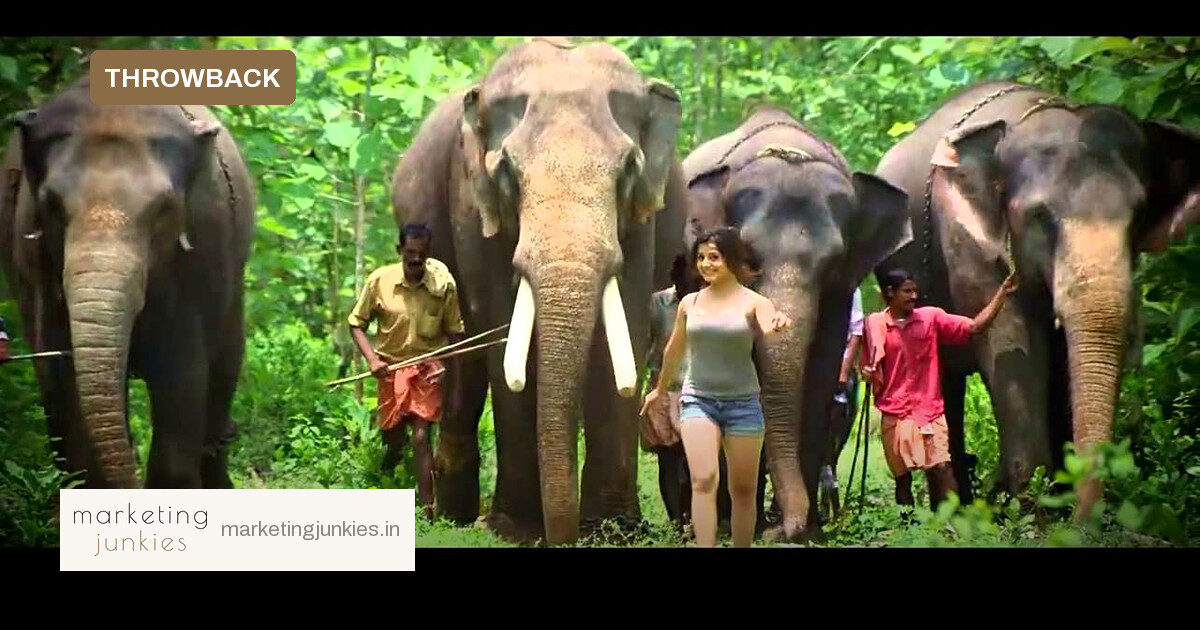
In 2002, India’s Ministry of Tourism and Ogilvy & Mather launched Incredible India. It was not a single ad but a long-running identity: a wordmark, print, television and, later, digital films. The Pathanamthitta film from the early run is a good sample of the campaign’s first voice.
The timing mattered. Before this, India was often sold as separate postcards—Goa, Rajasthan, Kerala—each with its own appeal. The campaign pulled those stories under one idea: India is too large and too surprising to be reduced to a list.
Incredible India
Working closely with the Ministry, the agency team treated the country as a client, not a geography. The result was a brand with room for many moods.
What the film said and how
The Pathanamthitta film avoids a hard sell. It doesn’t stack facts or urge viewers to check off monuments. It works through water, ritual, craft and quiet, letting the place carry the mood. The tagline does the heavy lifting.
That was the campaign’s grammar: not “visit this destination” but “arrive at an India that still surprises you.” The Kerala setting becomes a doorway, not an itinerary. The work treated India’s contradictions as a strength, not a problem to explain.
For marketers, the craft is the point. The film shows that restraint can be a strategy when the product is already rich.
The response it got
The campaign quickly became a benchmark. Tour operators and travel writers used the line, and the Ministry extended the platform rather than replacing it. The films gave India a single, confident story at a moment when destination marketing was becoming more competitive.
Amitabh Kant, then joint secretary at the Ministry of Tourism, championed the campaign and its brand-led approach. The work is still taught as a nation-branding case study, and the tagline entered everyday speech in India and among travellers—a rare result for a government campaign.
What it changed in the category
Incredible India made destination marketing think like brand management. It changed the category in a few ways:
- It showed that an emotional position could hold together many regions, languages and travel styles.
- It turned a tourism ministry into a brand custodian rather than a brochure publisher.
- It pushed Indian state tourism boards to sharpen their own identities instead of leaning on generic images.
After it, “a country as a brand” stopped being a metaphor and became a planning brief.
Where the brand and the idea are now
The Incredible India tagline remains India’s official tourism shorthand more than two decades later. Later refreshes have modernised the visual system and shifted budgets toward digital and influencer travel, but the core promise has not been replaced.
The Pathanamthitta film now reads as an early time capsule: slower, quieter, and confident enough to let a place breathe. That confidence is the part worth stealing. The lesson has outlived the media plan—sell the feeling, not the feature list.
Watch the original: Incredible India on YouTube