India’s Gen Z is not waiting to be marketed to. It is researching, comparing and demanding proof before it buys. A new study by Rukam Capital, conducted with YouGov among 4,002 respondents aged 18–29 across 18 states, maps how this cohort shops, celebrates and evaluates brands.
What the data shows
The study, Gen Z: A Deep Dive into India’s Most Influential Consumer Cohort, found that Gen Z is pragmatic and validation-driven.
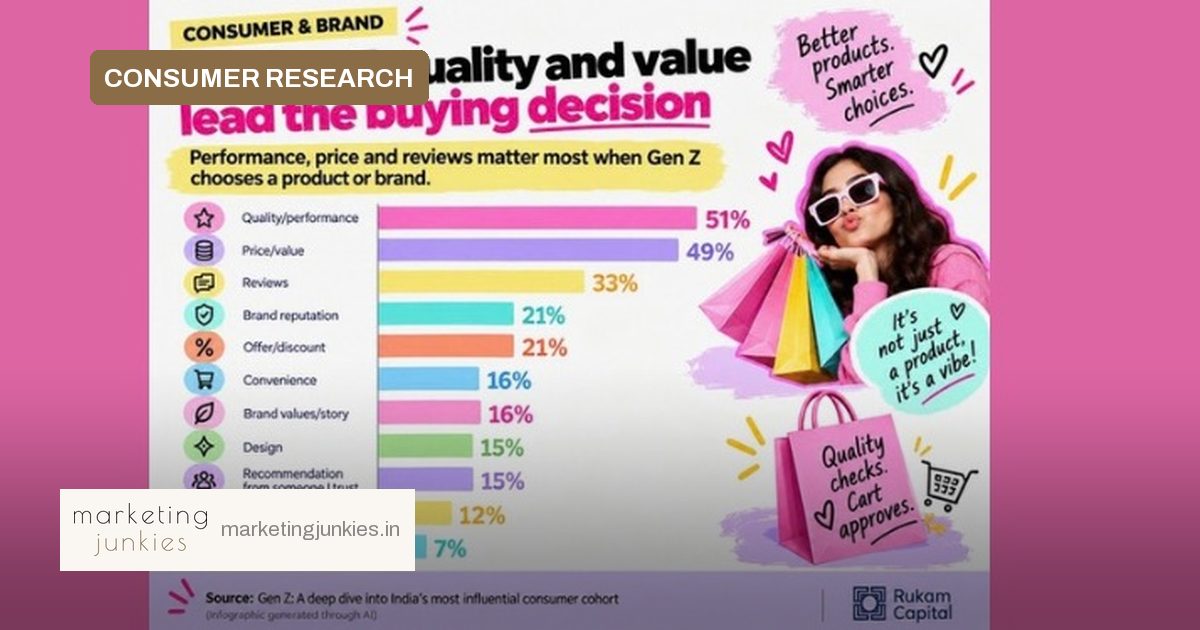
- Transparency first: 82% expect honesty and transparency from brands, while 51% cite quality and 49% cite price as top purchase drivers.
- Festive spending is intentional: 60% spend more during festivals, 74% gift parents and family, and 41% turn to online search for ideas; one in four already use AI for gift suggestions.
- Validation before purchase: 46% research more before buying, only 4% buy immediately after discovering a product, and 32% verify sellers because of fake or deepfake content concerns.
- Creator paradox: Social media and creators drive discovery for 29%, but only 6% purchase straight after a creator recommendation.
- AI as aide, not autopilot: Nearly six in ten use AI at least occasionally for product research, 70% are comfortable with AI recommendations, but only 49% would let AI decide without approval.
Why this matters
Rukam Capital Founder and Managing Partner Archana Jahagirdar put it plainly:
“the brands that win will be those that earn trust, not just attention.”
The study supports this. Around 30% of Gen Z say influencer overuse, forced slang or excessive trend-chasing can hurt brand perception. Personalised marketing, by contrast, is broadly accepted: only 6% reject it, and relatable, engaging content outperforms overt promotion.
For marketers, the implication is clear. Gen Z is not anti-brand; it is anti-inauthenticity. Discovery happens on social platforms, but conversion happens after independent research, reviews and seller checks. Attention alone is no longer a reliable proxy for sales.
What to do about it
Brands can use a simple working rule: discovery is social, credibility is owned, and purchase is evidence-led. That means:
- Give creators the job of starting a conversation, not forcing a checkout.
- Place comparisons, verified reviews and clear seller information near the point of discovery.
- Make AI-assisted shopping easier with structured product data, clear prices and honest specs.
- Keep festive campaigns grounded in family, wellness and self-expression, the study’s strongest emotional triggers.
Rukam Capital says 74% of Gen Z consumers agree that a good customer experience builds trust. The next decade of India’s consumption will be won by brands that design for that trust loop, not by brands that chase short-term attention.
Source: MediaNews4U