
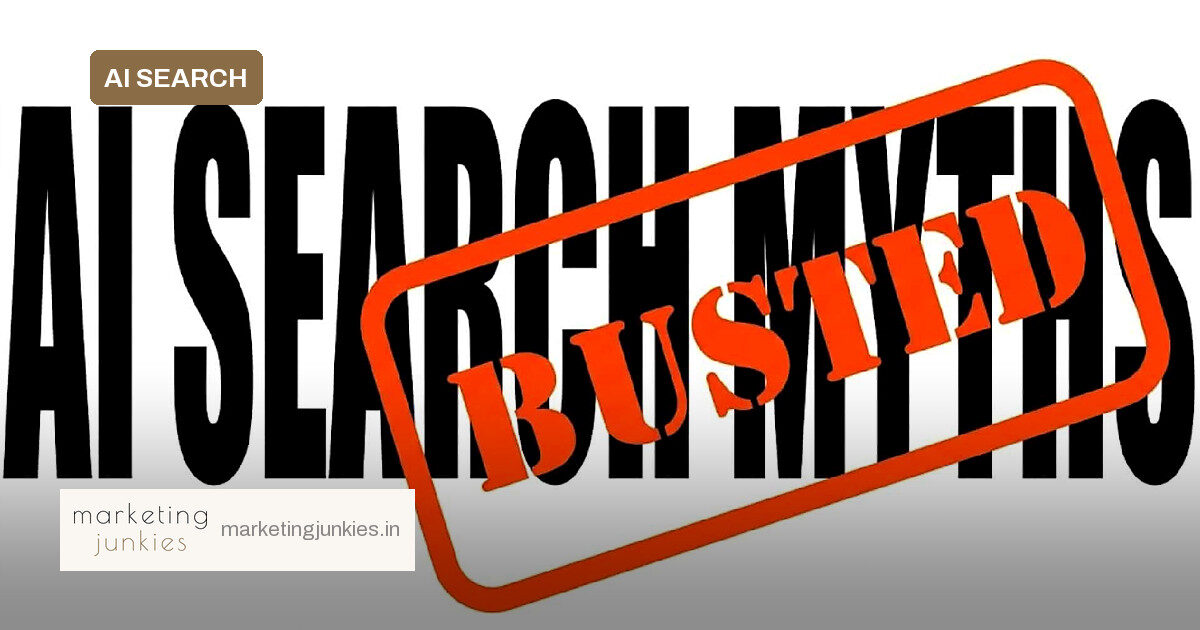
Open LinkedIn any day and someone will declare traditional search dead, AI-written content unrankable, or SEO teams obsolete. These claims sound plausible and get repeated until they feel like fact. The data tells a different story.
Search demand is expanding, not switching
AI platforms such as ChatGPT, Claude and Perplexity are growing. But the State of Search Q2 2026 report found AI search and traditional search are growing at roughly the same quarter-over-quarter pace. The useful frame is not AI versus Google; it is AI plus Google.
That does not mean the open web is safe. In the same study, clicks to non-Google-owned desktop results hit their lowest level since April 2025. Overall demand is rising even as Google answers more queries directly and sends fewer users outward.
Traffic is real but badly measured
The claim that AI sends no meaningful traffic breaks down under research on the AI mention effect. After an AI assistant mentions a brand, site visits climb to 1.5 to 2.5 times the forecast baseline over the next seven days. Yet only about 2.5% of those downstream visits carry a trackable AI-referral UTM. The other 97% appear as direct, organic or unattributed.
Most first visits happen after day one, not within the hour, which makes the journey harder to trace.
Myths that keep circulating
Several technical claims survive despite evidence. A 90-day study across 10 sites found llms.txt produced no measurable change in AI crawl frequency or AI-referred traffic for most sites. Google has said it does not use llms.txt for AI search discovery. llms.txt is plumbing, not a ranking lever.
Similarly, many AI crawlers cannot render client-side JavaScript the way a browser can. Profound’s research found server-side rendering is crucial for AI visibility. In one test, ChatGPT initially recited key points from a JavaScript-hidden article, then admitted it had pulled them from a different page because it could not read the original.
Organic search is not uniformly dead, either. A local business posted its highest month of organic clicks in July 2026 from non-branded blog and service pages. Separately, four entirely AI-generated articles, published between March and September last year with light human review, still rank and perform. The real filter is not authorship; it is whether the page adds original value.
- AI and traditional search are growing at a similar pace.
- AI-driven site visits are widely undercounted in analytics.
- AI crawlers still struggle with JavaScript rendering.
- AI can audit at scale but still needs human judgment on priorities and intent.
What marketing teams should do
Validate claims before they enter the strategy deck. Treat AI referral data as a floor, not a ceiling. Use server-side rendering where AI visibility matters, and keep humans on prioritization and search intent. AI detects more errors faster, but it misses critical ones and will confidently agree with a bad idea.
The teams that win will not be the ones who move fastest on the next hot take. They will be the ones who checked first.
Source: MarTech