
The campaign
In late 2005, Sony needed to introduce Bravia, its new line of LCD televisions, to a market still fixated on screen sizes, contrast ratios and refresh rates. It turned to Fallon London with a brief that could have led to another spec-sheet reel. Instead, the agency delivered “Balls,” directed by Nicolai Fuglsig.
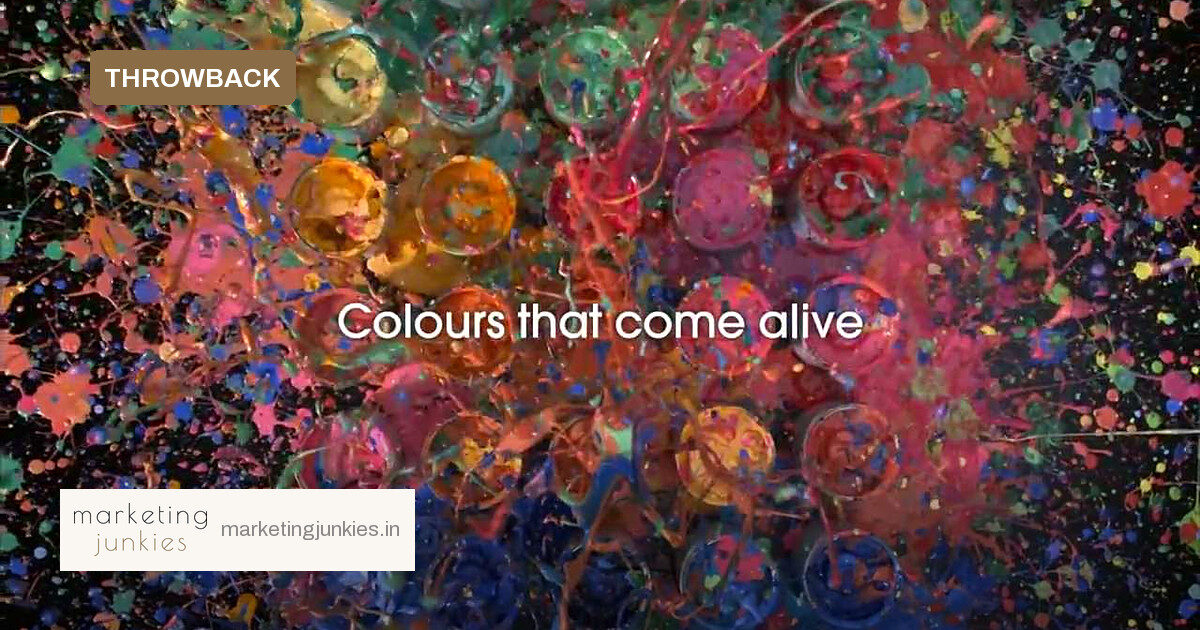
The film was shot in San Francisco, where the team released roughly 250,000 brightly coloured superballs down a steep residential street. No CGI, no product demo, no voiceover—just colour bouncing through a grey cityscape. It ran on broadcast and cinema in the UK, backed by the tagline “Colour like no other.”
What the film said and how
The message was simple: Sony Bravia is colour. Rather than showing a television screen, the ad staged colour as a physical force. The balls became pixels in motion, turning a cold urban hill into a moving palette.
The craft did the arguing. The film used practical effects and the soundtrack “Heartbeats” by José González, which gave the chaos a calm, warm cadence. There was no dialogue; the tagline “Colour like no other” landed only where needed. That restraint let viewers feel the benefit instead of being told it.
It also flipped the product demo: the street was the screen. By making colour tangible, it sidestepped the classic problem of advertising picture quality on any device—viewers saw colour, not a claim about colour.
- No dialogue or voiceover
- Roughly 250,000 real bouncing balls, no CGI
- Music by José González: “Heartbeats”
- Tagline: “Colour like no other”
The response it got
The ad quickly became a cultural reference. In advertising circles, it swept major honours, taking the Film Grand Prix at Cannes Lions in 2006. It earned praise for its art direction and for proving that scale could be emotional rather than just noisy.
The campaign is widely credited with raising awareness and sales for the young Bravia brand, helping Sony establish a clearer premium position in a crowded LCD market. It also made José González’s “Heartbeats” a breakout track, introducing many viewers to his music.
What it changed in the category
Before “Balls,” TV advertising leaned heavily on feature lists, showroom comparisons and demo loops. Sony’s film showed a different path: a single visual metaphor could carry a product launch across markets. Colour became the brief’s organising idea, not an afterthought.
After it, many brands reached for large-scale, one-take-feeling stunts and sensory storytelling. The campaign also shifted how marketers used music in tech ads—less jingle, more mood.
Where the brand and the idea are now
Sony Bravia still stands as Sony’s television line, with colour and picture quality still central to its consumer pitch. The “Colour like no other” era gave way to newer taglines and technologies, but the campaign remains a benchmark for launch advertising.
Fallon London’s film is still studied as an example of how a brand can show a product benefit without showing the product. The idea—make the invisible visible—keeps getting borrowed, but few executions have matched its clarity.
Watch the original: Sony on YouTube