
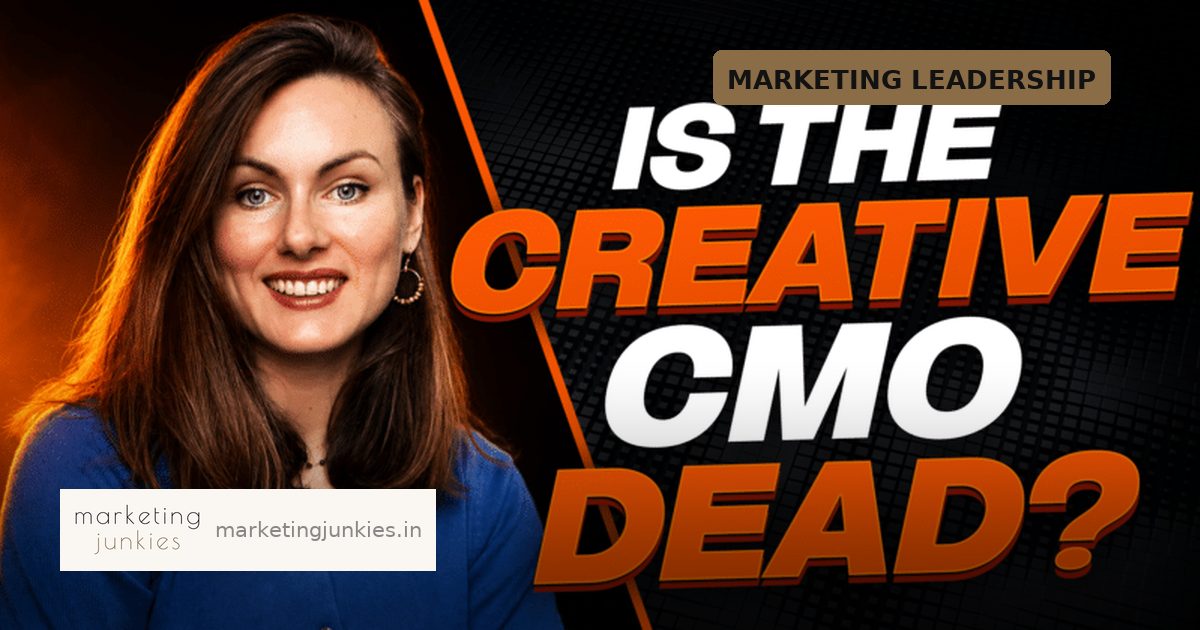
The stereotype of the chief marketing officer as chief storyteller is being quietly replaced. According to a new episode of MarTech’s Conversations with MarTech podcast, the next generation of CMOs is far more likely to come up through marketing operations than through the creative studio.
The guest is Valeria Balaro, CMO at Star, an AI-native technology consulting firm, where she leads a 20-person marketing team spanning brand, demand generation and content out of London. Her argument, backed by research she says was conducted with Forrester, is blunt: a formal martech background is shifting from nice-to-have to mandatory.
Why the job description is changing
Three forces are pushing the role from creative to technical. AI is rewriting how marketing work gets produced and sequenced. Revenue accountability means marketing sits closer to the P&L than ever. And the demand for demonstrable ROI leaves little room for leaders who cannot interrogate their own data.
The consequence, per the discussion, is that CMOs can no longer delegate decisions about data and infrastructure to someone else and hope for the best. Understanding technical workflows and data architecture is becoming a survival skill, not a specialism.
The CMO-CIO ‘power duo’
One of the more interesting threads in the episode is the emergence of the CMO and CIO as a joint force, sharing ownership of technology investments. That partnership is not frictionless. Marketing wants speed; IT is accountable for governance, security and risk. Balaro frames the relationship as a genuine alliance rather than a turf war, which is a useful reframe for Indian marketing leaders who often find martech procurement stuck between growth targets and compliance sign-off.
The data problem is starker than most decks admit. The episode cites a finding that only 8% of organisations have achieved seamless data integration with their agency platforms. For anyone running performance marketing through multiple partners, that number explains a lot about why attribution debates never end.
Automation with guardrails
At Star, Balaro describes using AI agents to build what she calls a “go-to-market brain” for process automation, while deliberately protecting authentic human insight and thought leadership from being automated away. That distinction matters: automate the plumbing, defend the point of view.
She also names what she considers the biggest lie marketing tells itself, that AI is simply another campaign tool. Treating it as a tactic rather than a structural change to how the entire marketing function is designed is, in her view, a critical mistake.
What this means for marketers in India
India’s marketing leadership pipeline still tilts heavily towards brand and communications. But the growth of D2C, subscription businesses, fintech and quick commerce has created a class of marketers who live inside CDPs, attribution models and lifecycle automation. Those are exactly the profiles this shift favours.
If you want to be on the right side of that trend:
- Learn the stack, not just the tools. Know how data moves between your CRM, CDP, ad platforms and BI layer, not only which dashboards you like.
- Build a working relationship with IT early. Understand the governance and security constraints your CIO is measured on before you pitch a new platform.
- Audit your agency data flows. If your partners’ platforms do not talk to yours, you are guessing at incrementality.
- Treat AI as an operating model question. Ask which processes disappear, not just which campaigns get faster.
- Protect the human layer. Original insight, positioning and thought leadership remain the hardest things to replicate.
None of this means creativity is obsolete. The best marketing leaders will still be judged on whether the work moves people. But the route to the corner office increasingly runs through the ops team, and that is a career signal worth acting on now rather than in five years.
Source: MarTech