

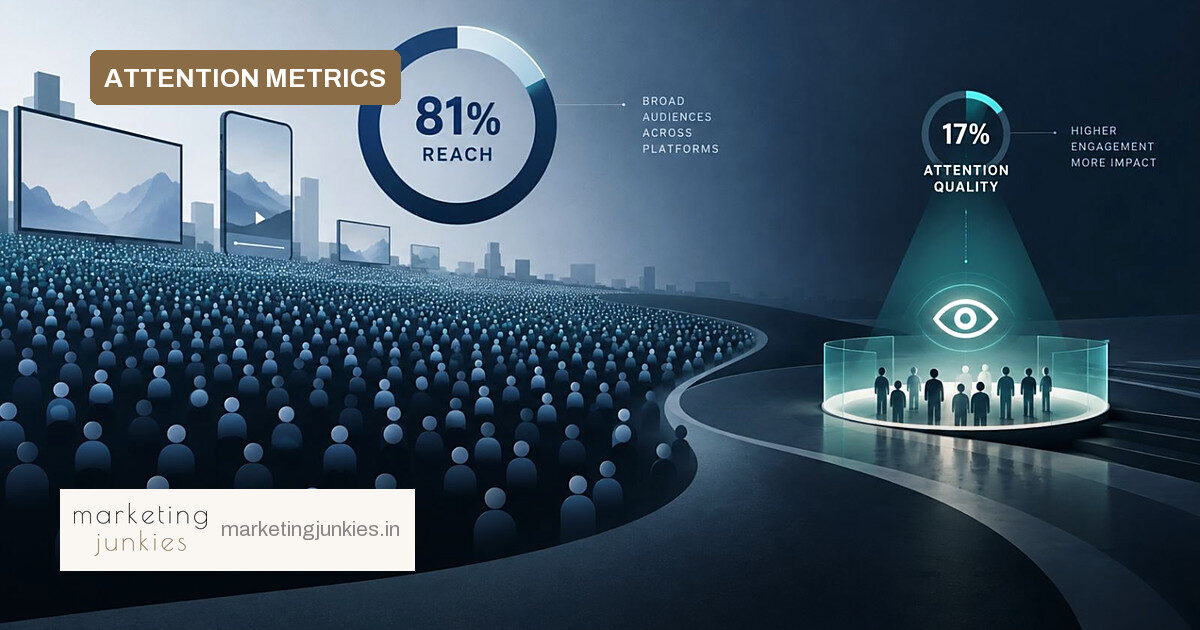
Indian media planning still runs on reach. A new report from Publicis Media India and MMA India, Beyond Reach, shows that 81% of Indian marketers list reach or incremental reach among their top three media-allocation metrics, while only 17% give attention quality the same weight. The gap suggests planning tools and budgets have not caught up with the industry’s growing interest in the quality of exposure.
Reach is still the default setting
Attention is not yet a planning input for most teams. The report says 69% of marketers say attention is either absent from their media plans or does not influence media decisions. That is not because they dismiss it. Around 86% say they would be likely or very likely to reallocate budgets if robust attention evidence showed another allocation could build stronger brand memory.
The real bottleneck is measurement. About 92% rank the lack of reliable or standardised attention measurement among their top three challenges, and every respondent—100%—believes an agreed industry standard would speed up adoption. In short, appetite for attention-led planning is ahead of the industry’s ability to measure and apply it consistently.
What equal impressions actually deliver
Lumen, the attention partner for the report, contributed India-specific planning norms that estimate visual attention per 1,000 delivered impressions. Equal impressions do not deliver equal human attention:
- Linear TV: 7,771 attentive seconds
- CTV: 7,286 attentive seconds
- YouTube non-skippable video: 3,579 attentive seconds
- YouTube skippable video: 1,957 attentive seconds
- Instagram Reels: 692 attentive seconds
The creators caution these are not a ranking of media effectiveness. A format can have lower attentive seconds but still play a specific role. The point is that the same volume of impressions hides very different levels of human attention, even between formats on the same platform.
Why this matters for planners
The report’s argument is that attention should qualify reach, not replace it. Lalatendu Das, CEO, Publicis Media South Asia, said that reach remains fundamental, but scale alone does not show whether an exposure has the quality or opportunity to drive an outcome. Moneka Khurana, Managing Director, MMA India, put it more bluntly: “Brands today can be seen everywhere, but being seen is not the same as being noticed.”
For marketing teams, that means attention can inform format selection, frequency, creative design and budget allocation—not just where a plan is placed. The practical next step is to request comparable attention benchmarks from media partners and test whether current formats are delivering more than reach.
What to do with attention data
Marketers do not need to wait for a perfect standard to start. Ask media and platform partners for attention benchmarks per format rather than impressions alone. Run small tests comparing a reach-optimised plan with an attention-qualified one on brand memory metrics. Review creative for the time and environment it actually gets—especially in fast-scrolling formats where attention seconds are lower.
The report suggests the next phase will depend on standards. If an agreed measurement framework emerges, the 86% who say they would reallocate budget will have the evidence to act. Until then, attention can still be a diagnostic layer that makes reach work harder.
Source: Storyboard18