
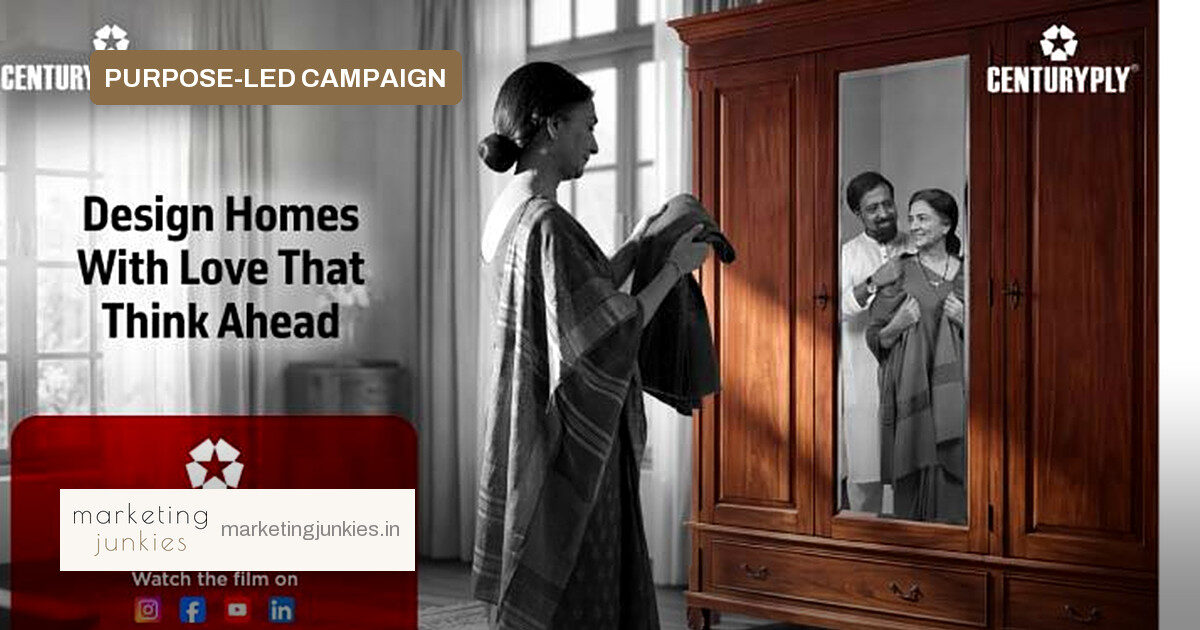
Century Plyboards (India) Ltd. has released ‘His Last Blueprint’, the newest film under its CenturyHeroes 2026 campaign. The message is direct: Indian homes should be designed for how life changes, not just for how it looks today.
The campaign carries the thought ‘Design Homes with Love that Think Ahead’ and uses ageing, independent living and future-ready furniture as its central themes.
A blueprint left behind
The film follows Ar. Sanjay Ghosh, an architect who quietly plans for his wife’s future needs. After his passing, Mrs. Anita Ghosh discovers a blueprint he prepared—one that anticipated the changes she would require as she grows older. Each design intervention reveals the thought behind it, turning practical furniture modifications into a final act of care.
CenturyPly says the film was conceptualised and executed in-house. It features Natasha Rastogi as Mrs. Anita Ghosh, Ajay Dutta as Ar. Sanjay Ghosh and Narendra Khatri as the carpenter.
The demographic shift behind the idea
CenturyPly is responding to a sharp change in India’s population profile. Government projections cited by the company estimate that the population aged 60 and above will rise from 10 crore in 2011 to 23 crore by 2036, or 14.9% of the total population.
The ageing story is also a daily-living story. According to the Longitudinal Ageing Study in India, 23.8% of people aged 60 and above have at least one limitation in Activities of Daily Living.
- 23 crore Indians are projected to be 60 or older by 2036.
- 23.8% of people 60+ have at least one ADL limitation.
- Accessibility is often added after a crisis instead of at the design stage.
From care story to protection promise
The film connects its emotional message to CenturyPly Total Cover, which covers furniture restoration costs—including material and labour—for up to 10 years on eligible products. In the story, a warranty certificate in Mrs. Ghosh’s name becomes evidence that long-term value was considered alongside emotional care.
“Our lives change as we grow older, but we rarely think about whether our homes are changing with us,” said Keshav Bhajanka, Executive Director, Century Plyboards (India) Ltd.
Nikita Bansal, Director, said the campaign is meant to open a conversation around foresight, care and inclusive living. She added that it reflects the philosophy behind Total Cover: looking beyond immediate needs to protect the long-term value of furniture.
CenturyPly plans to amplify the film through a digital campaign across social media and other platforms.
What marketers can borrow
This is not a typical furniture ad built on finishes and polish. Instead, CenturyPly is using a demographic tailwind to reframe furniture as a long-term care decision—an example of empathy-led brand building. For home, health and financial brands, ageing in place remains an under-used creative territory.
The film also demonstrates how a warranty can be dramatised. Rather than presenting Total Cover as an add-on, the story makes it the proof that a decision was made with foresight.
For marketing teams, the takeaway is that functional promises become more memorable when they are placed inside a human timeline and backed by a real consumer shift.
Source: MediaNews4U