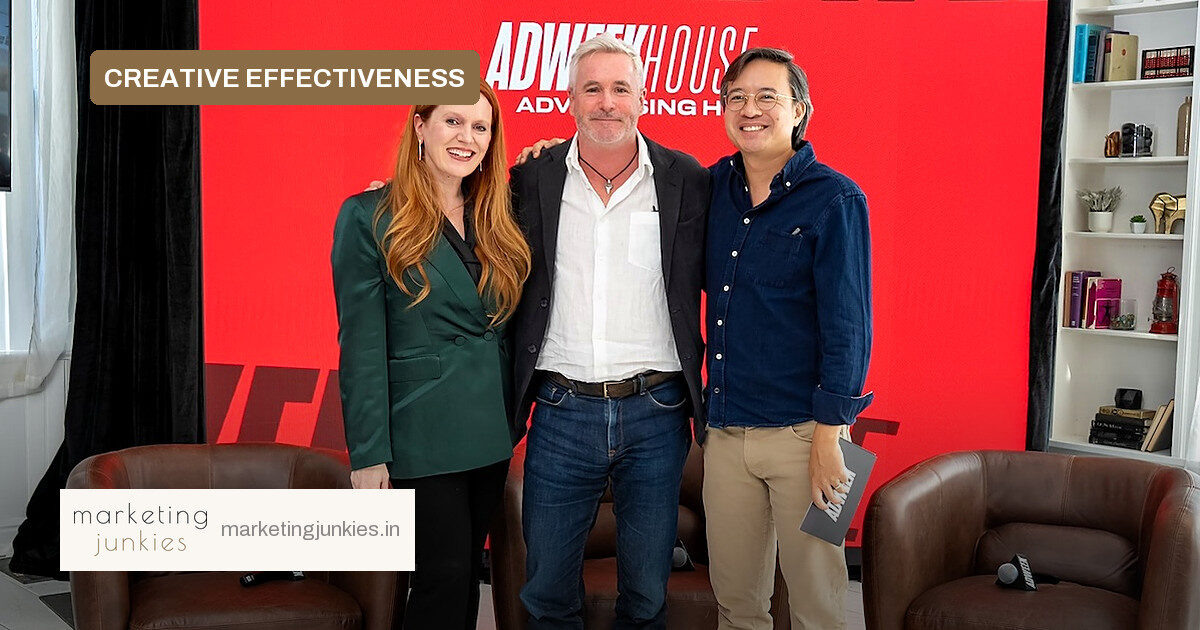
Zappi used the ADWEEK House Advertising HQ stage to share a blunt read from its annual “State of Creative Effectiveness” report: brands have become efficient at capturing attention but not at turning that attention into connection. In a fireside chat with ADWEEK editor-in-chief Ryan Joe, Zappi founder and chief innovation officer Steve Phillips and CMO Nataly Kelly outlined what separates ads that merely stop the scroll from ads that build memory.
Attention is easy; connection is not
The report examined social media ads to understand what actually engaged viewers. The uncomfortable finding, Kelly said, is that advertisers are strong at getting noticed and far weaker at creating a meaningful connection. A celebrity cameo or influencer collaboration can stop a thumb mid-scroll, but in many cases it does not move sales.
“What the highest performing ads do is draw a throughline to distinctive brand assets and make sure that they are front and center,” Kelly explained.
Phillips pushed the definition wider. Distinctive assets are not only the logo or the palette; they can be the type of story arc a brand uses, its sense of humour, or the rhythm of its storytelling. “Every client thinks they know what their distinctive brand assets are,” he said. The real asset may live outside the guidelines.
The scroll problem
Phillips called the social media challenge “struggling with scroll.” Brands are strong at TV advertising, he noted, but social creative often falls back on formula. Process guidelines, designed to keep ads consistent, can become more important than the creative itself, and consumers respond with indifference.
“The guidelines become more important than the creative,” Phillips said. That matters because indifference is expensive: a brand may have spent the budget and reached the audience, but if nothing changed, the ad did not do its job.
Synthetic consumers speed up testing
Zappi’s answer to the scale problem is a synthetic audience: an AI-generated, data-driven simulation of real customers. Large campaigns can involve thousands of creative variants, and human testing every version is too slow and too costly. Phillips said brands still need feedback on every asset — whether it works, how to improve it, and whether it fits the campaign.
The practical split: high-stakes hero assets should still go to human panels, while derivative versions and lower-risk variants can be tested synthetically first.
What marketers can do
- Audit brand assets beyond the logo: story arcs, humour, tone and audio cues.
- Put one distinctive asset front and centre in the opening seconds of social video.
- Resist process guidelines that make every scroll ad look the same.
- Test derivative creative with synthetic consumers; keep human testing for hero work.
For marketing teams, the takeaway is to plan for memory, not just reach. Attention is borrowed; connection is what makes a brand recallable when the scroll resumes.
Source: Adweek