
Wikipedia has built 25 years of trust as one of the web’s most cited knowledge sources. But answer engines are changing how people find that knowledge — and the Wikimedia Foundation now faces a familiar publisher problem: being everywhere while getting little credit.
At Brandweek, Zach McCune, global head of brand marketing at the Wikimedia Foundation, said ChatGPT cites Wikipedia more than almost any other source, second only to Reddit, according to Ahrefs. Yet fewer humans are visiting the site itself to read and, critically, to edit.
The awareness paradox
“We’re more visible than ever, and yet less known,” McCune said. Voice assistants and AI agents deliver answers while hiding that the answer often comes from Wikipedia. For a nonprofit that depends on volunteers and donors, that invisibility is a brand health issue — and a long-term risk to the editing community.
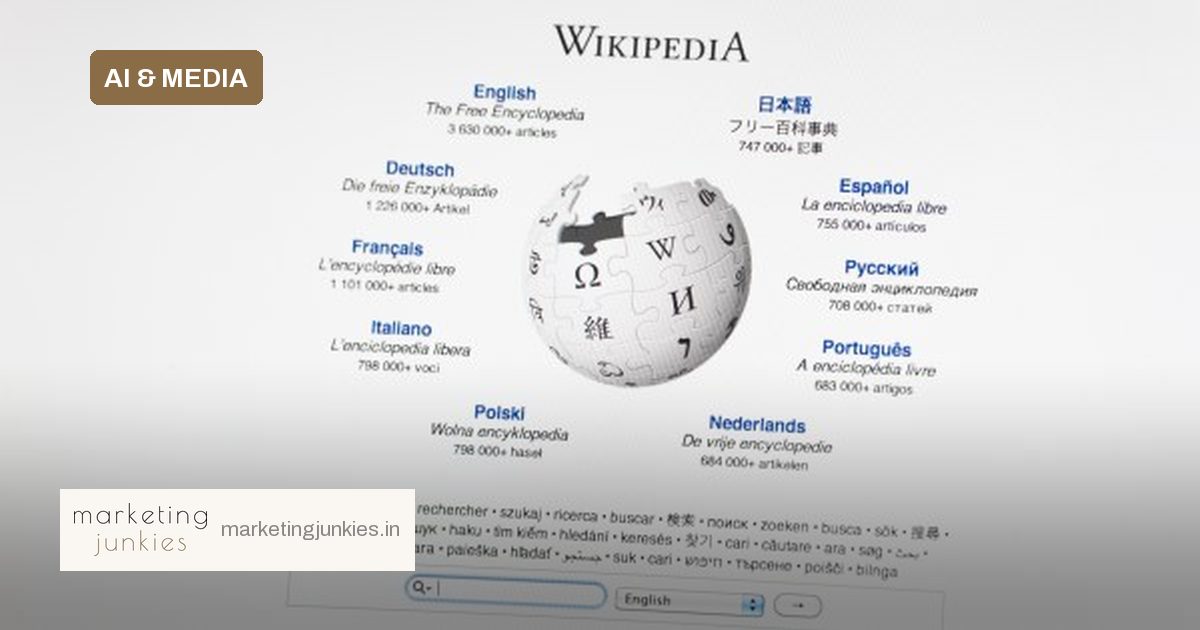
Wikipedia’s 25th-anniversary campaign, created by agency Kin, is designed to make people feel connected to the knowledge they rely on. The creative is made from screenshots of roughly 700 Wikipedia pages, pushing the editors and edits behind the platform to the front.
Why human traffic still matters
Wikipedia is less exposed to the ad-revenue collapse hitting commercial publishers. But McCune pointed to a different conversion problem: visitors must become contributors. The foundation sees about an 8% year-over-year decline in human traffic, even as bot traffic climbs sharply.
Fewer human visits mean fewer people noticing typos, filling gaps or correcting errors. “All the composition happens on our site,” McCune said. AI distribution is welcome, but the content still needs constant human refresh and fact-checking.
The licensing layer
Wikipedia is not following a strict “woo and sue” path. The foundation operates an enterprise API that gives large language model companies real-time access to Wikipedia data, creating a commercial relationship where platforms pay for heavy usage. This diversifies support beyond roughly 8 million donors who give an average of $11 each.
The mission remains free knowledge across more than 300 languages. But McCune said the goal is a virtuous cycle: AI platforms distribute the content, and enough humans return to Wikipedia to keep it accurate.
- ChatGPT cites Wikipedia second only to Reddit, per Ahrefs.
- Human traffic to Wikipedia is declining about 8% year over year.
- The 25th-anniversary campaign by Kin uses screenshots from around 700 Wikipedia pages.
- Wikimedia’s enterprise API gives LLM companies paid, real-time access to its data.
- The brand funnel is awareness → usage → editing, not ad revenue.
What marketers can take away
Wikipedia’s problem is an early signal for any brand whose content feeds answer engines: distribution without attribution can erode direct relationships. The foundation’s response pairs emotional brand marketing with a commercial API and a clear contribution funnel.
For marketing leaders, the lesson is to design for the next action you actually need — whether that is a donation, a subscription or an edit — rather than treating visibility inside AI outputs as the end goal.
Source: Adweek