K-beauty’s most consequential export may not be a toner or serum. It is a point of view—one that has quietly reshaped what American shoppers look for in the skincare aisle and, just as significantly, how beauty brands talk to them.
A new marketing vocabulary
There is no certification that formally defines a K-beauty product, but brands such as Laneige, Dr. Melaxin and COSRX share an understated visual identity and a science-backed philosophy that now reads as the category standard. According to Claire Kane, EVP and director of strategic planning at VML, that philosophy has “completely upended” how beauty products are marketed at home and abroad.
“Marketing has rephrased its lexicon around skincare benefits,” Kane said.
The shift is visible on the shelf and in the feed. Products once sold by coverage now lead with skin claims:
- Foundation is positioned as a serum
- Lipstick is reframed as a lip oil
- Blush is sold for its hydrating barrier properties
“Skincare has essentially become the new primer,” Kane told Adweek.
From reactive fixes to daily ritual
Kane describes the older American approach as reactive: either cover a flaw with concealer or reach for a clinical product to correct it. K-beauty, by contrast, frames skincare as a preventive, holistic self-care ritual—one anyone can take part in.
That framing carries social media. Creators share their routines, explain lesser-known ingredients and move followers from discovery to purchase in the same scroll. “Modern skincare consumers love the thrill of organic discovery and geeking out on ingredient science,” Kane said.
TikTok Shop and Amazon reinforce each other: a creator posts a 60-second formulation breakdown, and the viewer can buy immediately from the feed or pull up the same product on Amazon.
Discovery moves from shelf to store
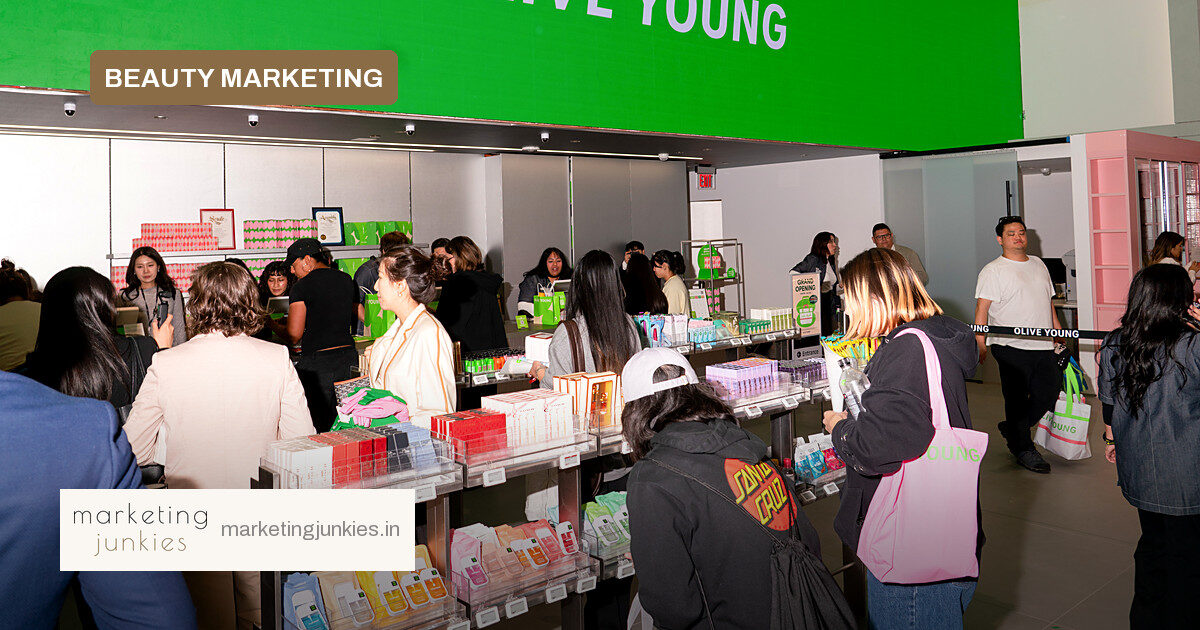
Alongside social commerce, K-beauty brands have landed shelf space with legacy retailers including Sephora, Ulta and Target. Those retailers are responding with curated shop-in-shop formats—Sephora’s partnership with Korean retailer Olive Young is one example—that try to recreate online discovery in a physical environment.
Education matters because many hero ingredients are still new to American consumers. David Van Veen, managing director of beauty branding agency MSLK, points out that K-beauty brands tend to be transparent about formulations and use actives that are often gentler than Western alternatives. Bakuchiol, a plant-based retinol alternative, is among the most popular skincare ingredients in South Korea but remains relatively unknown in the United States.
What marketers can take from it
Western brands cannot force their way into the K-beauty market, but they can borrow the move that made it work: build curiosity before the transaction. As consumers’ skin changes over a lifetime, there are repeated opportunities for education and adoption.
“If brands stop thinking strictly about immediate sales and start genuinely geeking out on skin health alongside their community, the alignment will happen naturally,” Kane said.
For beauty and personal-care marketers, the practical play is clear: treat product education as a discovery channel, pair it with instant purchase paths, and make retail feel like a continuation of social discovery rather than a separate step.
Source: Adweek