

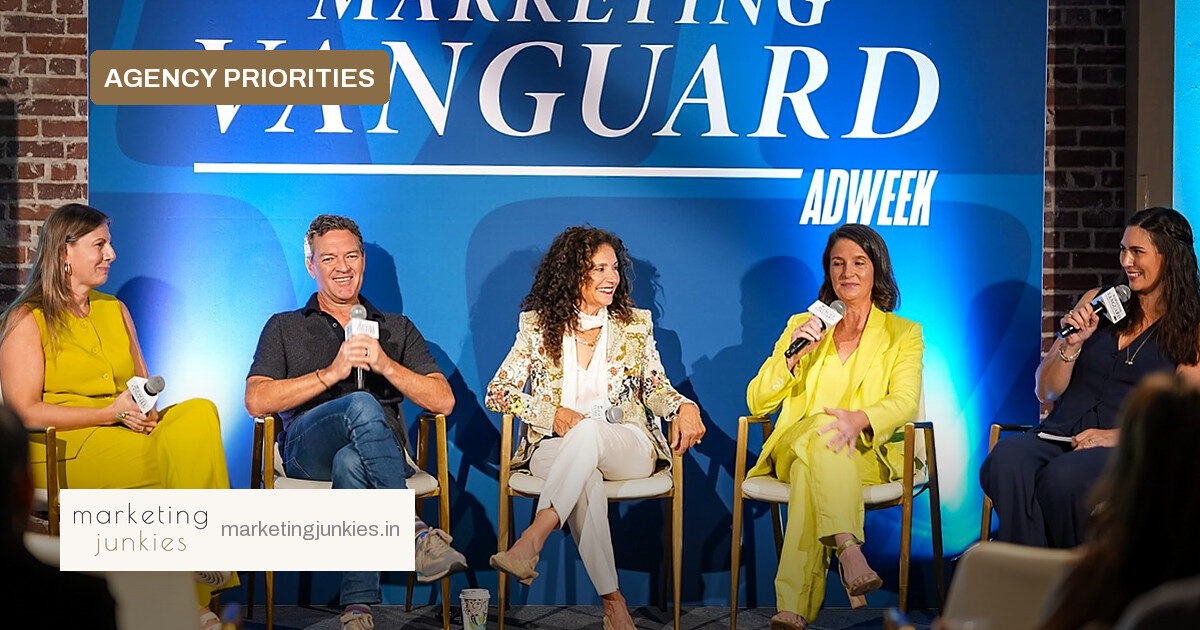
AI is squeezing fees, budgets are moving, and client expectations are shifting. But agency leaders are not chasing the next shiny tool first. At a roundtable at Brandweek Atlanta, four executives described the one change they see as essential for the next 12 months: bringing their people up to speed, not just their tech stacks.
The conversation, hosted by ADWEEK’s Liz Kneebone, included Melissa Berger, chief solutions officer at Digitas; Sharon Napier, founder of Partners + Napier and strategic partnerships at Project Worldwide; Andrew O’Dell, co-founder and CEO of Pereira O’Dell; and Frances Webster, CEO of Walrus.
People, before platforms
O’Dell, who also founded the AI lab Silverside AI behind Coca-Cola’s AI-generated “Holidays Are Coming” work and Svedka’s Super Bowl debut, made upskilling the priority. He framed the moment as a transformation that forces agencies to examine both their business and their employees.
“As an industry, we have to really lean into what’s happening in this new transformative revolution,” O’Dell said. “That’s going to require us to really look at our businesses and our people.”
Berger sees a different return from AI: speed that buys senior people time for higher-value conversations. Instead of delivering against a brief, teams can ask what the client is actually trying to solve.
“Forget the brief you gave us; that’s maybe just a symptom,” Berger said. “But what are you actually trying to do?”
What the leaders said they’d change
- Andrew O’Dell: Upskill teams around evolving AI tools and make workforce development a business priority.
- Melissa Berger: Use AI to simplify and speed up execution, freeing senior leaders to uncover the client’s underlying business challenge.
- Sharon Napier: Bring young women into AI transformation and get clients to pay for their development.
- Frances Webster: Stay flexible while using AI internally for RFPs, contracts and client-facing value.
Why this matters now
The tension is familiar: clients want faster work, but agencies still need to protect margins and training budgets. Napier noted that AI tools “cost a lot of money” to license and train, and argued that brands and agencies should fund the shift together rather than treating capability-building as an agency overhead.
That reframe has practical implications. If AI is introduced only as a cost-saving lever, it becomes a negotiation point about fees. If it is positioned as a joint capability investment, it can support both faster output and better business conversations.
A useful lens for your next brief
Berger’s “symptom, not the problem” framing is a simple diagnostic. Treat the written brief as a starting hypothesis, then ask what business outcome sits behind it. That shifts the agency from order-taker to problem-solver and gives senior strategists a reason to stay in the room.
For marketing leaders, the roundtable points to a manageable short-term agenda: pilot AI on internal workflows you control, use the time saved for business-level client conversations, and bring junior staff into the tools early rather than leaving them as a separate talent track.
Source: Adweek