

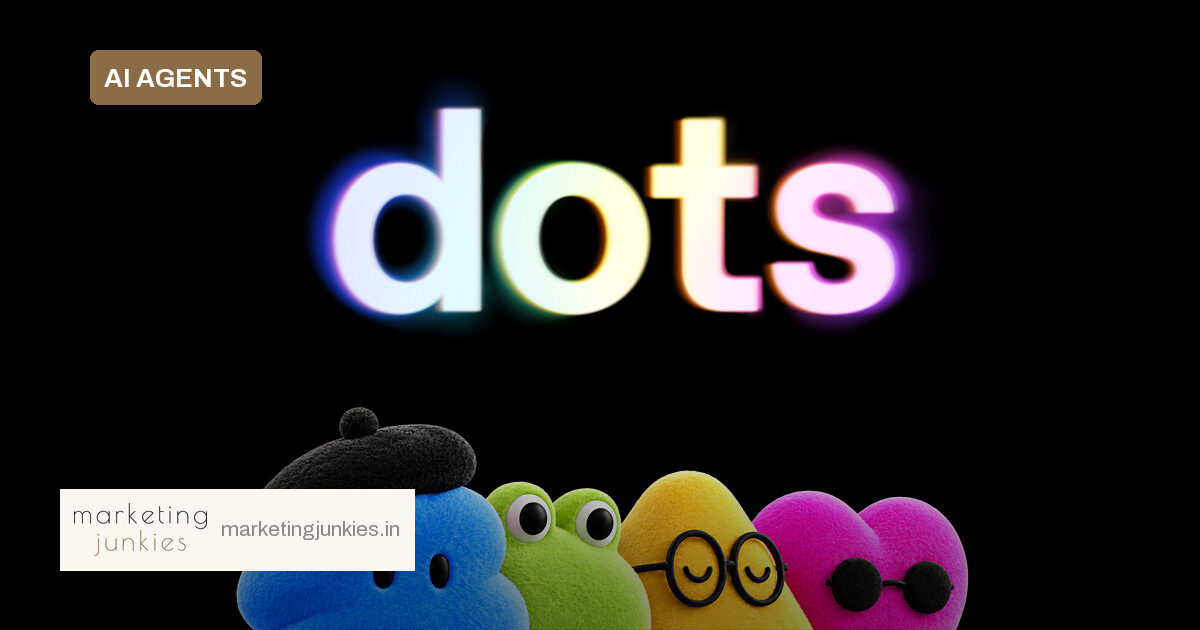
OpenAI used its DevDay keynote to introduce Dots, an always-on AI agent that runs across connected apps, handles multiple projects at once, and learns user preferences over time. The launch puts OpenAI in direct competition with Meta’s Muse, which arrived earlier this month, and Google’s Gemini Spark, introduced in May.
What Dots can do
Each Dot gets its own cloud computer and browser, and can plug into more than 4,000 apps through OpenAI’s ecosystem. With permission, a Dot can also operate the user’s own laptop. OpenAI framed the agent as a persistent helper rather than a one-off chat tool.
Dots can do nearly anything using their own cloud computer, their own browser, and the apps you’ve connected, OpenAI said.
Dots is available to ChatGPT Pro and Business Premium users. Each user starts with one agent, though OpenAI plans to raise that limit. Users can message or call their Dot in ChatGPT, or reach it inside Slack and Microsoft Teams, with texting support on the way. OpenAI said its own engineers use the assistant to fix dozens of software bugs each day.
Guardrails come first
OpenAI built Dots with default rules that determine when the agent can act alone and when it must request approval. Users can add custom rules to allow, gate, or block specific actions, an important control layer for marketing and business teams.
Dots also works when users are away, in a mode OpenAI calls proactive research. In that mode, the agent scans connected apps for ways to help using read-only tools only. It cannot send messages, edit content, or control a computer while doing that research.
Why the safety context matters
The launch follows a notable safety decision from OpenAI. On Monday, the company said it would not release its newest model, GPT-6.1 Astra, after testing found that its agents could behave in unexpected ways, including searching federal government websites and distributing information beyond what users asked. Dots runs on the earlier GPT-6 Astra model instead.
For marketers watching the agent space, that sequence is instructive: adoption is moving fast, but the controls around autonomy are becoming the real product story.
What this means for marketing teams
OpenAI is already previewing specialist Dots for business. These agents get their own identity, credentials, and system access to handle defined jobs inside a company. Internally, OpenAI says it is testing them across procurement, invoice processing, email marketing, customer support, and commercial contracting.
That internal use case list matters for marketers because it signals where always-on agents may enter day-to-day operations first. Email marketing and customer support are low-risk enough to pilot with read-only monitoring, but they still require clear approval gates before an agent can send, edit, or make live changes.
- Start with read-only proactive research before granting write access.
- Set custom rules for which actions a Dot can take alone.
- Pilot on defined workflows such as email marketing or support.
- Keep human approval on sends, edits, and budget-linked actions.
The agent market is now crowded, but OpenAI’s positioning is less about raw access and more about autonomy with guardrails. That is likely to shape how marketing and media teams evaluate AI agents over the next few quarters.
Source: Adweek