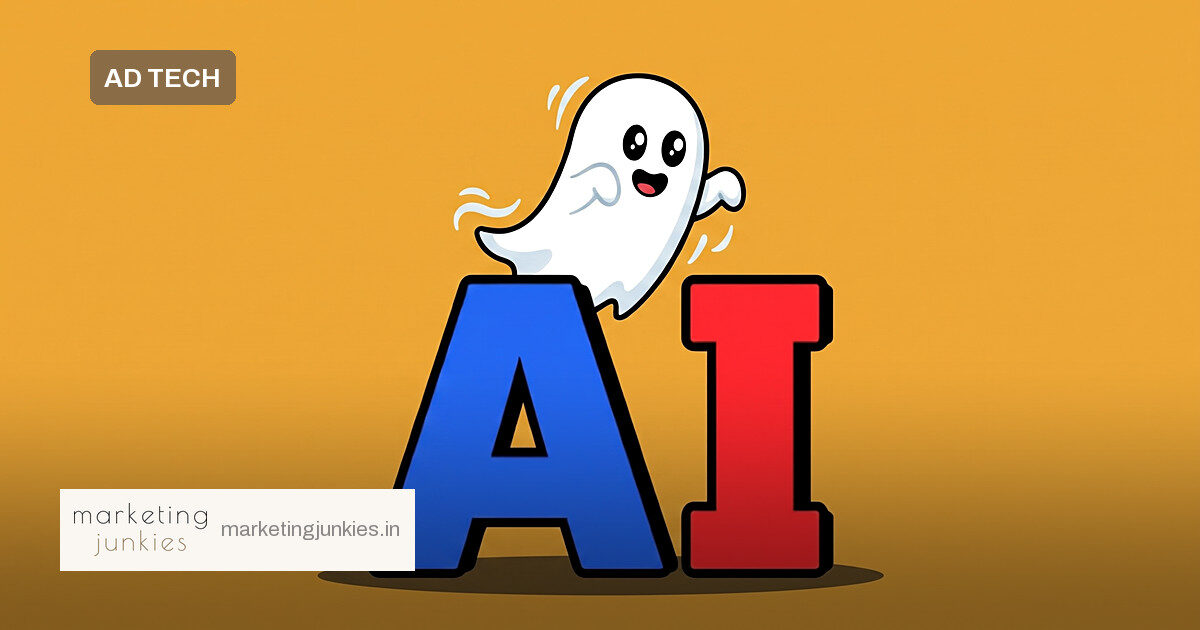
Advertising has a poltergeist problem. In 2025, automated traffic reached 53% of the web for the second consecutive year, and traffic from AI agents and agentic browsers jumped by 7,851%. The industry is now caught between two contradictory instincts: blocking bots when they land near an ad, and paying to be noticed by them when they read a product page.
That tension is no longer theoretical. It is showing up in budgets, measurement stacks and attribution debates.
The numbers behind the ghost traffic
- Imperva puts bots at 53% of web traffic in 2025, keeping humans in the minority.
- HUMAN Security measured AI agent and agentic-browser traffic up 7,851% in 2025; October alone was 2.6 times September’s level.
- Media sites took 19% of that agent traffic, behind e-commerce, but their share still more than doubled in a month.
- Adobe found AI-referred shoppers on US retail sites converted 60% better than other shoppers in July, the 11th straight month.
Money is following fast. Forrester’s 2026 guidance told B2B marketers to move at least 15% of content or digital spend into AI search visibility, and its 2027 guidance makes answer engine optimisation a priority. Yet more than 20 vendors sell tools to measure that visibility, and only 16% of brands track it systematically.
Same visitor, different door
On the media side, IAS and DoubleVerify still classify declared AI agents as general invalid traffic. The impression is stripped out, the advertiser doesn’t pay, and the publisher earns nothing.
On the marketing side, the same visitor is welcomed. A crawler indexing a page, an assistant researching a product and an agent shopping on someone’s behalf have different intentions. In practice, the bot is an intruder when it appears next to an ad and a VIP when it reads the product description.
When the buyer is also a bot
The Agentic Atlas, built by Evgeny Popov of No Fluff Advisory, maps 197 companies and 513 surfaces agents can plug into across DSPs, SSPs, retail media, measurement and creative. Most of it is still “look, don’t touch”. By October, however, a handful of agent-to-agent deals had moved from conference stages to launches or first campaigns, with a human still approving the deal before it books — for now.
Elsewhere, ChatGPT ads reached a $1 billion annualised revenue run-rate in under 200 days. Anthropic insists “Claude will remain ad-free”, but the industry has heard that claim before.
The measurement gap is the real poltergeist
Advertising runs on proxies: the impression stands in for a viewable impression, which stands in for attention. An agent has no eyes. Some agentic browsers present themselves as ordinary Chrome and are counted as human. Others fetch a page without rendering it and never show up at all. So the bot a brand pays to keep out may already be in its numbers as a human, while the bot it pays to impress may be missing entirely.
Attribution is just as tangled. The IAB’s AI-Era Attribution Blueprint separates human-owned, AI-assisted and AI-executed purchases. But when a consumer asks an AI assistant, absorbs a publisher review, searches for the brand days later and buys elsewhere, who gets the credit — the publisher, the AI platform, the search engine or the retailer? OpenAI is already testing a dashboard that shows businesses how often they appear in ChatGPT’s answers and how many clicks those mentions send, which concentrates much of that evidence in one place.
What marketers should do
The practical move is to treat AI traffic as a distinct channel rather than an afterthought. Audit how your verification partner classifies agents, build a consistent AI-visibility measurement habit, and watch for signals about where assistant answers pull their information. The bigger risk is pretending the current impression-and-attribution machinery can see a visitor that has no eyes.