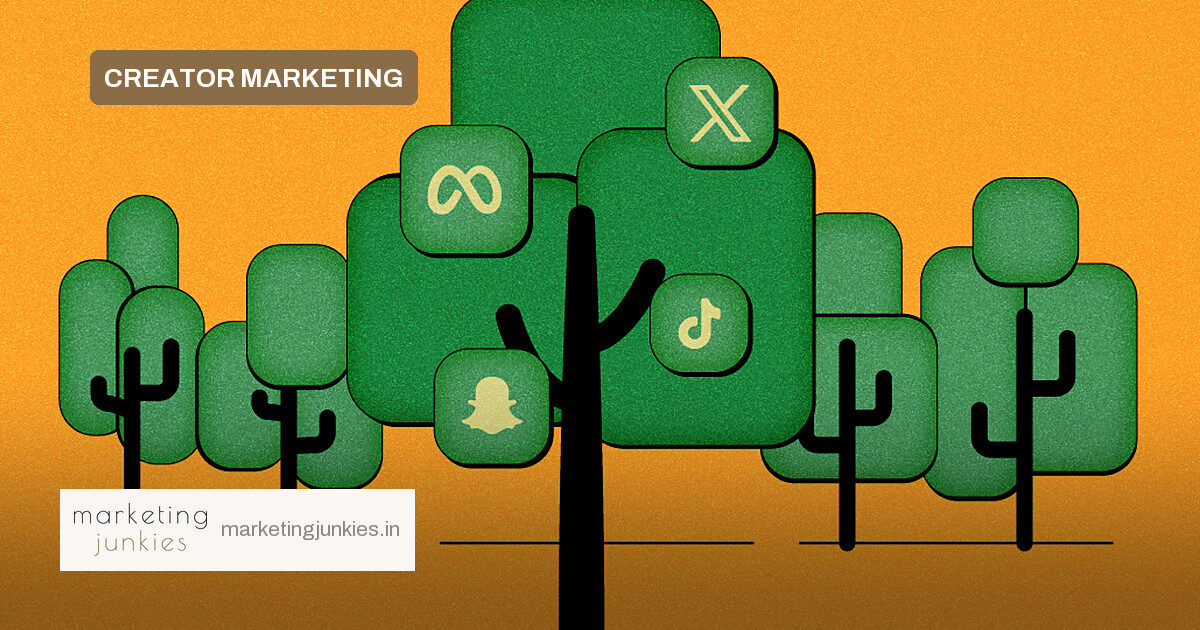
Creator partnerships are now a default in social strategy, but the 2026 Creator Marketing Index from Digiday+ Research suggests that how brands structure those partnerships matters more than simply showing up. The report, built from 1,755 social media posts and 20 branded campaigns tracked between January and September 2026, scores creator content across platforms to identify where engagement and reach actually come from.
The first clear signal: social remains the centre of creator work. In a Q1 survey of brand and agency professionals, 96% said they partner with creators for social content. Instagram led as the most-used platform at 90%, followed by Facebook (80%), YouTube (72%) and TikTok (63%). But usage does not equal performance.
Instagram Reels set the engagement benchmark
Among Instagram formats, Reels delivered the strongest average engagement rate at 11%, ahead of still posts at 7% and carousels at 5%. The metric measures engagement against follower count.
At the campaign level, the picture is more nuanced. When Digiday ranked the top 75 posts for each campaign hashtag, Instagram had the most posts in that high-performing group. TikTok, though, posted a higher average engagement among its top performers. In practical terms, Instagram provides steadier, more predictable performance, while TikTok offers a higher ceiling for reach and engagement.
That difference points to a simple platform decision: brands running longer campaigns and wanting consistency may prefer Instagram, while smaller brands with tighter budgets may find TikTok gives creator content a better shot at breaking out.
Sponsored posts win reach, with one notable demo exception
The index split content into sponsored posts—where a brand and creator have a direct paid agreement—and gifted posts, where products are sent without a paid content contract. Disclosures such as #ad, #paid, #gifted and #PR were used to classify posts.
Sponsored posts generated far greater reach: an average of 334,055 views compared with 48,008 for gifted posts. Paid amplification likely explains the gap, since brands may put media money behind sponsored work while gifted posts usually rely on organic distribution.
But the engagement story flips for one format. Sponsored posts outperformed gifted posts across most content types, except product demonstrations, where gifted demos did better. Style shots showed the reverse pattern and delivered the highest overall engagement among sponsored formats. The likely reason is production budgets: sponsored style shots often include video, while gifted style shots tend to be simpler flat lays or still product images.
Creators also favoured style shots more often in gifted content, by a ratio of 19 to 15. One explanation from the report: demos focus on a single product and can look overtly promotional, while style shots feel less like advertising—something creators may prefer when they have not been paid.
What the top campaigns did differently
Charlotte Tilbury’s #exaggereyes campaign ranked first. Gifted posts made up 35% of its content, the highest share among campaigns analysed, and the brand worked with Influenster, a sampling and review platform owned by Bazaarvoice, to collect user-generated content rather than sending PR packages directly. Most of those gifted posts were demo videos, the format that outperformed within gifted content.
Neutrogena’s #hydroboost campaign came second and had the highest share of brand-seeded posts at 39%. The brand also paired the branded hashtag with the broader #hyaluronicacid tag, connecting a line extension to a wider category interest.
Too Faced’s #chocolatesoleil campaign took a localization route, with 34 of its top 75 posts mentioning Brazil and content from Brazilian creator accounts. It also had the lowest share of sponsored or gifted posts among the top 10, with 74 of the top 75 posts classified as organic.
What marketers should take from the index
- Use Instagram Reels for predictable engagement, but test TikTok when reach is the goal.
- Expect sponsored posts to deliver views; use gifted demos where creators can show a product naturally.
- Do not outsource the campaign entirely to creators—brand-owned posts still matter.
The overarching lesson is that budgets remain important but not sufficient. Paid support did not lift every campaign. The strongest performers combined high-budget amplification, brand-owned activity, product seeding and creative formats in different ways. There is no single template, but the data gives teams clearer trade-offs for their next creator brief.
Source: Digiday