

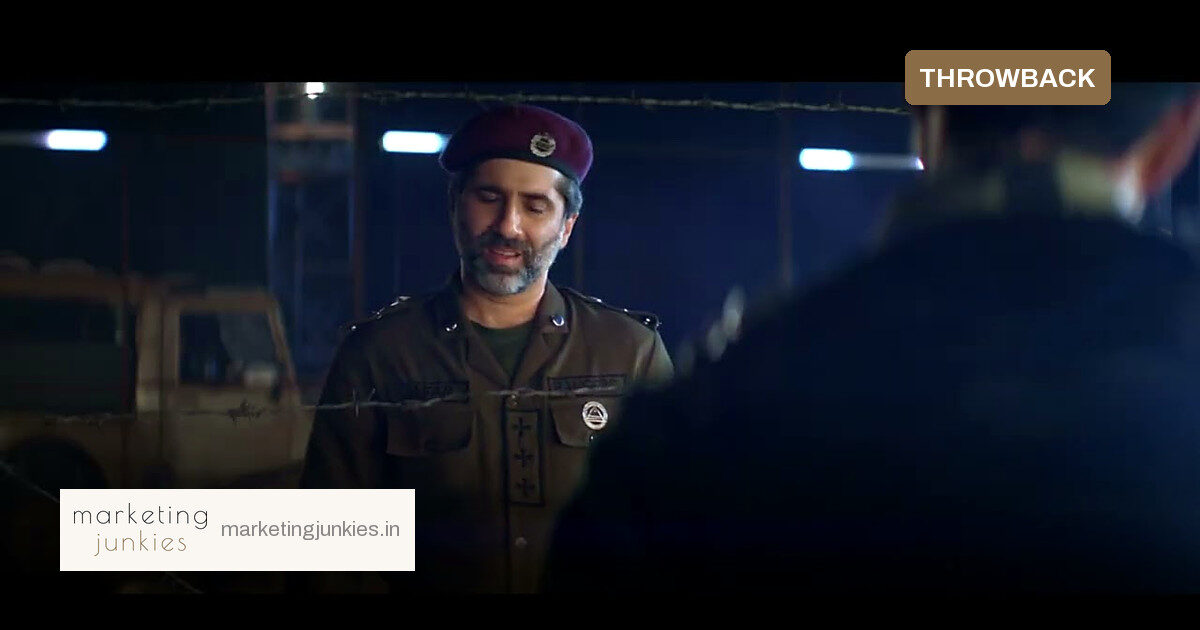
Fogg’s “Kya Chal Raha Hai?” did something rare: it turned a product formulation choice into a national call-and-response. More than a decade after it first appeared, the line still does the brand’s heavy lifting. The film above is the 2023 Border 2.0 Hindi cut, but the idea it refreshes is older, simpler and more instructive.
The campaign
Brand: Fogg. Owner: Vini Cosmetics. Campaign: “Kya Chal Raha Hai?” Country: India. The original work ran from the early 2010s, and Fogg has kept returning to the same question rather than replacing it. The brand was built on a precise product claim: the deodorant uses no gas propellant, so more of what is in the bottle is perfume.
What the film said and how
The campaign’s central line was a question that worked as a tease and a literal product demo. “Kya chal raha hai?” asks what is going on, but also what is actually spraying. The answer was always the same: “Fogg chal raha hai.” The films used the line to point at gas-based deodorants and frame their spray as airy waste.
Fogg did not sell scent notes, romance or sports. It sold endurance and value. The packaging repeated the argument in plain language—“No gas, only perfume.” Every ad, shelf pack and retail conversation pulled toward the same conclusion: if there is no gas, each spray delivers more fragrance and the bottle runs longer.
The response it got
The question became a street-level catchphrase. Consumers did not have to remember a benefit list; they had to remember one line. The phrase gave Fogg a verbal logo that cut through clutter, especially in a category that had leaned on similar masculine and romantic codes.
- The line worked as recognition: hearing “Kya chal raha hai?” triggered the brand before the logo appeared.
- It converted a technical product fact into a social, repeatable phrase.
- The campaign’s discipline let Fogg stretch a single thought across more than a decade of media.
What it changed in the category
Deodorant advertising in India had long been about fragrance fantasy, attraction and confidence. Fogg made the category argue about propellant. It reframed gas as waste and turned “sprays per bottle” into a value message. Competitors had to respond, whether by highlighting their own duration or moving toward similar no-gas and long-lasting claims.
The campaign showed that a challenger does not need a bigger budget if it can attach a simple product truth to a repeated cultural phrase. Category conversations shifted from how a deodorant smells to how much usable perfume the buyer is actually paying for.
Where the brand and the idea are now
Fogg still runs on the same central question. The 2023 Border 2.0 film is a faster, louder expression of the original “Fogg chal raha hai” idea, updated for shorter attention spans and digital feeds. The brand has broadened its range of fragrances and formats, but its core identity remains the no-gas, no-waste challenge it threw at the category.
For marketers, the lasting lesson is small and hard: find one functional difference, translate it into a phrase people can repeat, and resist the urge to start over.
Watch the original: Fogg on YouTube