
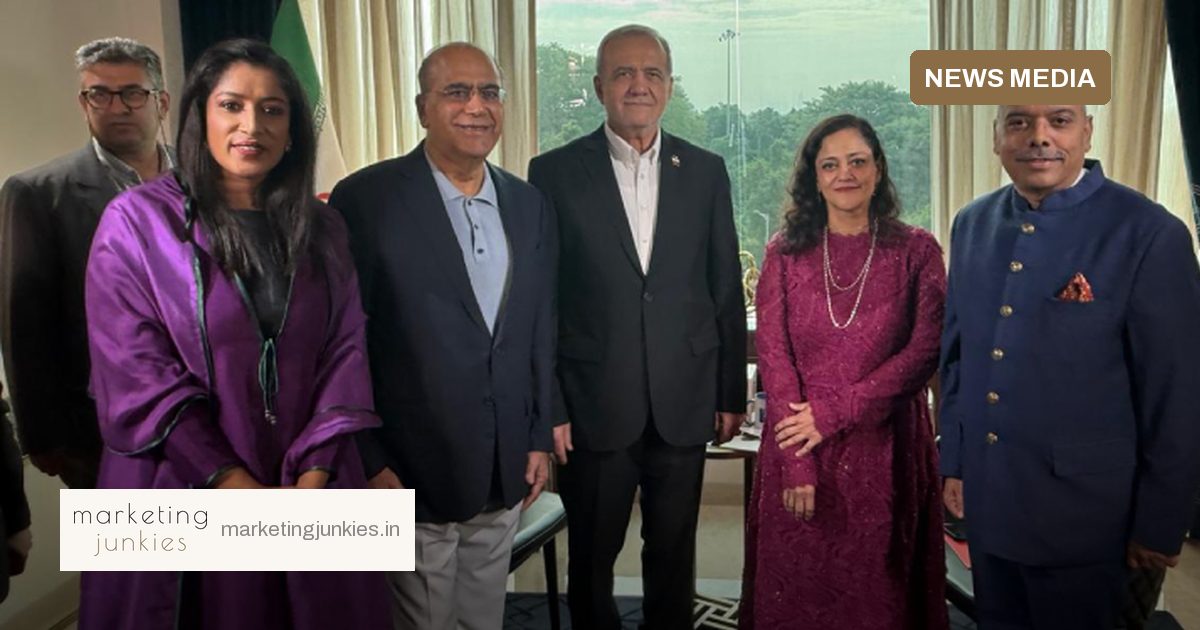
India Today TV has turned a high-stakes diplomatic interview into appointment viewing, airing a world-exclusive conversation with Iranian President Masoud Pezeshkian at 8 PM. The interview was conducted by Geeta Mohan, Group Editor, Foreign Affairs at India Today, during the BRICS Summit in New Delhi.
For news publishers and advertisers, the broadcast is more than a foreign-affairs scoop. It signals how Indian television brands are using geopolitical exclusives to command prime-time attention, build trust and create high-value ad environments.
What the interview covered
The conversation ranged across Iran’s position on the West Asia conflict, the Strait of Hormuz, relations with the US and Israel, and engagement with neighbouring countries and multilateral blocs. Pezeshkian said Iran linked the reopening of the Strait of Hormuz to an end to US blockades, and revealed that regional foreign ministers were meeting in Oman to work on a maritime framework for restoring shipping routes.
He ruled out direct negotiations with Washington, citing the killing of senior Iranian leadership as a major obstacle, and warned neighbouring Arab countries hosting US military bases that such facilities could become targets if used for attacks on Iran. He described US and Israeli actions as “state terrorism” and responded to allegations around Iran’s nuclear ambitions and reported reliance on Russian and Chinese military intelligence.
Why marketers should pay attention
From a media and marketing lens, the interview has at least four types of impact.
- Audience spike: Breaking-news exclusives compress a large, attentive audience into a fixed broadcast window, making them attractive for appointment-based sponsorships and adjacent ad slots.
- Energy and trade signals: The Strait of Hormuz is a critical route for oil and gas. Any disruption can affect energy supplies, shipping costs and global trade, which in turn shape input costs and consumer demand.
- Brand safety context: Geopolitical news can deliver high engagement but requires careful contextual targeting, because advertisers may not want all creative next to conflict-heavy coverage.
- India-BRICS narrative: Pezeshkian framed multilateral blocs as a counterweight to unilateral US sanctions. For Indian brands eyeing global south trade corridors, that is a relevant macro signal.
The bigger media lesson
Exclusive interviews with global leaders are a classic tentpole content strategy. They give news brands a differentiated reason to tune in, support viewer retention, and offer premium inventory. For marketing teams, the lesson is not to treat such events as foreign news alone: they are attention moments that can align with category messaging around energy, logistics, finance, travel or B2B trade.
India Today TV is positioning the conversation as a significant television news event at a time when developments around Iran and the Strait of Hormuz carry implications far beyond the region. That framing gives media planners a concrete reason to include news programming in high-attention moments instead of defaulting only to entertainment properties.
Source: MediaNews4U