
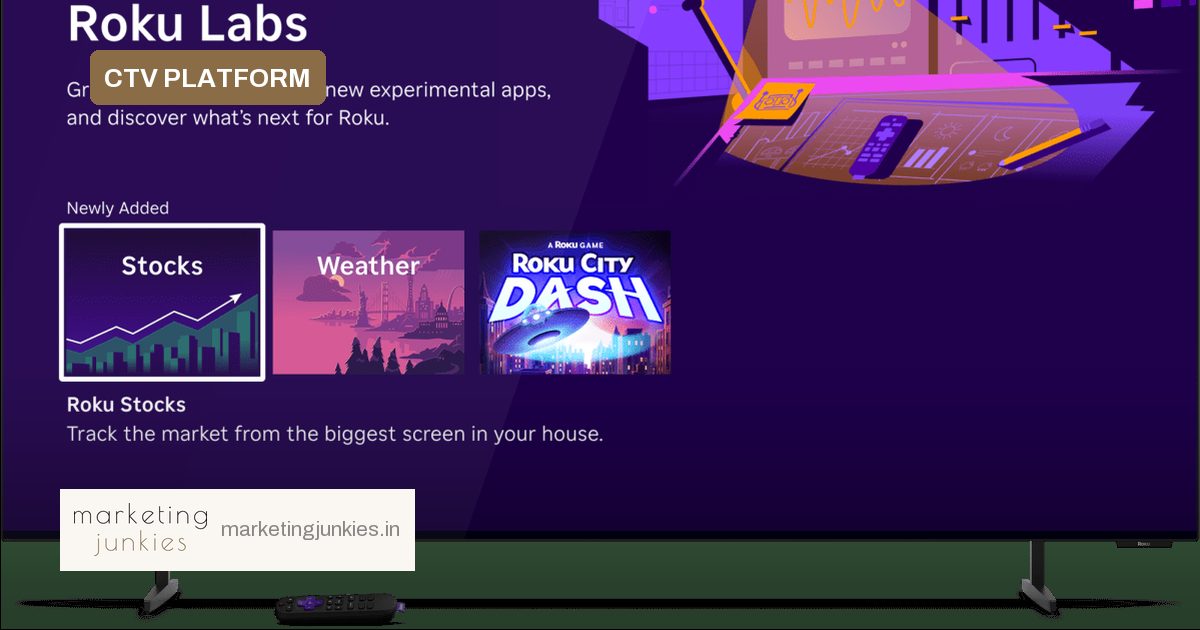
Roku is turning its TV platform into a testing ground for new first-party experiences. The latest Roku OS update, announced Thursday, introduces Roku Labs, a hub where U.S. customers can access experimental apps built by Roku itself. The apps appear through a new tile on the Roku Home Screen.
What Roku Labs offers at launch
The first wave of Roku Labs apps focuses on utility and play. Users will see:
- Weather tracking for quick at-a-glance forecasts.
- Stocks for market updates on the big screen.
- Roku Dash, a game that lets players fly a UFO across Roku City, the platform’s neon purple and pink screensaver known for pop culture references and ads.
The strategy behind first-party apps
Roku Labs may look like a small product experiment, but it signals a bigger shift. The additions suggest Roku is increasing investment in what could become monetizable first-party apps that put the company at the center of connected households. For a platform that has long competed with Google and Amazon in connected TV, building owned experiences is a way to deepen engagement beyond third-party streaming apps.
Roku’s rivals are pushing AI-powered CTV products with Gemini and Alexa+. Roku’s answer, at least in this update, is less about a new assistant and more about owned surfaces and utility that keep viewers interacting with the platform itself.
Bundles, local expansion and open remotes
Alongside Labs, Roku is expanding its personalized Home Screen to Mexico and Brazil, with region-specific features such as localized content and tailored suggestions. Its voice assistant will also start answering weather-related questions.
On the streaming side, Roku will offer bundled subscriptions in the U.S. and Mexico, letting users mix and match plans from smaller services including AMC+, Fox ONE, Hallmark+, Howdy, and Starz. Roku says these bundles are usually more affordable than buying each plan separately.
The company is also open-sourcing Roku LT OS, the software that powers the Roku remote. That could invite outside developers and makers to build their own applications and devices, extending Roku’s ecosystem reach.
What marketers should watch
For marketing and media teams, the Roku Labs update is worth tracking for a few reasons. First, experimental first-party apps can create new owned touchpoints where Roku controls the experience, the data and potentially future ad placements. Second, bundle growth in the U.S. and Mexico may increase viewing time and reduce churn, which matters for CTV advertisers planning reach and frequency. Third, an open remote OS could expand the Roku ecosystem into new hardware surfaces, giving brands more ways to show up in connected households.
None of this changes the CTV market overnight, but it shows Roku investing in the platform layers that tend to drive long-term attention and ad inventory.
Source: TechCrunch