

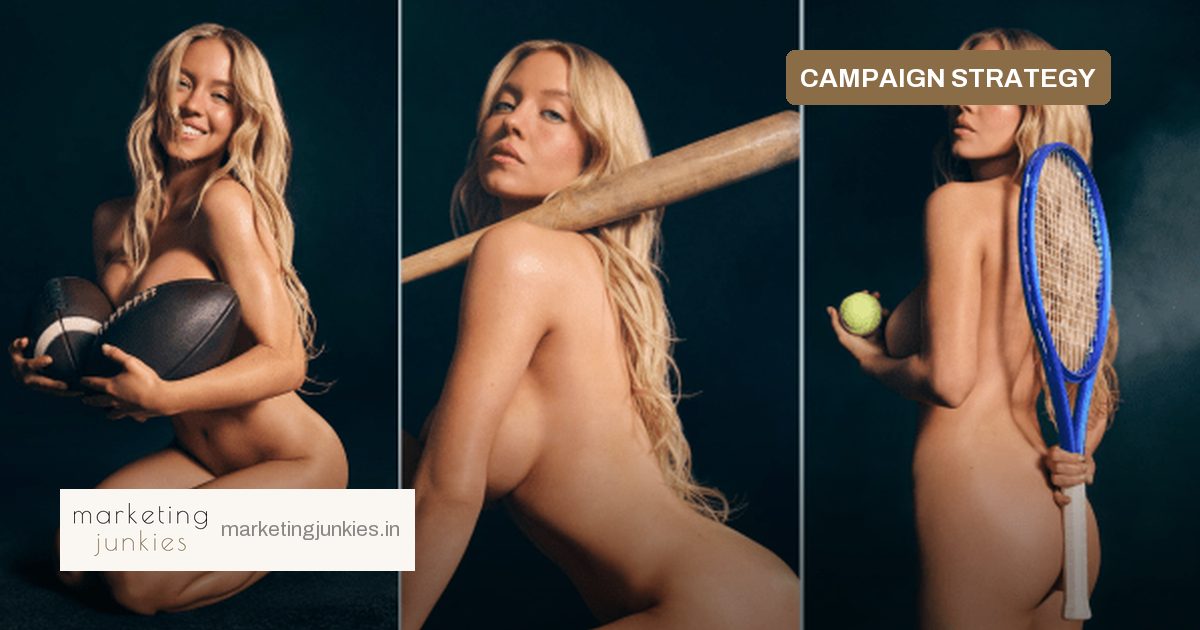
A year after Sydney Sweeney’s American Eagle spots became a talking point for their too-tight top and stuck zipper, the actor is back in the center of advertising debate. This time, the wardrobe problem is gone because there is no wardrobe.
Sports prediction app Novig has launched what it calls its first national brand campaign featuring Sweeney. The work is titled “Just Sports,” and the company says the best sports trading experience comes from a platform singularly focused on the game. The execution, however, has shifted the conversation away from product focus and toward the familiar question of whether “sex sells” still has a place in modern brand building.
Some male viewers have been vocal in their approval. But many women—especially female athletes and professionals—have responded with disappointment and anger. An Australian Olympic gold-medal swimmer called the campaign “a kick in the face to every woman who has dedicated her life to perfecting her craft.” An AI executive responding on Sweeney’s Instagram made a related point: that great female athletes have used their platforms to challenge norms and inspire change, while this campaign appears to reward Sweeney primarily for her body. Sweeney, for her part, responded with a post showing athletes such as MMA star Ronda Rousey and football player Rob Gronkowski in revealing poses—suggesting that she sees the creative as part of a broader athletic and entertainment aesthetic rather than a new provocation.
Why the reaction matters for brands
The criticism is not solely about nudity. Advertising has long used skin to sell. The bigger issue is context. The campaign arrives at a time when women’s sports are gaining visibility, sponsorship dollars and public respect. Against that backdrop, the creative feels to many like a regression to older advertising tropes—the “fly me” airline campaigns of the 1970s or the racy Axe ads of the early 2000s.
The brand risk is sharpened by the audience math. One recent estimate suggests that around 70% of sports bettors are men, and a 2013 study published in the Journal of Advertising found that men evaluate sexual appeals more positively than women. Those numbers may make the creative seem rational for a betting platform, but they also explain why the backlash is intense: women are being told the product is “just sports” while the marketing appears to speak mostly to one group.
What marketers should watch
For marketing and media professionals, the Novig campaign is a live case study in attention versus alignment. The spot may generate reach, but reach is not the same thing as relevance or trust. Here are a few practical takeaways:
- Message and mechanic need to match. If the promise is “just sports,” every creative choice should reinforce focus on the game.
- Demographics are not the whole story. A majority-male user base does not mean a brand should ignore how women experience the category.
- Cultural timing can amplify backlash. Creative that feels retrograde during a surge in women’s sports visibility can become a reputational flashpoint.
- Talent incentives shape risk. Sweeney is not only the face of the work; she is also a partner and equity stakeholder, which aligns her financial interest with the brand’s attention strategy.
The campaign may deliver the short-term notoriety Novig sought. The longer-term question is whether “Just Sports” can mean something credible after the conversation it has started.
Source: Adweek