
The campaign
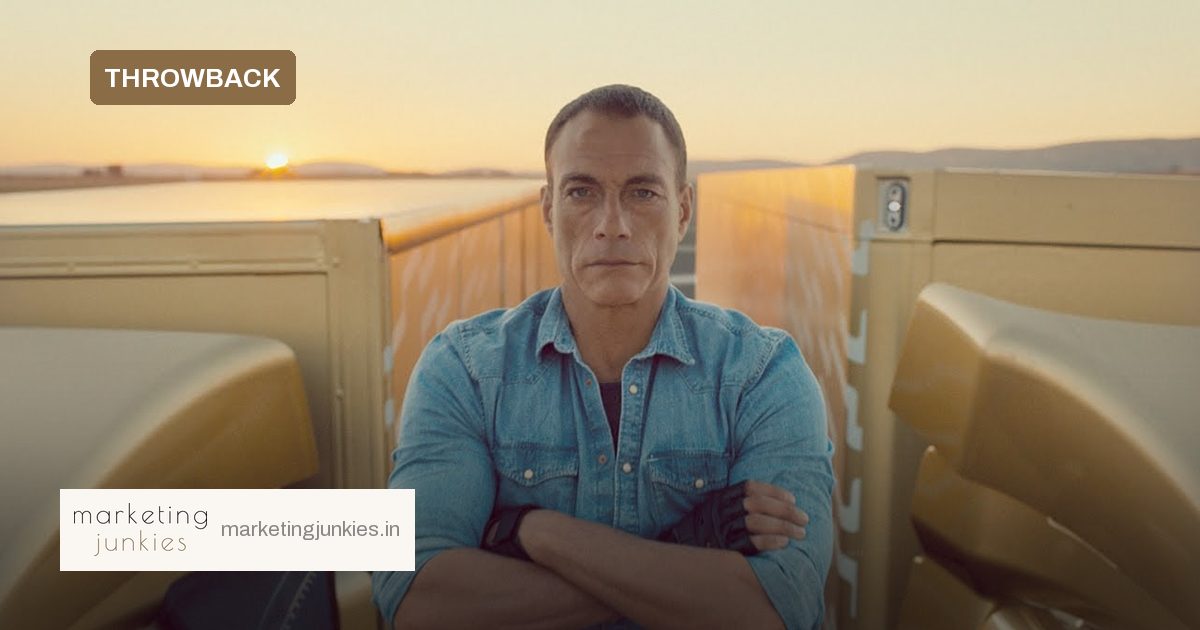
In late 2013, Volvo Trucks and its agency Forsman & Bodenfors released ‘The Epic Split’ as part of a series of live demonstrations called Live Test. The assignment was to dramatise a single engineering claim: Volvo Dynamic Steering keeps a truck stable and precise at low speed and in reverse. The brand chose action-movie star Jean-Claude Van Damme to perform a slow, real-time split between two Volvo FM trucks as they reversed side by side. It ran globally on digital channels and quickly became the standout of the wider product-demonstration series.
What the film said and how
The message was direct: the steering system is so controlled that a person can balance between two moving trucks. Instead of explaining that in a spec sheet or talking-head interview, the film showed it as a calm, almost ceremonial stunt. Van Damme’s voiceover sets up the moment, and the final visual closes the argument. The product proof was the spectacle.
The craft borrowed more from cinema than from commercial-vehicle advertising. A wide, high-contrast dawn shot, a soaring soundtrack and one long, unbroken-looking action gave viewers something to react to. Volvo Trucks kept the branding spare: no rapid feature list, no fine print up front. The takeaway hung on one image and one product benefit.
The response it got
The film took off within hours. It became one of the most-shared ads of the year and a rare example of a commercial vehicle brand entering mainstream entertainment. Viewers made parodies, remixes and tributes; television and digital news programmes covered the stunt. It also earned top creative honours, including a Cannes Lions Grand Prix, and entered advertising case studies as a reference for B2B virality.
- A truck brand, not a consumer brand, became the internet’s shared topic.
- Parodies and tributes came from creators, fans and talk shows.
- It won major creative awards and remained a benchmark for years.
What it changed in the category
Before this, B2B advertising was often built for a small, rational audience and confined to trade media. The Epic Split made the case that engineers, fleet owners and procurement teams also live in popular culture and share things that impress them. It shifted the benchmark for product demonstrations: a technical point could be carried by one high-stakes visual instead of a list of features.
It also validated the live-test format. The brand staged a real, controlled demonstration and let viewers verify it themselves, which made the authenticity part of the message. In following years, more industrial and technology brands tried the same logic: put the product in a legible, high-pressure situation and let the result travel.
Where the brand and the idea are now
Volvo Trucks continued the Live Test series and still uses real-world demonstrations to talk about steering, safety and driver control. The Epic Split remains the reference point for those efforts, and it is still used in marketing courses to explain how a B2B proof point can become a cultural moment.
Forsman & Bodenfors and the team behind the film are still cited for turning a niche product claim into a global story. The film remains one of the most recognisable pieces of truck advertising ever made.
Watch the original: Volvo Trucks on YouTube