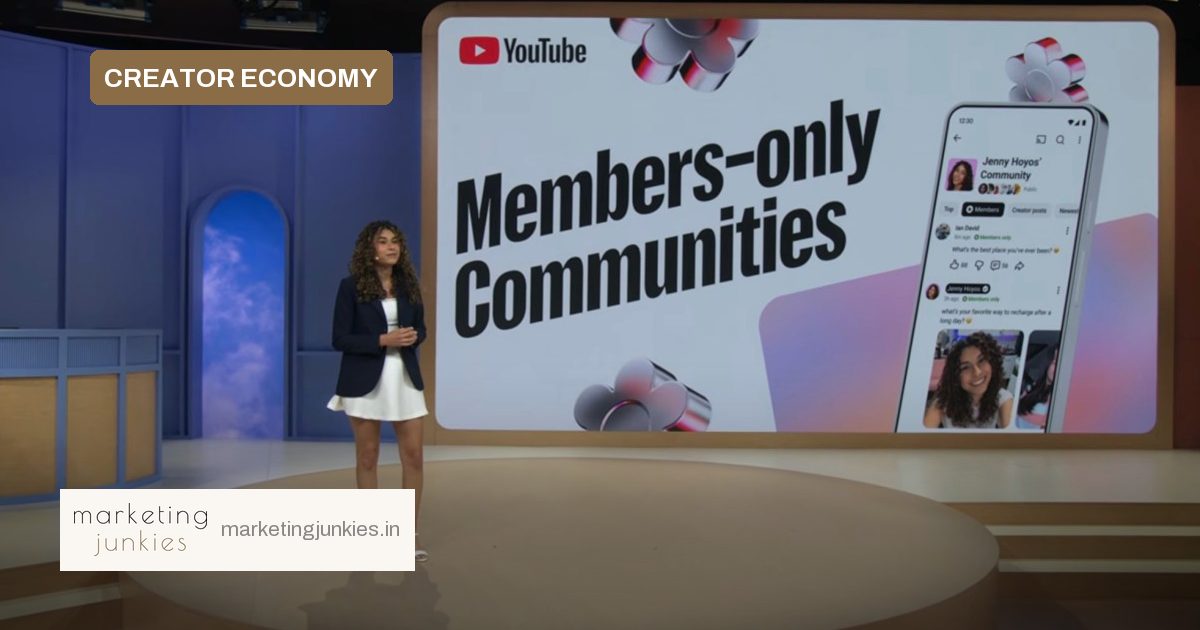
YouTube is turning its comments section and fan community into a more interactive, more monetisable layer. At its Made On YouTube event on September 23, 2026, the platform announced GIF replies, voice comments on TV, paid members-only communities and a paid boost feature called Hype with Jewels.
The updates at a glance
Comments are still one of the main ways viewers engage with creators, but YouTube has trailed rivals in interactivity. TikTok recently added voice replies, polls, photo carousels and Live Photos to comments, while Spotify offers polls and Q&As for video podcasters. YouTube is narrowing that gap:
- Viewers can now reply to comments with GIFs.
- People can leave comments from YouTube on TV by voice, avoiding remote-control typing.
- Creators get a personalised comment moderation experiment, aimed especially at live videos.
- Channel Memberships gains paid, members-only communities.
- A new channel memberships page helps viewers discover paid communities.
- Hype with Jewels lets fans use a virtual currency to boost smaller creators.
- Group chats for sharing videos, plus quick raw video clips, arrive in the next few months.
Fandom becomes a revenue engine
The bigger story is not GIFs. It is that advertising is no longer the only way creators monetise video, and YouTube is building fandom into a distinct revenue line. Paid members-only communities will let members share posts and start discussions with other top fans. YouTube will market these alongside other memberships on a discovery page made for viewers.
Hype, which already lets fans recommend smaller creators’ videos, gets “Hype with Jewels.” Fans could previously hype videos three times a week for free. Now they can buy Jewels to hype more, and their handles will be permanently added to the video description. YouTube says viewers have already hyped more than 75 million unique videos over 1 billion times.
What it means for marketing teams
These features are discovery and retention surfaces, not just consumer perks. A dedicated memberships page lowers the friction for superfans to find paid communities. Members-only discussions create an owned-audience layer between public content and DMs. For brands working with creators, community depth becomes easier to see and potentially easier to activate.
A useful lens is the 1-9-90 rule: roughly 1% create, 9% participate, and 90% observe. YouTube is lowering the effort for the 9% to participate through GIFs, voice comments and group chats, while giving the 1% better ways to monetise the most engaged slice. Marketers should watch for quality shifts, not just volume.
What to do about it
Creators should test personalised moderation on live formats before depending on it; YouTube is calling the feature an experiment and has not released detailed technical details.
Agencies and brands should update creator briefs to ask how a channel uses memberships, Hype and group chats. Do not assume ad revenue is still the default creator income model. Treat fandom spend as an audience development signal, and do not confuse hype volume with comment quality.
Source: TechCrunch