
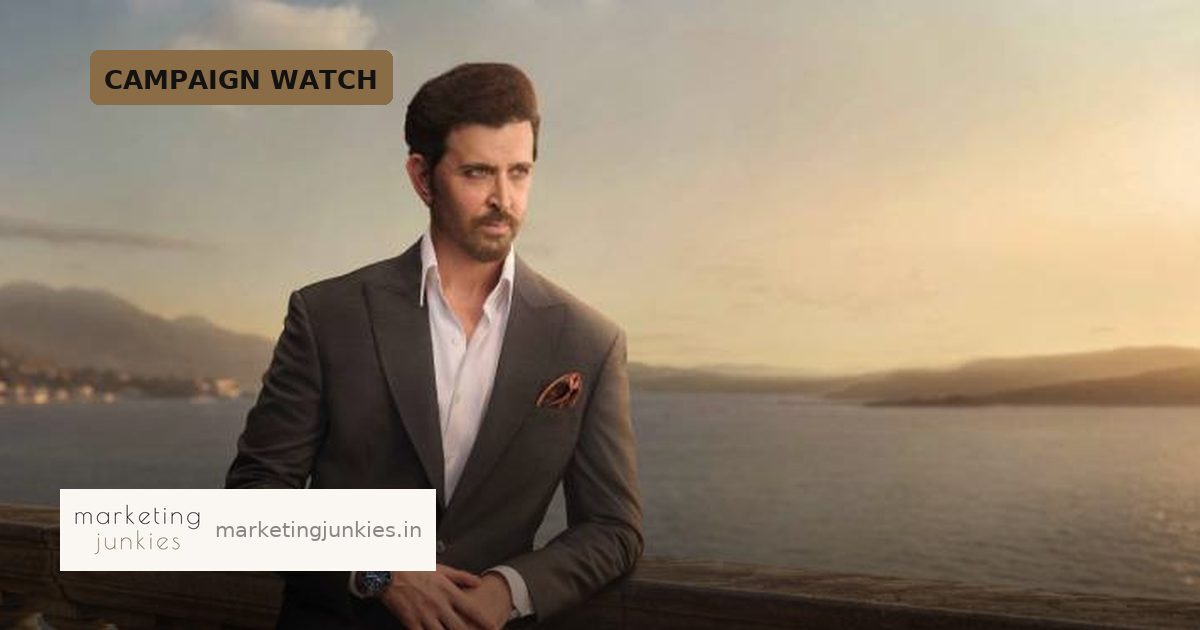
Swiss watchmaker Rado has launched a new brand campaign, ‘The Search’, fronted by its global brand ambassador Hrithik Roshan. Instead of the familiar luxury-watch formula of a celebrity, a wrist and a slow pan, the film hands the actor a creative brief: turn a feeling into an object.
What the campaign does
The narrative begins with Roshan’s memories of a loved one. Wearing the Captain Cook High-Tech Ceramic Chronograph, he sets out to convert that sentiment into something physical, a search that takes him inside Rado’s world of designers and engineers.
The film follows the process from a first sketch through material, shape and finish choices, ending in the creation of the Centrix Open Heart Diamonds in plasma high-tech ceramic. The watch carries a light silver mother-of-pearl dial and an open-heart design that reveals the movement underneath, creating a direct visual link between wearer and mechanism.
Plasma high-tech ceramic, Rado’s signature material, is given a starring role of its own. Roshan wears it in the campaign and chooses it for the watch he imagines, with its metallic sheen, comfort and engineering credentials woven into the creative journey on screen.
The closing sequence is the emotional payoff: Roshan presents the finished watch as a personal gift under a night sky, with the Rado anchor appearing among the stars. It is a tidy visual metaphor for the campaign’s stated themes of inspiration, passion and destiny.
Why it matters for marketers
Luxury watch advertising has a sameness problem. Ambassador-led films tend to trade in aspiration without narrative, which makes them interchangeable and easy to scroll past. Rado’s move here is structural rather than cosmetic: it converts the ambassador from an endorser into a participant in the product’s creation story.
That shift does three useful things at once. It gives the film a plot. It gives the product a reason to exist beyond a launch calendar. And it gives the brand a natural way to talk about proprietary technology, in this case plasma high-tech ceramic, without turning the film into a spec sheet read-out.
For Indian marketers, there is an added lesson in how the campaign handles celebrity equity. Roshan’s presence is not the message; his search is. The brand keeps ownership of the story arc, which means the campaign can extend into retail, editorial and social without depending entirely on the star’s reach.
The co-creation playbook
If you are building an ambassador-led campaign, ‘The Search’ offers a repeatable template:
- Start with a human motive, not a product feature. Here, it is a memory of someone.
- Give the ambassador a job inside the brand’s process, so the association feels earned rather than paid.
- Let proprietary technology carry the middle act. Materials, craft and engineering are inherently visual and hard for rivals to copy.
- Land on a tangible artefact. A specific, nameable product gives PR, retail and commerce teams something to sell.
- Close with a symbol people can repeat. The anchor in the night sky is a shareable frame, not just a sign-off.
What to watch next
The real test of a craftsmanship-led film is whether the story survives the cut-downs. Emotional narratives lose most of their power in a six-second bumper, so the value will depend on how Rado sequences the long film, the behind-the-scenes design footage and the product-led assets across owned and paid channels, and whether boutiques pick up the same language in store.
The broader signal is one worth noting: in a category where every brand claims heritage, Rado is arguing that meaning is manufactured in the process, not just inherited from the archive. That is a defensible position, and one that translates well to markets like India where luxury purchases are frequently gifts tied to relationships and milestones.
Source: MediaNews4U