
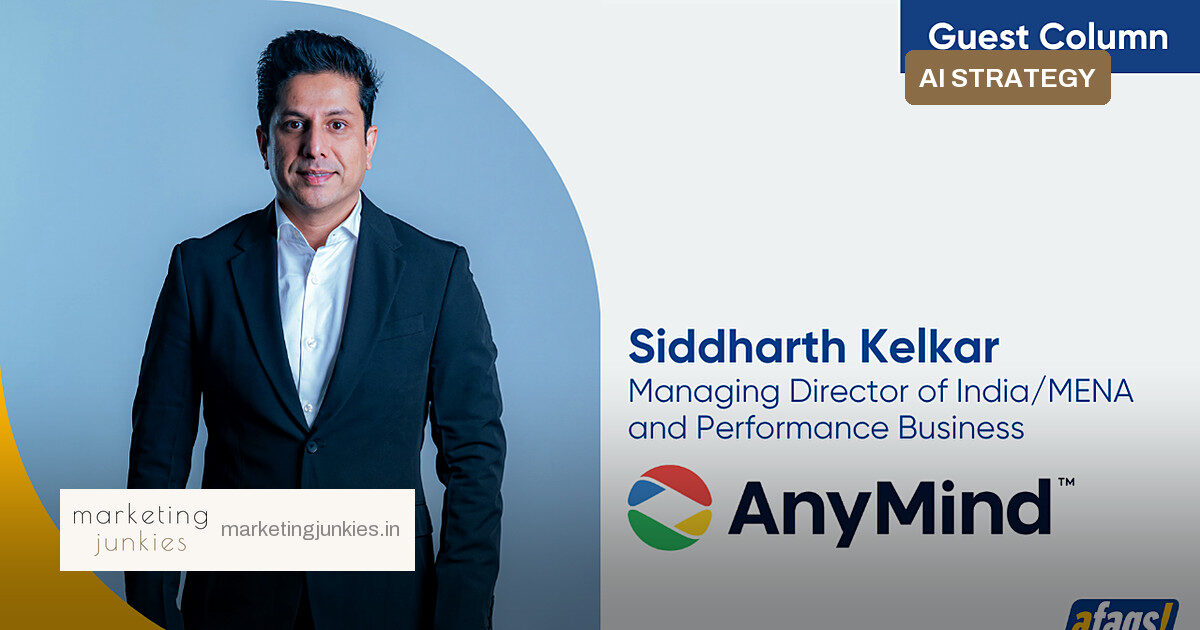
For years, India’s festive marketing ran on a predictable rhythm: build a plan, launch it, and review performance after Diwali. That model is fading. A new Afaqs! guest article by Siddharth Kelkar, Managing Director for India/MENA and Performance Business at AnyMind Group, argues that the real role of AI in festive marketing is to shorten the distance between a live signal and a marketing decision.
The most effective campaigns now behave less like fixed projects and more like daily learning loops. Creative variants rotate, budgets shift, and audience cohorts sharpen as each day’s performance data guides the next. The point of AI is not another dashboard or automation layer, but better calls while the season is still unfolding.
Where AI earns its place
The festive purchase journey has fragmented. A shopper might begin with a creator recommendation, compare products across three marketplace tabs, see a mobile game ad, watch a connected TV spot, and only then buy in an app or physical store. Consumers are also doing their own AI-assisted research before brands detect intent.
Against that backdrop, Kelkar identifies three areas where AI genuinely helps:
- Intent over demographics: Platforms such as AnyAI insights combine behavioural, contextual, device and location signals with first-party data to build cohorts around what people are likely to do, not who they look like.
- Faster regional creative: AI can generate and test creative variants across India’s many languages and cultural contexts quickly.
- Real-time media optimisation: Predictive DSPs like AnyAI DSP adjust bids, placements and budgets continuously, outperforming a plan optimised once at launch.
Culture is still the human moat
India’s festive calendar carries different meanings region to region. A line that works in one city can fall flat in another, and sometimes needs an entirely different product hook. AI can detect patterns, but Kelkar is blunt about the limits: “personalisation without cultural fluency is just automation at scale.”
That gap matters commercially. More impressions during the festive rush do not automatically buy more impact, and saturation makes people tune out faster. Formats such as rewarded video and playables work because they show up inside an experience the user already chose, not because they interrupt it. AI’s role there is narrow and useful: it identifies which audiences respond and when, rather than manufacturing engagement.
What this means for marketers
India makes this both hard and interesting. Consumers move across languages, income bands and devices faster than in most markets, and the same festival carries different timing and reasons to buy. Creators, mobile marketing, commerce and live selling now operate as one funnel. AI can read the struggles and value signals across that funnel and turn them into pricing, premiumisation and messaging decisions.
The practical lesson is to design festive campaigns as adaptive systems. Build daily decision loops, use real-time predictive buying, and keep a human owner on cultural fluency and authenticity. The final call on what deserves attention still belongs to people.
Source: Afaqs!