
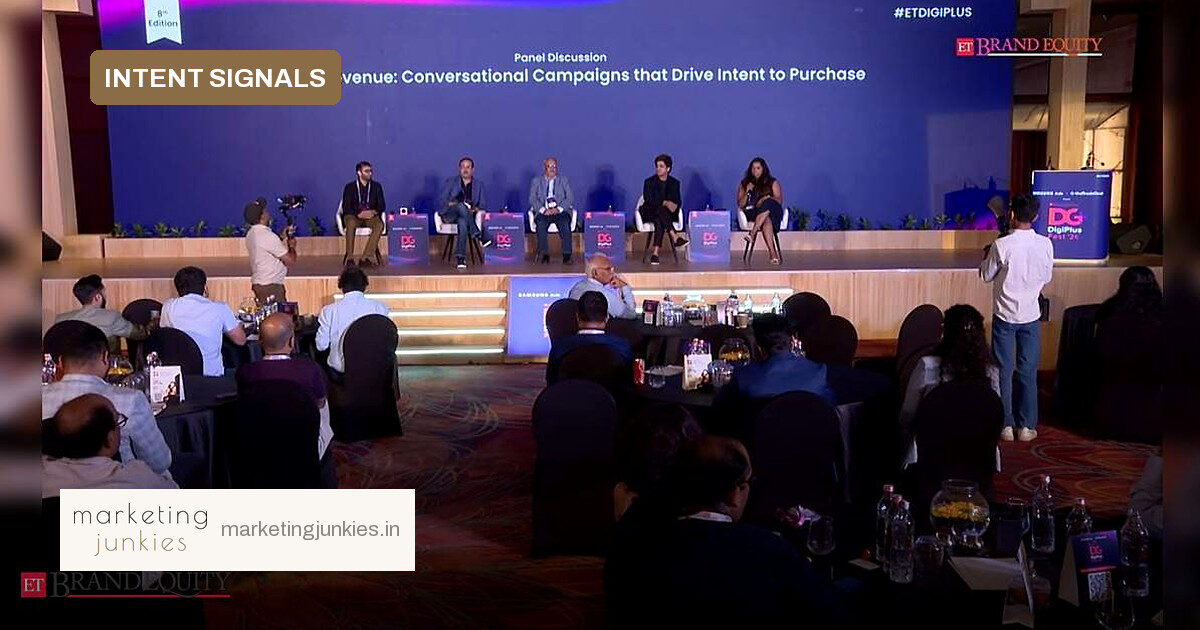
For years, clicks, impressions and leads have been the default proof of campaign performance. At the eighth DigiPlus Fest 2026, held on September 25, marketing leaders said that is no longer enough. As consumers move through WhatsApp, chatbots and AI-led interfaces, the more valuable signal is what they say after the click.
From leads to early signals
Dhiraj Sharma, head of marketing and public relations at Panasonic Life Solutions India, framed conversations as a way to extend customer lifetime value. A buyer who purchases an air conditioner could later need servicing, another appliance or an upgrade. Instead of treating the original purchase as the end of the relationship, his team uses product lifecycle signals to find the next relevant interaction. Sharma said marketing is now “more about revenue generation” and is being driven by multiple nano campaigns rather than one master campaign.
Mohit Mishra, head of marketing at DLF Office Businesses, said the B2B shift is from treating leads as the primary signal to spotting intent much earlier. A company may show intent nearly two years before it moves into a new office, and the final transaction often involves around nine months of active engagement. Expansion plans or market entry can surface well before a formal lead exists. In that environment, marketers need to know who is influencing the decision, what the requirement is and where the prospect sits in the buying cycle.
Conversation as the first consultation
Anshuman Dhanorkar, head of digital at JSW Dulux, said a paint buyer may know they want to repaint but still have questions about scope, colours and products. Chatbots and AI agents can act as an initial consultation layer, revealing why the person is repainting, for whom and at what stage. That context then hands over to a human representative.
Here is what the speakers described:
- Panasonic: use one product lifecycle to open service, cross-sell and upgrade moments.
- DLF Office Businesses: track expansion and entry signals before a lead is declared.
- JSW Dulux: let AI ask why and for whom, then pass context to sales.
- Apollo24/7: treat healthcare queries as part of an ongoing relationship, not a transaction.
Automation without losing the human
Shamik Banerjee, CMO at Apollo24/7, warned that easier measurement should not turn customer relationships into transactions.
“CRM is not customer revenue management. CRM is customer relationship management.”
The second half of that distinction matters: a relationship is built on questions and answers. In healthcare, consumers often arrive with uncertainty about a symptom, doctor or service, so empathy, data, technology and intent have to work together. The Apollo24/7 ‘Ask Apollo’ proposition is built around that behaviour.
Dhanorkar made a similar point: AI should prepare the ground for human interaction. If the bot already knows the job context, the salesperson does not have to start discovery from zero. The goal is to make conversations useful and relevant without stripping out human judgment.
What to do next
The practical takeaway is a simple loop: listen for signals early, use conversation to qualify intent, and hand a human the context. Marketers can start by auditing where the relationship currently stops after a purchase, and then train AI agents to ask the questions that expose why a buyer is moving.
Source: ETBrandEquity.com