
The campaign
Cadbury Dairy Milk and Fallon London released “Gorilla” in the United Kingdom in late August 2007, first airing on television during the finale of a major reality show. It was part of a new brand platform, A Glass and a Half Full Productions, built around the line “A glass and a half full of joy.”
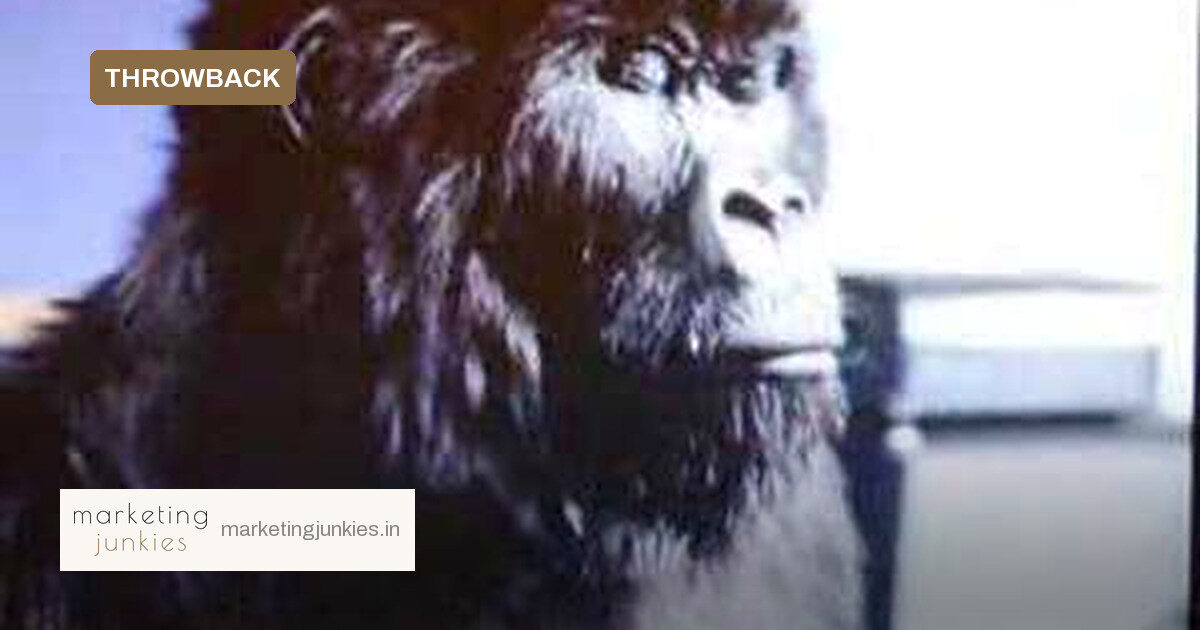
Directed by Juan Cabral at Fallon London, the 90-second film replaced the usual chocolate-ad grammar with a single, absurd spectacle: a lifelike gorilla at a drum kit, alone, waiting through the opening of Phil Collins’ “In the Air Tonight” before crashing into the track’s famous drum fill. There was no voiceover, no product demonstration and no eating close-up. The product and the tagline appeared only at the end.
What the film said and how
The ad said very little and meant something simple: Cadbury Dairy Milk is a moment of unguarded pleasure. By refusing to talk about cocoa, milk or taste, it treated the brand as the feeling, not the factory. The gorilla was not a salesman; it was joy made visible.
That choice borrowed the emotional weight of a song viewers already knew and used its slow build. Instead of interrupting with a pitch, the film created anticipation and release, then tied that sensation to Cadbury’s “glass and a half” heritage. It made the brand feel generous enough to entertain people before asking for attention.
The response it got
The ad became a genuine cultural event. It was shared, parodied and discussed far beyond advertising columns. It won top creative honours, including a Film Grand Prix at Cannes Lions in 2008, and made the drumming gorilla a reference point in British popular culture. Dairy Milk sales were widely credited with rising in the UK after the campaign ran, though the brand’s goal had looked more like fame than flavour.
What it changed in the category
Chocolate advertising before “Gorilla” often leaned on product shots, taste cues and sensory language. This ad proved an everyday FMCG brand could behave like a media property, creating content people actively sought out rather than merely tolerated between shows.
- It made pure joy the message, instead of a support for a product claim.
- It separated Cadbury from price-and-pack chatter and gave the brand a distinctive voice.
- It raised the creative bar across the category and beyond, emboldening brands to take bigger swings.
Where the brand and the idea are now
Cadbury Dairy Milk continued to explore the “glass and a half full of joy” territory in the years that followed, though few commercials reached the same cultural pitch. The Gorilla itself remains one of the most quoted examples of entertainment-led brand building, taught to planners and creative teams as evidence that a strong, simple feeling can outperform a list of product benefits.
For marketers, the lesson has aged well: the product can be the payoff, but the feeling has to come first. If a drumming gorilla can make people talk about chocolate, the category’s real ceiling is imagination, not appetite.
Watch the original: Cadbury Dairy Milk on YouTube