
Hyundai has spent 28 years attaching a colourful handprint to its childhood cancer initiative. This September, for Pediatric Cancer Awareness Month, the automaker is rebuilding that equity into something considerably louder — and it is doing it without showing a single vehicle.
The new Hyundai Hope on Wheels campaign, titled “Little Warrior,” opens on a young child dressed as a gladiator. The idea is to dramatise the fighting spirit of paediatric cancer patients and the support system around them, rather than sell a car.
“There’s not a car in this commercial because this commercial is not about our product,” Hyundai CEO Sean Gilpin told Adweek. “It’s just our mission as a brand.”
The insight came from the patients
According to Gilpin, the creative platform grew out of conversations with Hope on Wheels’ child ambassadors — childhood cancer survivors who now advocate for the programme. Their input was that even on frightening days, the fighting spirit stayed intact, and they wanted current patients to feel the same confidence.
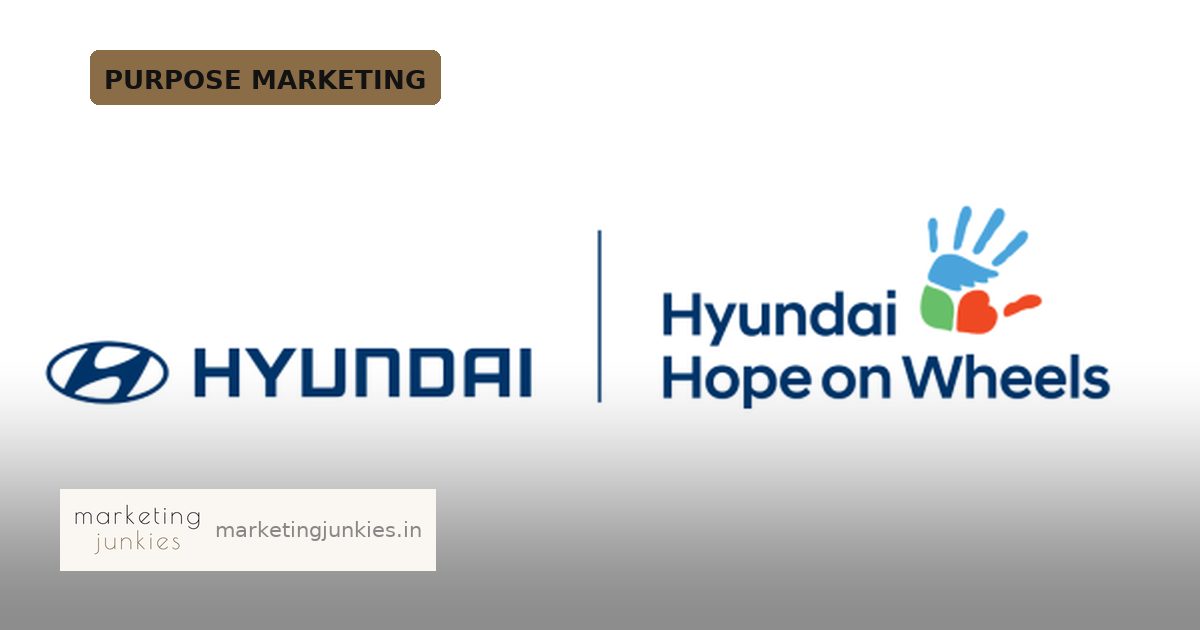
That led the team to the imagery of warriors marking themselves with paint and symbols before battle. Conveniently, Hyundai already owned a paint-based visual asset: the Hope on Wheels handprint, which now doubles as war paint. It is a smart piece of brand archaeology — reinterpreting a 28-year-old identity element rather than discarding it.
Beyond the film: gowns, decals and dealer matching
The campaign is built to travel off-screen, which is where a lot of purpose marketing usually falls apart. Hyundai’s supporting layers include:
- Warrior gowns for paediatric cancer patients to wear during treatment, featured in the ad. The design was inspired by a mother who made princess pyjamas to replace her daughter’s itchy hospital gown, earning the nickname “princess warrior.”
- 2,000 gowns donated to children’s hospitals in Southern California, with national distribution planned and Hyundai dealers matching donations.
- Handprint decals distributed to Hyundai owners and new-vehicle buyers, giving supporters a visible, physical way to signal participation.
The decal detail is worth pausing on. It turns an owner base into a distributed media network — an old-fashioned tactic that still works because it converts an abstract cause into a thing people can stick on a car and be seen with.
Media partners doing the heavy lifting
Hyundai has also pushed the campaign past conventional paid media. NBC will run the Hope on Wheels spot during Sunday night football broadcasts. Amazon is backing the effort through a “Stream It Forward” programme that Hyundai says will generate roughly $500,000 in additional contributions based on views during the campaign period.
Gilpin’s framing of those partner conversations is instructive: the brand told media partners it did not need the work to be about Hope on Wheels specifically — it wanted it to be about paediatric cancer. That deliberate loosening of brand control is often what unlocks partner generosity and earned distribution.
The Jonas Brothers have joined too, partnering with Hyundai via their podcast, with one of the brothers recently visiting a fan in a children’s hospital.
Why it matters for marketers
Hyundai has funded paediatric cancer research and patient support for nearly three decades but, by Gilpin’s own account, had stopped short of making Hope on Wheels a full-blown marketing platform. “Little Warrior” changes that while keeping the brand deliberately in the background.
That is the tension every purpose campaign has to manage. Push the logo forward and the work reads as opportunistic; hide entirely and the investment never compounds into brand equity. Hyundai’s answer is to let a proprietary asset — the handprint — carry the attribution while the story belongs to the kids.
A few takeaways for teams planning cause work in India or elsewhere:
- Mine your beneficiaries for insight. The strongest line in this campaign came from ambassadors, not a brief.
- Reinterpret existing assets instead of launching a new identity every three years. Longevity is the point.
- Give supporters something physical to do. Decals, gowns, dealer matching — participation beats impressions.
- Trade brand prominence for partner scale. Media owners contribute more when the cause, not the sponsor, is the hero.
Twenty-eight years in, the lesson is that consistency is the asset. The creative can get fierce; the commitment shouldn’t change.
Source: Adweek