

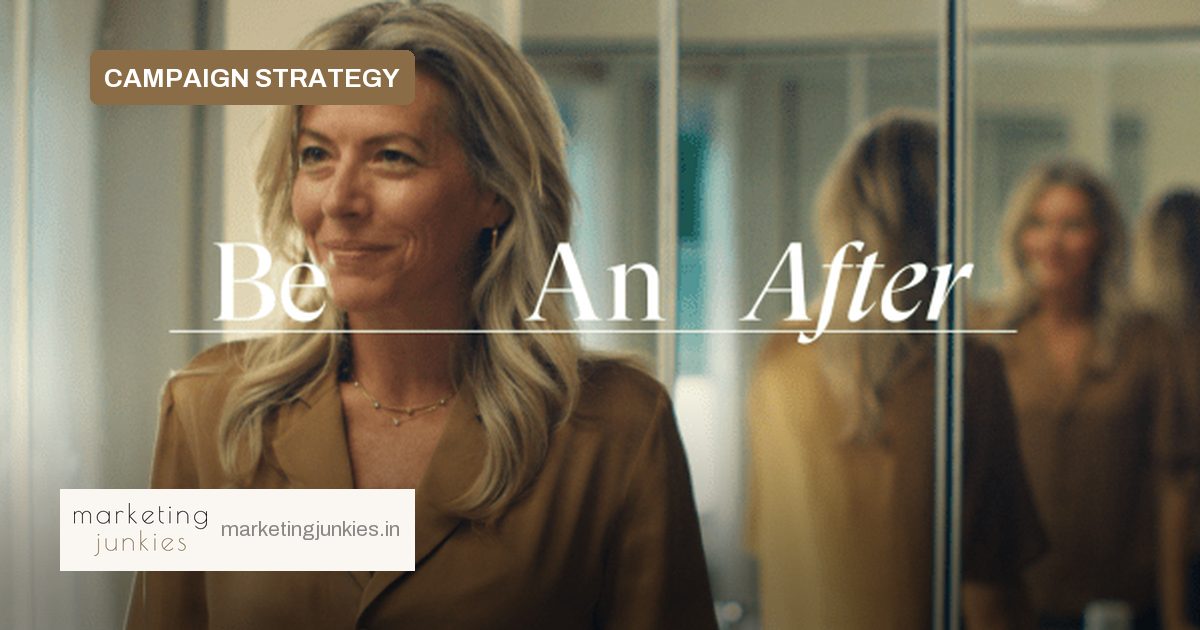
Nutrafol used the 78th Emmy Awards to launch a new campaign that flips the familiar before-and-after hair growth format. The Unilever-owned brand ran “Be An After” during Live with E! and paired the spots with a custom social segment featuring E! red carpet correspondent Zanna Roberts Rassi, who shared her own Nutrafol experience.
Created by agency nice&frank, the spots start with a conventional before-and-after image, then step back to the moment someone decided to make a change. The three films focus on postpartum recovery, divorce, and marathon training—showing that hair thinning can follow very different life chapters.
From visual proof to emotional milestone
Instead of ending on a polished after photo, the creative work pulls the camera back to the messy middle. nice&frank creative director Rob Stone told Adweek that the team used mixed-media techniques to capture what he called the “raw and unpolished” part of a journey that most hair ads skip.
Nutrafol CMO Deena Bahri framed that shift as a trust-building move. In a category crowded with quick fixes and bold claims, she said, brands need to balance aspiration with realism.
“The visible result matters, but so does helping someone understand what it takes to get there.”
— Deena Bahri, CMO, Nutrafol
Hair thinning is “incredibly personal,” Bahri said, so the decision to do something about it is itself a meaningful milestone. That is the emotional center of “Be An After.”
Why it matters for marketing and wellness brands
The campaign is a clear example of a legacy category moving away from insecurity-driven messaging. Bahri discussed that industry shift on Marketing Vanguard in June, noting that fear-based marketing used to be the norm. “Be An After” reframes progress as hope and accountability rather than shame and urgency.
- Rework a familiar format. The ads acknowledge the before-and-after trope, then use it as a storytelling frame instead of a literal transformation promise.
- Anchor the story in real life transitions. Postpartum, divorce, and marathon training make the hair-growth trigger specific and relatable.
- Use editorial-adjacent talent. The Zanna Roberts Rassi social segment extends the brand inside red carpet coverage rather than as a disconnected ad unit.
- Lead with the decision, not just the result. Making the “after” feel achievable starts with recognizing the moment someone chose to invest in themselves.
What marketers can do next
Brands in performance and wellness categories should audit their own creative for outcome-only storytelling. A simple reframe is to lead with the decision or action that started the change, then show the visible result. That preserves proof while making the journey feel attainable.
For DTC beauty and health brands, the Emmy-week push is also a reminder that creator and red carpet-adjacent formats can make a product story feel less like an ad. If a category is loaded with fear-based claims, an empowerment-led narrative can stand out—provided it is supported by realistic expectations and credible voices.
Source: Adweek