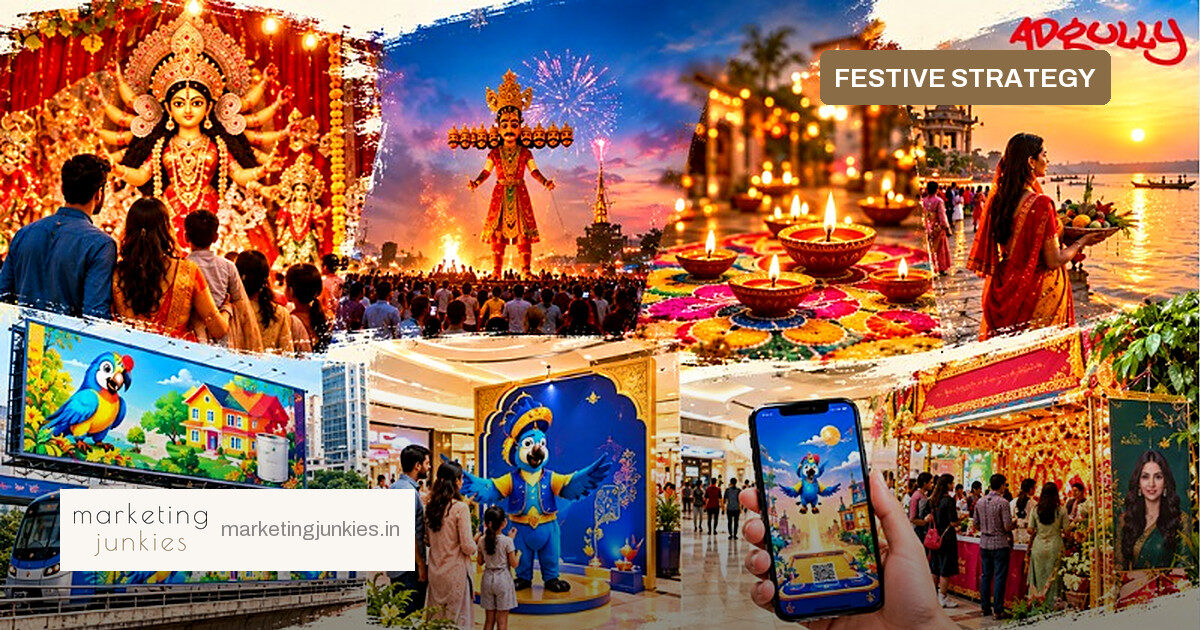
Eastern India’s festive season is no longer just a high-spending quarter. With Durga Puja, Dussehra, Diwali and Chhath creating an extended engagement window, marketers are treating the region’s cultural calendar as one continuous consumer journey instead of a string of standalone campaigns.
From standalone festivals to one extended journey
Megha Beriwala Gupta, Marketing Director at Macaw Paints & Shyam Steel Group, says the shift is structural. “We see the festive season as one extended consumer journey rather than a series of standalone festival campaigns,” she told Adgully.
Macaw Paints is anchoring its calendar on the thought “Macaw ke rang, Magic ke sang,” which runs from Durga Puja and Dussehra through Diwali and Chhath. The brand’s 360-degree plan pairs a TVC featuring Kartik Aaryan as the “Macaw Genie” with OOH, cinema, mall installations and festive associations. Life-size Macaw Genie installations are turning advertising into physical family experiences.
Where the real festive rubber meets the road
The region’s significance is measurable. Anirban Banerjee, CEO of Eveready Industries India, says one-third of the company’s sales come from Eastern India — a legacy position that shapes how it reads festive demand.
Preeti Pachauri, Head of Business Revenue & Growth at Khushi Advertising Ideas, points out that each festival opens a different category window. Pujo is an out-of-home occasion, so fashion and lifestyle brands stay active. Diwali is celebrated at home, shifting demand towards white goods, mobiles, gold and home improvement. The skill, she says, is matching the offering to the occasion.
A 75,000 sq ft bet on community spaces
Emami is betting on cultural proximity. Its snacking brand WeMe, from Emami Agrotech, is running activations across around 60 strategic Kolkata locations, with pandal wraps, stretch banners and sampling covering more than 75,000 sq ft of festive branding. The thought, “We Khush To Me Khush,” celebrates togetherness. Kesh King has added roughly 500 banners across 40 major Durga Puja pandals.
Macaw Paints is pushing interactivity further on Vande Bharat routes, where QR codes unlock “Macaw Bolta Hai” stories and a Macaw game designed for families travelling together.
Why Tier 2 and Tier 3 towns matter
Gupta notes festive consumption is now distributed across Tier 2 and Tier 3 cities, where paints and home renovation see a festive lift. Macaw and Shyam Steel have widened their footprint across West Bengal, Bihar, Jharkhand, Odisha, the North-East and Uttar Pradesh. Pachauri adds that e-commerce penetration and new malls in smaller towns are adding topline, and D2C brands are chasing physical retail in Tier 1 and Tier 2 markets.
The takeaway for marketers:
- Plan the festive quarter as one journey, not four separate bursts.
- Match category and format to each festival’s consumer mode.
- Use QR-enabled and interactive OOH where families gather.
- Weight Tier 2 and Tier 3 towns for festive renovation and preparation demand.
Eastern India’s festive window rewards brands that combine a large-scale idea with local cultural specificity. Reach is table stakes; relevance is where lasting consumer connections are made.
Source: Adgully