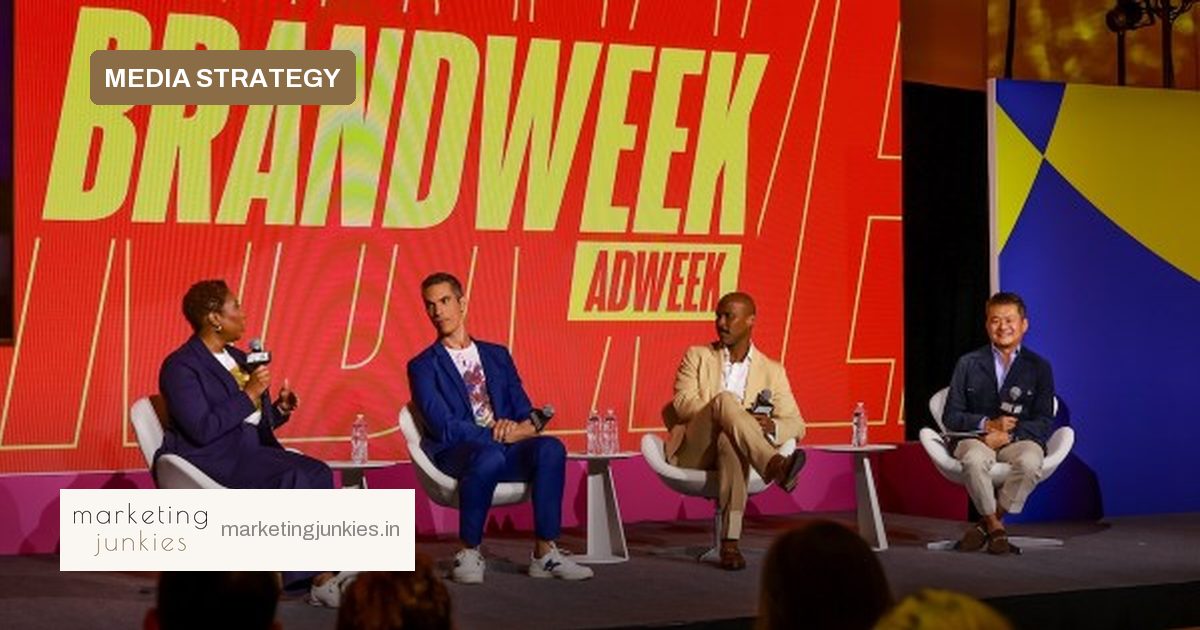
Media brands are increasingly competing in two different games at once: owning the big breaking-news moment, and staying relevant during the long stretches in between. At Brandweek 2026, CNN executives and podcast hosts argued that the second game is where durable audience loyalty is actually built.
Reach is easy; attention is harder
Guy Griggs, SVP of ad sales and client partnerships at CNN, framed the issue in terms marketers know well. The network is expanding into new verticals, formats and direct-to-consumer offerings, while keeping hard news central to its identity. The point is not to chase every impression, but to create reasons for audiences to return.
You can buy an impression; you can’t buy people’s interest.
That distinction matters for media planners. Scale is still valuable, but reach to a distracted audience can become a vanity metric if the surrounding context does not hold their interest.
The feed has become a multiverse
Audie Cornish, co-host of CNN’s Engagement Party podcast, said personal updates, entertainment, cultural debates and hard news now compete in the same scroll. News organizations have been slower to move beyond the traditional beat system that kept those subjects separate.
I think we’ve all learned that pop culture is no longer something off to the side that’s a guilty pleasure somewhere else. It is the story.
Cornish and co-host Ari Shapiro compare what surfaces in their own highly customized feeds and use that process to decide which topics deserve a closer look on the show. In effect, they “reknit the timeline” for audiences who no longer share one common news feed.
Hosts create the connective tissue
That fragmented environment gives recognizable hosts a stronger role. Shapiro said successful podcasts build loyalty because listeners develop a sense of familiarity with the people behind the microphone.
They feel connected to the hosts. They feel like they’re friends, even if they’ve never met in real life.
Cornish makes a useful distinction between an anchor and a host. An anchor grounds the story; a host welcomes people into the conversation and introduces them to others. CNN’s Engagement Party applies that philosophy through listener feedback and segments such as “Scroll and Tell,” which brings audience participation directly into the show.
What marketers can take from this
For brands, the opportunity is to join conversations people already care about without disrupting the experience that attracted them. Griggs said CNN is exploring integrations and new ways for brands to participate with that principle in mind.
- Use host-led formats to maintain relevance between major news cycles.
- Treat pop culture and entertainment as core story engines, not side content.
- Design brand integrations around existing audience interests rather than interrupting them.
- Treat trust as the boundary: reach should never come at the cost of credibility.
We’re going to go as far to the line as we possibly can without crossing that line, because trust is our product, and without that, we have absolutely nothing.
The larger takeaway for marketing professionals is straightforward: attention is not a media-buying problem alone. It is an editorial, format and relationship problem. Media brands that build familiar hosts, responsive formats and culturally relevant conversations are better positioned to convert occasional reach into repeat attention — and that is the foundation of loyalty between big news moments.
Source: Adweek