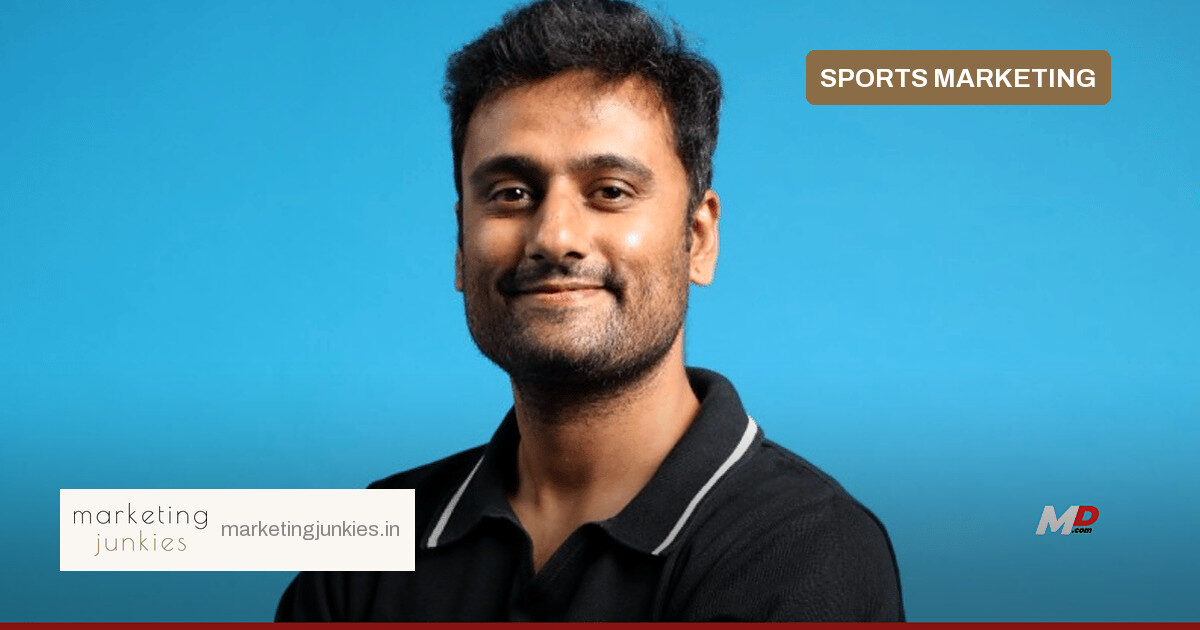
PUMA India has promoted Deven Deshpande to Lead – Sports Marketing at PUMA Sports India Pvt. Ltd., handing the sportswear brand’s sports marketing function to a marketer who has spent recent years building its social and influencer presence.
A social and influencer playbook meets sport
Deshpande moves into the role from Lead – Social and Influencer Marketing, where he focused on deepening engagement across digital platforms, social media and influencer-led campaigns. He has been with PUMA since 2019, working across multiple business and marketing functions.
His experience spans brand strategy, sports marketing, integrated marketing communications, digital and influencer marketing, consumer engagement, social media and B2B e-commerce. The blend of commercial operations and consumer-facing brand work is significant: it suggests the promotion is less about replacing a sponsorship specialist and more about connecting sports storytelling with digital distribution.
Why the move matters
Sports marketing in India is no longer only about athlete signings and event sponsorships. The discipline increasingly sits at the intersection of live sport, social content, influencer-led narratives and commerce. A leader who has managed social and influencer marketing brings a distribution-ready mindset to the role.
The appointment also signals how brands are structuring marketing teams. Instead of keeping sport and social in separate silos, PUMA India is putting one senior marketer in charge of the sport function after he has already proven himself in digital audience building.
- Cross-functional depth: From brand strategy and integrated marketing communications to digital, influencer and B2B e-commerce, Deshpande’s background covers both trade and consumer sides.
- Internal progression: The elevation reflects steady growth within PUMA, rather than an external hire brought in to reset the function.
- Sport plus digital: The shift points to sports marketing that is built for feeds, reels and creator partnerships, not just stadiums and jerseys.
What marketers can take from this
For marketing leaders, the promotion is a useful reminder that the handoff between social, influencer and brand work is becoming a leadership pipeline. Rotating high-potential marketers across digital and commercial roles can create leaders who understand both the audience and the business model.
There is a legitimate debate here for marketing organisations: should a sports marketing role go to a social-first marketer or to a traditional sponsorship specialist? PUMA India’s choice suggests that, for a brand competing for attention on Instagram and YouTube as much as in stadiums, digital fluency is now a core qualification.
The promotion lands at a moment when sports, digital engagement and brand storytelling are increasingly overlapping. For a sportswear brand, that means athlete partnerships need to become content systems, event moments need to become social moments, and creator distribution needs to connect with retail outcomes. A marketer who has worked across those areas can join the dots faster.
For agency partners and martech vendors working with PUMA India, the change is also a signal. Briefs may increasingly expect sports marketing ideas to be built for digital amplification and influencer layers from the start, not added after a campaign is developed.
Before PUMA, Deshpande worked with Choose To Thinq and Larsen & Toubro Infotech in Bengaluru, gaining experience in operations and technology. That early exposure adds another layer to the appointment: a sports marketer who has also worked in tech-enabled operations.
Source: Marksmen Daily