

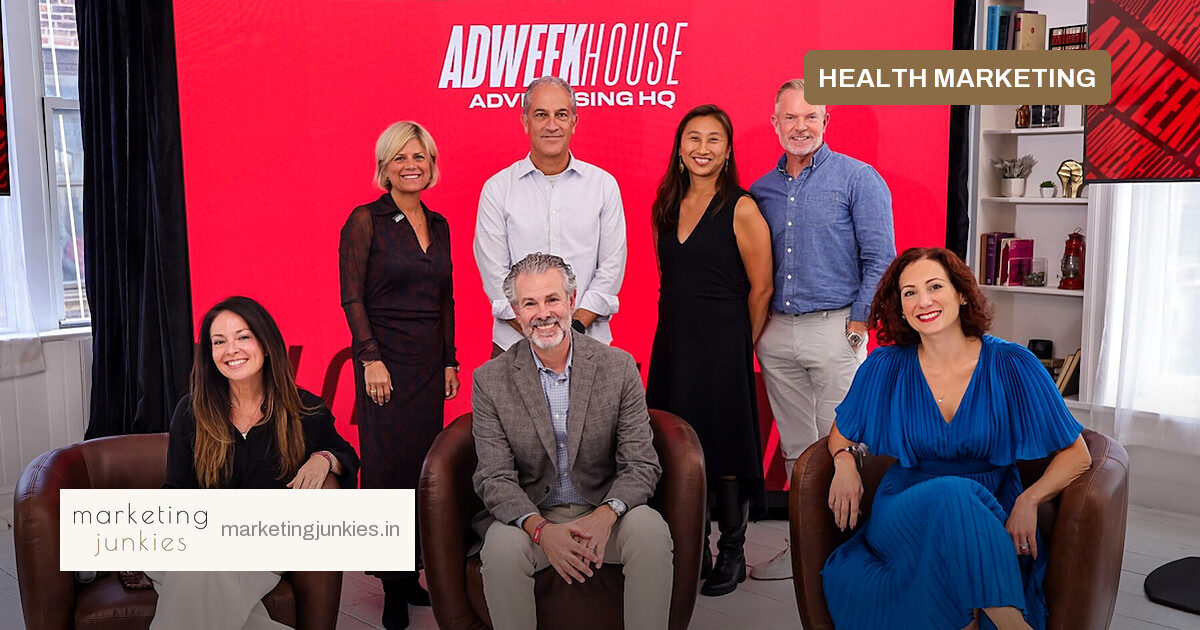
Healthcare used to begin with a symptom and a doctor’s appointment. Now it often begins with an Apple Watch alert, a TikTok scroll, or a question typed into an AI chatbot. That was the central observation at an ADWEEK House Advertising HQ group chat co-hosted with Publicis Health, where health leaders mapped the patient journey’s new shape—and the new skills marketers need.
The first signal can come from anywhere
Noom CMO Peter Scherr offered the clearest example. His father’s Apple Watch detected a heart anomaly before a doctor did, prompting care that eventually led to a pacemaker. “He consulted the device before his doctor,” Scherr said. The insight behind the story: consumer health influence now flows through devices, platforms, personal networks and clinical settings, often long before a formal moment of care.
Publicis Health global CEO Matt McNally framed the consequence. The empowered patient era gave people more tools and information, but also a more complex, continuous journey. In his view, the industry’s responsibility has shifted from providing information to helping people navigate healthcare.
Data is not the same as answers
Wearables, apps, blood work and other inputs are multiplying—and that is creating a new kind of overload. Scherr described the moment as one where there is “a lot of data masquerading as answers,” and consumers are overwhelmed. Health brands, he and others argued, can earn trust by structuring, contextualizing and simplifying that data rather than adding more noise.
AbbVie VP of consumer marketing Katie Baldwin put the marketer’s twin mandate in simple terms. “Do you move them or do you arm them?” she asked. Agencies have long been trusted to move patients emotionally; now arming them with credible, understandable information is just as critical before, during and after treatment.
AI is becoming a health influencer
Fannie McWatt, PhD, head of data and AI strategy at Publicis Health, said the conversation has to go beyond simply being findable in AI-powered search. The real challenge is recognizing AI as an influencer across the entire journey—and knowing what information needs to be retrieved at each decision moment.
McWatt also drew a line between confidence and accuracy. AI can sound certain while still being wrong, so health brands must be careful about how algorithms are built, how evidence is structured, and what context is supplied around it.
A simple journey framework
One useful way to apply the panel’s logic is to map the journey around the moments where patients make sense of their health, not just the channels where they see ads:
- Before care: Meet people where health questions already arise—wearables, social feeds, AI assistants—with credible guidance, not sales messaging.
- During care: Arm patients with accessible evidence that supports treatment decisions and reduces friction.
- After care: Anticipate the next likely need or side effect using connected data, without sliding into surveillance.
From knowing the patient to anticipating the need
McNally said the next phase of patient support will come down to anticipation. “It’s not enough just to know me. That’s table stakes,” he said. The real question is what a patient will need next—two weeks from now, after a side effect, at a moment of doubt.
Digitas Health chief creative officer Allison Ceraso captured the cultural shift: health is no longer simply in culture; it has become the culture. For Ceraso, the best health brands begin with the fears, questions and private moments that shape health decisions. “People don’t want your product all the time; they need it,” she said. “So, you have to come into the conversation with empathy and understanding.”
Craig Romanok, chief commercial officer at Digitas Health/Publicis Health, called this an inflection point the category has never seen before. The opportunity, the panel agreed, is to show up with the right context at the right moment—and make critical health decisions feel clearer, better timed and more human.
Source: Adweek