
Financial services marketing has spent a decade obsessing over dashboards. The next phase, according to Intuit, is about doing the work for the customer before they ask.
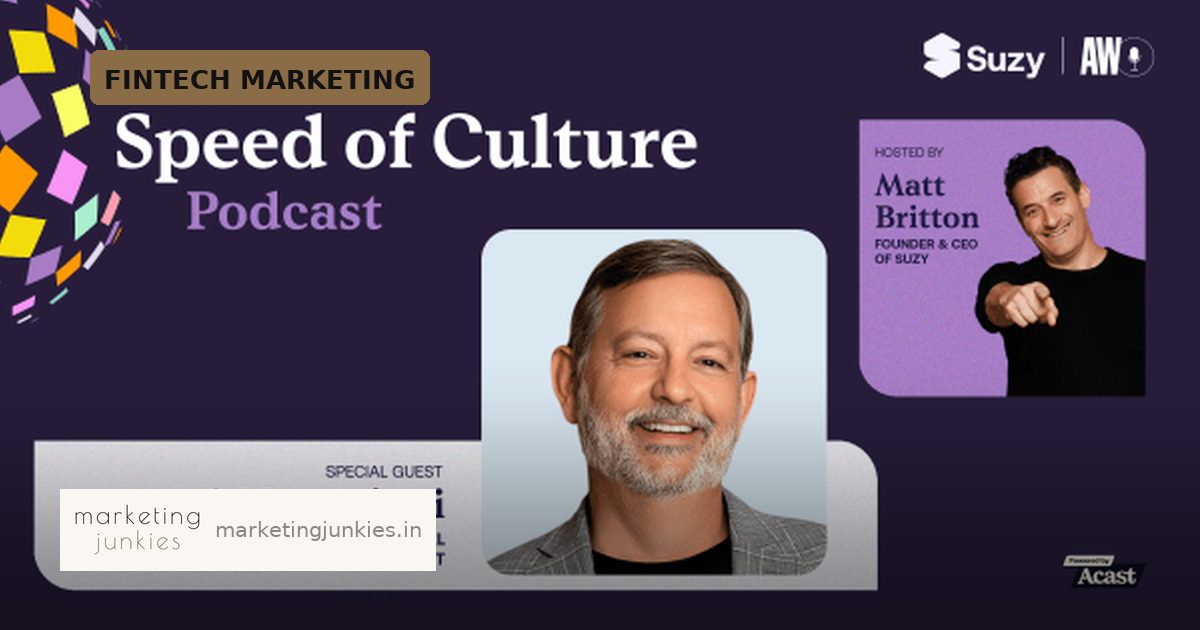
Speaking on The Speed of Culture podcast with host Matt Britton, Mark Notarainni, EVP and general manager of Intuit’s Consumer Group, laid out how the company is positioning TurboTax and Credit Karma around what he calls “kitchen table finances” — the small, real-time money decisions families make while balancing bills and checkbooks.
From data to action
Notarainni’s framing is useful for any marketer selling a utility product: giving people information is not the same as helping them act. Tasks that once meant sitting down with paper statements can now be completed instantly inside an app, which changes the value proposition from record-keeping to getting ahead.
That shift also changes the creative brief. If the product removes friction, the marketing has to dramatize relief rather than features.
AI as a proactive sentinel
The most concrete example he shared involves revolving debt. Intuit’s agents monitor a user’s borrowing situation and compare it against a marketplace of lenders, surfacing options that could save hundreds of dollars a month — automatically, without the consumer initiating a search.
For marketers, this is the difference between an AI feature and an AI benefit. Nobody buys “agentic monitoring.” People buy the outcome of not having to think about it.
The biggest paycheck of the year
Notarainni pointed to a moment most consumer brands overlook: the tax refund. For many Americans it is the single largest payment they receive in a year, averaging around $3,500. Intuit uses that moment to nudge users from short-term survival toward longer-term financial health — parking the money in high-yield savings or paying down debt.
That is a masterclass in moment marketing. The refund is a predictable, high-intent, high-emotion window, and the brand shows up with a next step rather than a congratulations message.
- Find the money moment. Every category has one — bonus season, appraisal cycles, festive payouts in India.
- Attach a decision, not a discount. The offer should reduce cognitive load, not add a choice.
- Measure the follow-through. Success is the action taken, not the impression served.
AI plus HI
The most quotable idea from the episode is Intuit’s “AI plus HI” philosophy — artificial intelligence paired with human intelligence. Technology handles data entry and repetitive processing; humans supply the confident advice people want before big life decisions.
Notarainni notes that the role of experts such as CPAs is shifting from manual labour to high-value advising, which in turn builds consumer confidence. He previously served as Intuit’s chief customer success officer, where he helped launch the company’s Virtual Expert Platform connecting users with human specialists. His Intuit tenure spans more than 15 years.
There is a lesson here for brands rushing to automate service journeys. Speed alone does not create trust in high-stakes categories — money, health, insurance, education. The winning architecture appears to be automation for volume, humans for the moments that carry anxiety.
Why it matters for marketers
Three takeaways travel well beyond fintech:
One, financial literacy is landing differently on younger cohorts, which means the tone of finance communication has to move away from institutional authority toward plain-language coaching.
Two, agentic AI is becoming a retention lever, not just an acquisition story. If the product saves money quietly in the background, churn drops without a campaign.
Three, keeping humans visible in an AI-heavy product is itself a positioning choice. As competitors race to look fully automated, “a real expert when you need one” becomes a differentiator worth advertising.
Notarainni also reflected on perseverance as the through-line of his career, arguing that with constant technological change, taking agency over your own skills and adopting new tools matters more than ever — advice that applies as much to marketing teams as to consumers.
Source: Adweek