

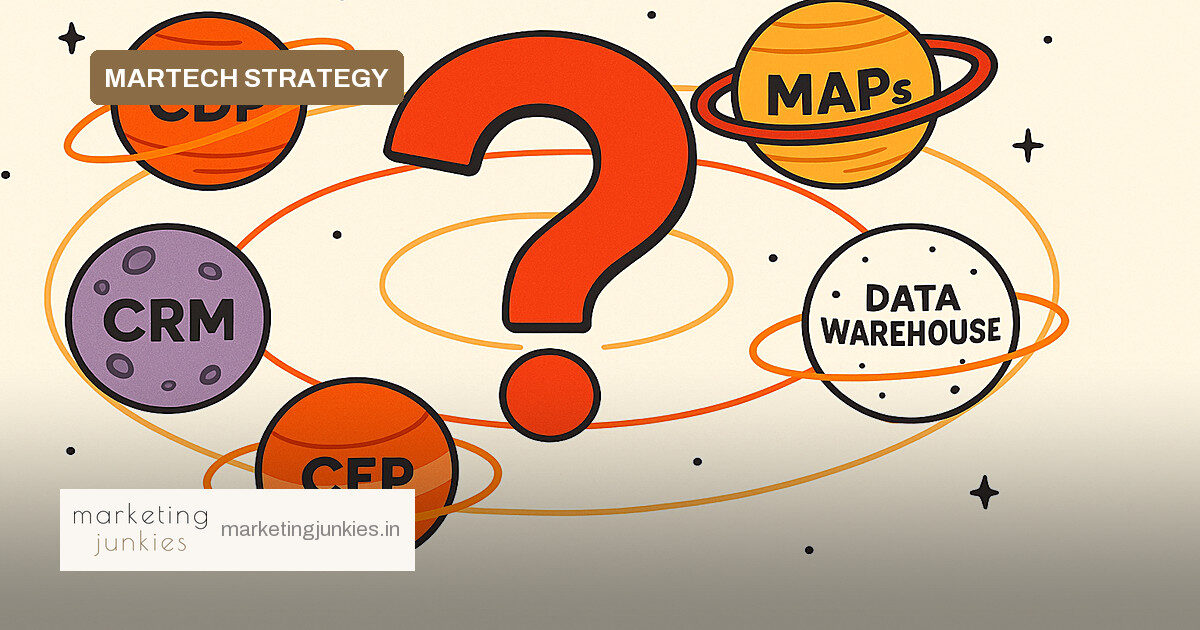
Marketing teams often assemble martech in the wrong order. They see a polished demo, hear a persuasive category pitch, and add a tool before they’ve named the problem it is supposed to solve. A new contributor piece on MarTech argues that this leaves teams with more dashboards, more conflicting data and less clarity about what is actually working.
The recommended sequence is deliberate: define the business problem first, audit the stack for the true gap, and only then let a tool compete for a place. Strategy sets the direction; the audit supplies evidence; the purchase follows.
Use the audit to reveal gaps, not to go shopping
A plateau is not a buying signal by itself. The more useful question is what the team is trying to achieve and what stands in the way. Once that problem is described in specific terms, it becomes far easier to judge whether an existing system is pulling its weight.
MarTech’s contributors suggest running the audit as a SWOT-style review against the strategy’s requirements rather than as a general tidy-up:
- Strengths: Keep load-bearing systems that offer clean data, consistent adoption and real integration, even if they are not exciting.
- Weaknesses: Treat workarounds and manual exports as signals—each one is a question the current stack cannot answer.
- Opportunities: Only here does a new purchase make sense, when the strategy demands a capability the stack genuinely lacks.
- Threats: Every extra system blurs ownership and invites data contradictions unless something above the stack decides what belongs.
AI makes the ordering mistake more expensive
Traditional martech often stayed quiet until someone used it. AI tools behave differently: they score leads, generate copy, route enquiries and automate decisions, sometimes with limited human oversight. A lead-scoring model without a strategic definition of a good lead will simply assign confident numbers to a flawed premise. A content tool without a positioning strategy produces polished but undifferentiated copy.
The danger is not AI itself; it is the speed at which it executes strategic ambiguity. That makes data quality, governance and team readiness strategy questions rather than technology questions.
Make every tool earn its seat
Disciplined teams name a problem, an owner and a success metric before approving a purchase. They also set a reevaluation date from the start and retire tools that no longer serve the strategy.
Before the next AI pilot, the piece suggests asking whether the capability is genuinely constraining growth right now, whether the underlying data is clean enough to support it, and whether the team can act on the output without adding another dashboard. If a tool cannot be tied back to the strategy after a defined period, it is noise—no matter how impressive the demo was.
Source: MarTech