
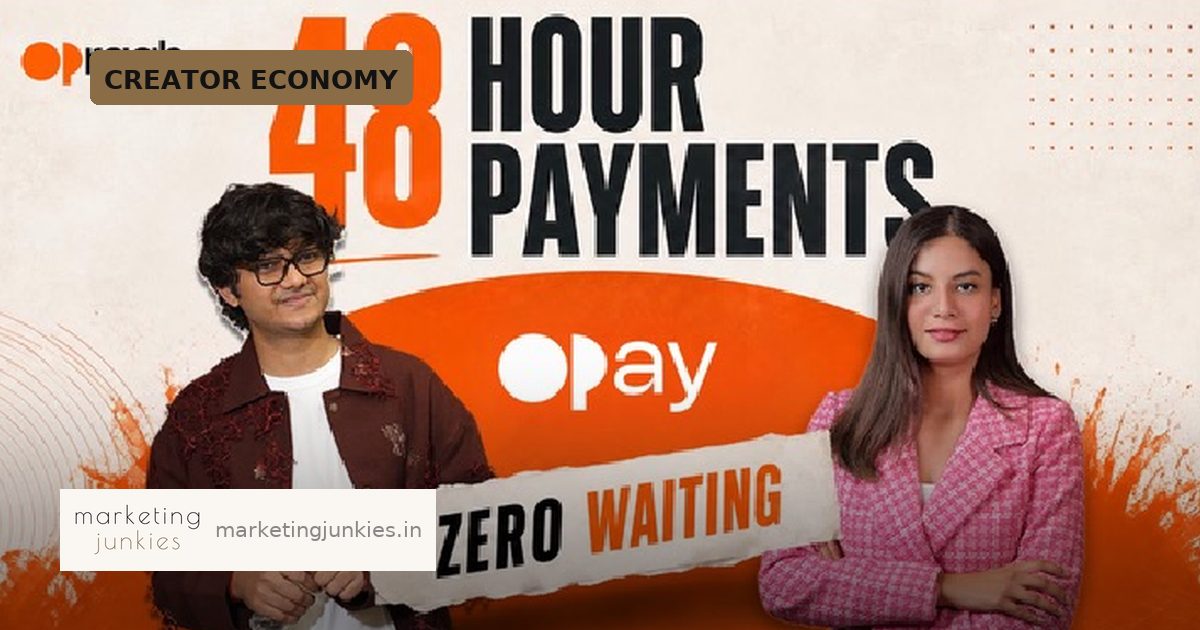
Creator management company Opraah has launched “OPay: 48 Hour Creator Payments”, an initiative under which its exclusive creators will be paid within 48 hours of a brand campaign going live — subject to the defined payment trigger, campaign completion and the required documentation being in place.
The move is a direct response to one of the least glamorous but most persistent problems in India’s creator economy: how long it takes for money to actually reach the person who made the content.
What Opraah has announced
The 48-hour commitment applies specifically to Opraah’s exclusive creator roster, not to every creator the company works with. The clock starts once the agreed payment terms are met, which includes campaign completion and the submission of the necessary paperwork and process steps.
Opraah frames OPay as part of a wider attempt to build what it calls a creator-first management ecosystem — one where the agency’s job extends past deal-making into process, transparency and day-to-day creator experience.
Co-founder Pranav Panpalia said creators today are running real businesses with teams and significant investment behind their work, and “shouldn’t have to chase money they’ve already earned”.
Co-founder Mansi Panpalia added that “professional creators deserve professional systems”, arguing that the trust creators place in a management company should extend to how their overall experience is handled, not just the opportunities they are offered.
Why payment cycles are a real business problem
The context here matters. A digital creator in 2026 is rarely a one-person operation. Many run small studios with editors, managers, production support, location and travel costs, plus recurring subscriptions and gear expenses. Those costs are paid upfront and in cash; brand money often arrives much later.
That timing mismatch creates a working-capital squeeze that looks a lot like what small agencies and production houses have dealt with for decades. The difference is that creators typically have far less negotiating power and no finance team to chase invoices.
- Fixed costs, variable inflows: salaries and shoot costs don’t wait for a brand’s payment cycle.
- Multiple layers: brand to agency to management company to creator — each hop can add delay.
- Documentation friction: missing POs, GST details or delivery proofs stall otherwise approved payments.
- Trust as a differentiator: for management firms, speed of payout is becoming as persuasive as the size of the brief.
What it signals for brands and agencies
For marketers, this is worth watching for two reasons. First, faster payout promises put quiet pressure upstream. If a management company commits to 48 hours, it needs predictability from the brands and agencies feeding it work — cleaner briefs, faster sign-offs, and approvals that don’t drift.
Second, payment reliability is becoming a talent-access issue. Creators increasingly choose representation and repeat partnerships based on how painless the money is. Brands with a reputation for slow settlements can find themselves quietly deprioritised when a creator has to pick between two similar briefs.
What to do about it
A few practical takeaways for marketing and partnership teams running influencer programmes:
- Front-load documentation. Agree deliverables, usage rights, invoicing format and tax details before the shoot, not after the post goes live.
- Define the payment trigger explicitly — go-live, delivery approval, or reporting sign-off — so nobody is guessing.
- Track payment timelines as a programme metric, alongside reach and engagement.
- Use payout speed as a negotiating asset. Faster settlement can earn goodwill, better slots and repeat collaborations.
Opraah says it expects the initiative to help push faster payment practices across the wider creator economy. Whether rivals match the 48-hour standard will be the real test of whether this becomes an industry norm or stays a differentiator.
Source: MediaNews4U