

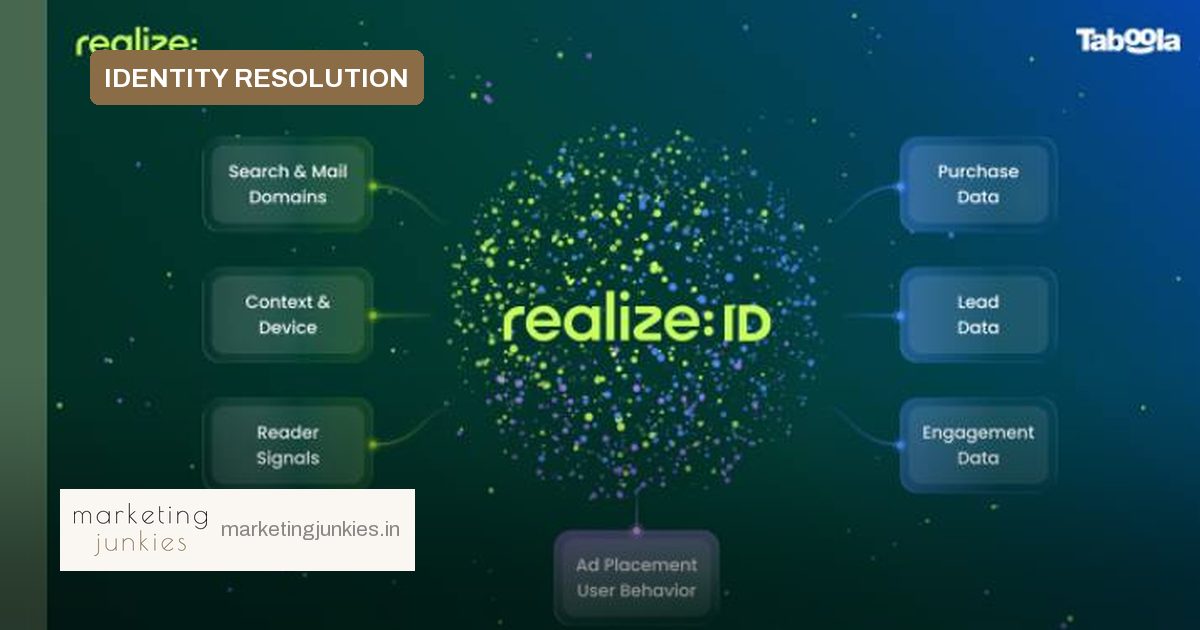
Taboola has announced a new unified identity offering called Realize ID, aimed at performance marketers who want to catch open-web purchase intent while it is still forming.
The launch extends the company’s Realize performance advertising platform. Taboola says the identity layer has shown up to a 2.4x increase in conversion efficiency through signal-enriched predicted intent models.
Why open-web identity is getting harder
Taboola points to a fragmented consumer journey: people move across devices, channels, content and transactional touchpoints including mail, news, search, price aggregators and generative AI platforms. That makes it harder for brands to connect early interest with a final purchase.
Realize ID attempts to solve this by turning different identifiers into a single, persistent profile of a high-intent prospect, especially after a consumer shows interest but before they commit to a competitor.
How Realize ID works
Because Taboola sits on both publisher and advertiser sides, it says it can capture real-time contextual data on visits. A marketer could follow a journey where someone reads a finance article, searches for bank accounts, sees a credit card ad, and then visits a landing page to open an account.
The identity system draws on Taboola’s first-party data around media consumption, ad interactions and buying behaviours. Signals include:
- Content engagement, scroll depth and time on site
- Ad clicks, video views and search keywords
- Conversion data and mid-funnel actions such as starting a quote
Taboola says AI combines these signals across the buyer journey to predict purchase intent before it becomes obvious.
What advertisers should watch
The launch signals that performance marketing is moving beyond reliance on search and social. If established channels are hitting efficiency ceilings, as Taboola’s leadership suggests, teams may need to look at identity and intent capture across trusted open-web content environments.
“The value of Taboola and the data behind Realize lies in its ability to capture genuine purchase intent, not just casual browsing,” said Sameer Jain, Head of E-commerce & D2C Business, Axis Max Life Insurance.
Subendu Maity, AVP – Performance Marketing & Digital, Motilal Oswal Asset Management Co. Ltd., said the data helps identify audiences with genuine investment intent and engage them at the right moment.
Adam Singolda, CEO at Taboola, framed the shift bluntly: AI is changing search behaviour and established channels are hitting efficiency ceilings, making incremental growth harder. Realize ID’s pitch is to help marketers capture consumers in trusted environments beyond search and social, where buyers research, compare and decide across independent content touchpoints.
For performance teams, the practical shift is to treat mid-funnel signals as conversion inputs, not just engagement metrics. The use cases in insurance and asset management suggest the sweet spot is considered purchases where consumers compare providers before acting.
Marketers evaluating Realize ID should ask whether their measurement connects mid-funnel signals such as scroll depth, quote starts and ad engagement to conversion. If not, they may be missing the window when a buyer is comparing options and before they choose another provider.
Source: MediaNews4U