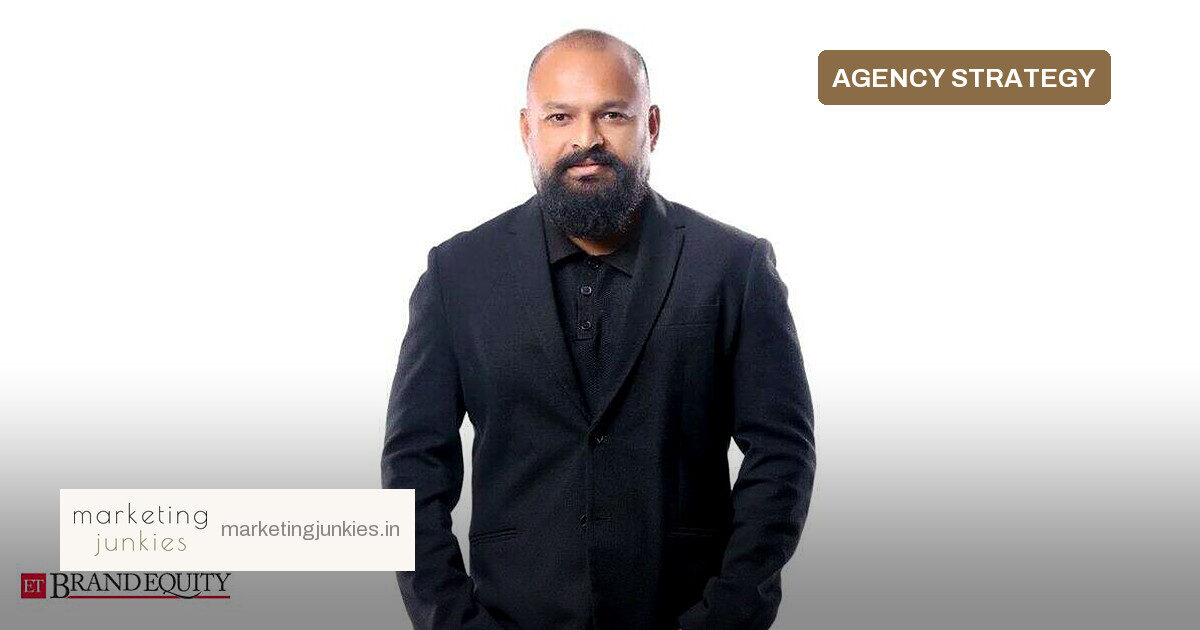
Nine months into his mandate as president, client solutions, South Asia at WPP Media, Shekhar Banerjee is not tearing up the playbook. Instead, he is recalibrating the agency around three levers: talent, proprietary data and AI-led execution.
Shorter planning cycles
Banerjee believes five-year plans have lost relevance in a market that changes every few years. He points out that generative AI was not part of agency vocabulary three years ago. His preferred horizon is 1.5 to 3 years, with the immediate year focused on operational priorities that create client impact.
“A 1.5- to 3-year window is a much more realistic horizon for goal-setting,” he says.
Three operating priorities
- Reskilling: onboarding teams onto open AI toolkits
- Data-driven differentiation: mixing first-party client data, proprietary search data and partner data
- AI-driven execution: automating e-commerce and operational workflows
Agency media plans often look identical because they draw on the same platform signals, Banerjee notes. WPP Media’s answer is a proprietary data mix to build bespoke targeting and break what he calls the “sea of sameness.”
Quick commerce shifts e-commerce
E-commerce now represents more than 10% of WPP Media’s business, and 60-70% of that volume comes from quick commerce. Because e-commerce execution remains highly manual, the agency is deploying machine learning algorithms to automate and optimise at scale.
The creative side of automation
As automation handles more execution, Banerjee argues differentiation must rest on two pillars: the algorithmic side and the human side. Agency teams previously spent 70-80% of their time crunching numbers. AI takes on that heavy lifting, freeing people to interrogate the brief and re-engage with media and content partners.
That shift is already visible in WPP’s work with Ogilvy on brands such as Mondelez, Colgate, Amazon and Reckitt. “Showing up as one team in pitches is something everyone tries to do, but the real impact happens in client execution,” he says.
Challenging briefs constructively
Banerjee credits the agency’s culture of “positive provocation”: before rushing to execution, teams ask whether there is a different way to frame the problem. Indian marketers, he says, are investing in a single unified brief across disciplines and spending more time working shoulder-to-shoulder in agency offices.
Brands as content creators
Banerjee sees durable brand participation as resting on cultural participation and occasion ownership. He points to Cadbury 5 Star, whose “Do Nothing” proposition makes viral social participation central to its narrative.
But he also warns boards to remember the business they are in. A viral comment may earn likes, but if it does not align with the brand core or drive outcomes, it is noise.
On micro-dramas, he notes the format emerged in China and is built on episodic cliffhangers that drive paid subscriptions. Brands should apply a first-principles filter: is this building a differentiated brand space, or just chasing reach? In India, reach is relatively easy — brands can hit 100 million people on almost any growing platform — but being everywhere risks standing for nothing.
Creator economy needs structure
Consumers now prefer raw, authentic content over polished influencer ads, Banerjee says. For creator marketing to become a structured growth driver, the industry needs standardised systems for discovery, brief approvals, payments and brand-safety auditing.
Outlook for the year-end
Banerjee remains optimistic after a solid H1. Traditional media projections were recalibrated for a few mediums, while e-commerce grew strongly. The agency is watching monsoon patterns and inflation risks, but festive bookings remain positive.
He expects two trends to close 2026: the maturation of Connected TV and machine-learning-driven execution. Wavemaker (WPP Media) won Agency of the Year at the ET M&E Awards, ET Trendies Awards and India DigiPlus Awards this year.
Source: ETBrandEquity.com