

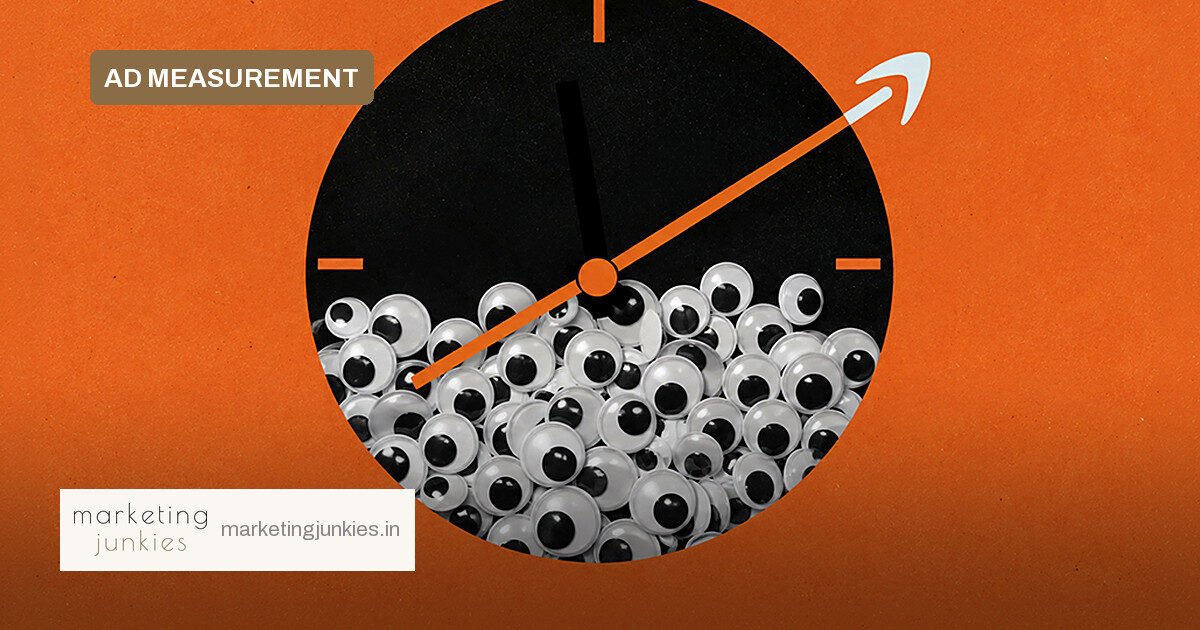
Amazon Ads is making a bolder claim about its value: standard attribution windows are too short. After studying more than 2 million campaigns that ran on its ad products in June, Amazon estimates that around 20% of a brand’s sales value on Amazon shows up after the typical seven- to 30-day window closes.
The finding matters because media planners increasingly treat platform-reported conversions as the whole story. Amazon wants them to plan around a full year instead, and it is building measurement tools to support that shift.
How Amazon is making the case
Amazon has been building toward longer-term measurement since October 2024, when its long-term sales metric entered closed beta. The model identifies shoppers new to a brand—those who have not bought from it in the past year—and tracks their first key actions after seeing an ad, such as a branded search or add-to-cart. It then applies the brand’s historical 12-month returns from similar shoppers to project what a campaign will generate over the next year.
“What we actually find is that roughly 20% of the sales value for a brand shows up over time and isn’t captured in that immediate attribution window because that’s just a cutoff date for measurement,” said Lily Tong, director of measurement at Amazon Ads. “It doesn’t mean that you didn’t create value.”
- Long-term sales metric: in closed beta since October 2024, projecting 12-month returns from new-to-brand actions.
- Full-funnel campaigns: announced last November to shift budgets across Sponsored Products, Sponsored Brands, display and streaming.
- Clean room lookbacks: extended this spring, with actual-versus-projected sales comparisons coming soon.
- Omnichannel metrics: coverage includes consumer packaged goods and now automotive.
Why brand advertisers should care
Tong says brand advertisers have the most to gain because their spend has been hardest to value. Without a dollar figure, they fall back on brand lift surveys or proxy signals such as search, making brand ads hard to compare with performance advertising. A long-term sales estimate could help marketers decide how much budget goes to upper-funnel activity versus direct response.
Amazon is not asking advertisers to take its numbers on faith. The company says it will soon let marketers check whether projected long-term sales came true against actual sales. Those checks matter because a branded search or add-to-cart is not a purchase; only some shoppers convert, though many who add to cart return within 12 months, according to Tong.
Agencies remain split
Some agency teams see long-term sales as a way to move past last-touch attribution and show how ads guide shoppers from discovery to purchase. Others are more cautious. Radoslav Mazganov, vp and head of technology at Hyperzon by Moburst, said: “So far, we haven’t seen it move the needle. What we do see is off-Amazon spend showing up in the reports across our campaigns, with no sales behind it.”
Many skeptics prefer their own marketing mix models, which often need around 18 months of historical sales data. Amazon currently provides 90 days by default, though access has improved this year through a beta program. Bryce Hamlin, vp of data intelligence at Power Digital, framed the uncertainty: “If the right data exists we see full visibility but that’s a huge ‘if’ depending on where the data is coming from.”
The bigger play
Amazon’s omnichannel metrics take attributed Amazon ad exposures and measure sales they drive elsewhere, starting with CPG and now automotive. Tong wants those numbers in standard end-of-campaign reports, especially for smaller advertisers that find marketing mix models “expensive and infrequent.” One study with an offline sales partner found Amazon’s streaming TV ads returned more than $2 in incremental off-Amazon sales for every dollar spent.
For marketing teams, the practical move is to test the metric rather than ignore it: ask for the projected long-term sales estimate, then require a comparison with actual sales before shifting budgets. Keep independent incrementality or marketing mix measurement running, especially for streaming TV spend.
The stakes go beyond measurement. If Amazon can prove its ads drive sales across the open web and in stores, it becomes the base of the media plan rather than just a retail search budget, with more money moving into its DSP as search budgets shrink.
Source: Digiday