
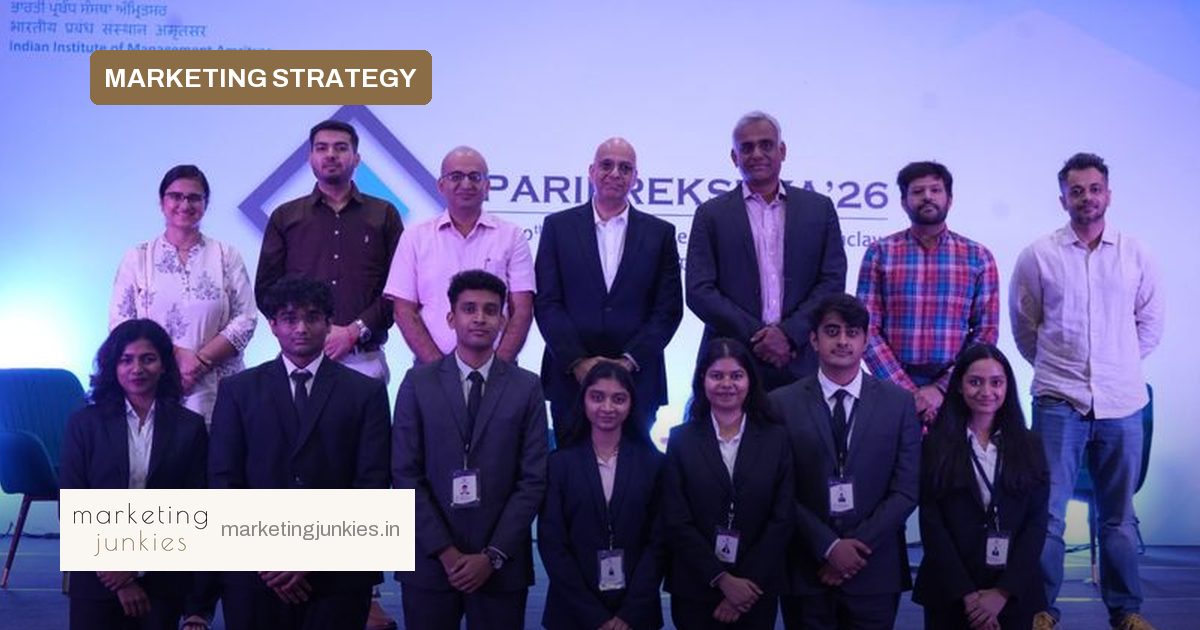
IIM Amritsar’s tenth annual finance and marketing conclave, Pariprekshya’26, put two big shifts in front of students and professionals: capital is moving into private and alternative assets, and marketing’s centre of gravity is moving from reach to relevance. Held at Hyatt Regency, the event brought together senior leaders from finance and marketing to connect classroom ideas with what is actually happening inside companies.
What the finance track signalled
The opening session focused on alternative investments in portfolio management. The core message was that India’s investment landscape is broadening beyond public markets, with alternative assets gaining traction for alpha generation, long-term capital and diversification.
Vishal Raigagla, finance controller and head of FP&A at Raymond Lifestyle, used his demerger experience to explain the migration of capital from public to private markets and the opportunities emerging in infrastructure and other sectors. Sambasivan G, CFO of Tata Play, brought more than three decades of finance leadership to the conversation, pointing to the expanding role of private capital in long-term infrastructure and growth.
For marketing professionals, this matters because shifts in capital create new categories, new buyer expectations and new vocabulary for brand and communication work. Whether you are marketing financial products or B2B solutions, understanding where money is flowing helps you speak the language of modern investors and decision-makers.
For brand managers, this is not about becoming investment experts. It is about spotting the language shift: when clients, partners and audiences talk about alternative assets, infrastructure funds or private credit, the marketing brief will demand clarity, education and trust signals rather than product-only claims.
Beyond the scroll: a clearer marketing ladder
The marketing discussion, themed “Beyond the Scroll: Winning Minds, Shaping Markets,” challenged the idea that visibility is enough. Panellists argued that effective marketing has to move past reach and impressions toward relevance, recall and meaningful engagement.
Srikrishna Chintalapati, VP and head of growth marketing at ITC Infotech, whose work has explored AI-powered marketing and digital trust, framed the journey as a progression: attention, connection, influence and impact. That ladder blends B2B and B2C thinking—attention may be the entry point, but connection and influence are where durable results live.
Anand Subbiah, executive director for asset and wealth management marketing at JPMorgan Chase, reinforced the importance of starting with consumer needs and a clear strategy before building campaigns. That sequence may sound simple, but it counters the common channel-first habit of producing content and hoping it lands.
What practitioners can take away
- Follow capital, not just content trends. Alternative investments, infrastructure and private markets are reshaping the financial narratives marketers may need to support.
- Move metrics beyond reach. Add relevance, recall and engagement signals to evaluate campaigns against influence, not just visibility.
- Use the attention-to-impact ladder. Plan creative with a clear path from capturing attention to building connection, influence and measurable impact.
- Ground campaigns in consumer insight. Establish strategy and audience need before selecting channels or formats.
For students and young marketers, Pariprekshya’26 is a useful reminder that industry-academia conversations can compress years of experience into a few focused lessons. The challenge is turning those lessons into everyday marketing habits.
Source: IIM-Amritsar hosts finance & marketing conclave – The Tribune