A new advertising surface is taking shape inside large language models, and the early playbook is being written around a familiar marketing instinct: keep sponsored messages away from content that could hurt the brand.
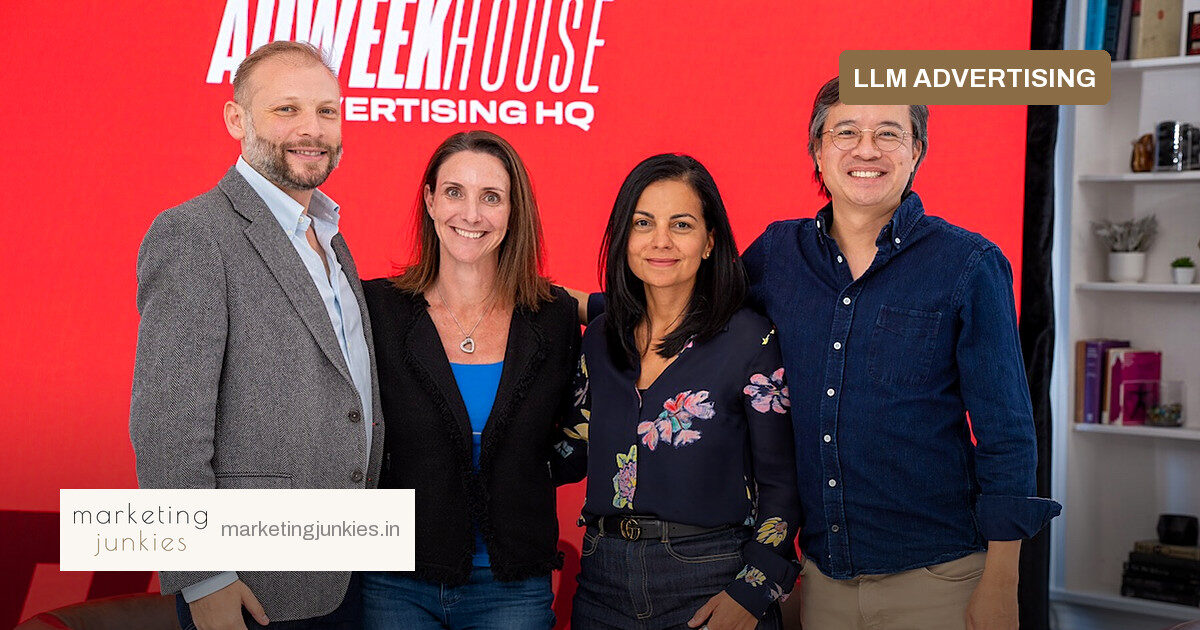
At an ADWEEK House Advertising HQ panel co-hosted with Integral Ad Science, leaders from OpenAI, Omnicom Media and IAS discussed how marketers can operate inside LLM environments without giving up control over context, suitability and trust.
One model for answers, one for ads
OpenAI’s Samantha Jacobson, VP of monetization partnerships, said ChatGPT runs one LLM for organic chat and a separate LLM for advertising. That divided setup allows her team to work with brands on suitability, giving advertisers control over when and where an ad shows up.
“Advertising gives merchants the ability to influence how they’re being surfaced and when they’re being surfaced,” Jacobson said. “We’re giving insight and controls to advertisers but also making that sponsored experience entirely separate from the organic experience.”
Old brand-safety logic, new surface
Ben Hovaness, EVP of global specialized capabilities at Omnicom Media, said the uncertainty around what ads consumers see has a historical analog in radio, TV and paid social. What makes brand safety workable, he argued, is that advertisers can attach guidelines to where ads appear, such as avoiding news, politics or social issues.
The same decision logic can govern LLM ads. Brands may never know exactly why an organic response said what it said, but they can still append a rule controlling what ads appear next to that content.
Guardrails before reach
OpenAI’s existing model guardrails already avoid showing ads during what Jacobson described as “sensitive or confidential conversation.” The company’s partnership with IAS provides oversight of whether ChatGPT is honouring those criteria.
“We would rather not show an ad than show an ad in a questionable environment,” Jacobson said.
IAS CEO Lidiane Jones said generative AI will evolve quickly, and the industry will need to keep pace. Starting with trust and transparency, she said, gives advertisers a foundation for safety and suitability as contextual information becomes more rapid.
Why this matters for marketers
Search and social proved that advertising can thrive next to dynamic content. LLMs move faster: every answer is generated in real time, so adjacency risk is harder to predict. A separated ad model signals that platforms are designing for controllability early, not bolting it on later.
For marketing teams, that changes the questions to ask before spending. Treat conversational AI as a new inventory class rather than a simple extension of search.
- Ask platforms how organic and sponsored outputs are separated.
- Set placement rules before scaling budgets, not after an incident.
- Look for independent oversight—guardrails matter as much as reach in conversational AI.
The early message from OpenAI, Omnicom Media and IAS: LLM advertising is a journey that is just beginning, but the ground rules are being set with trust first.
Source: Adweek