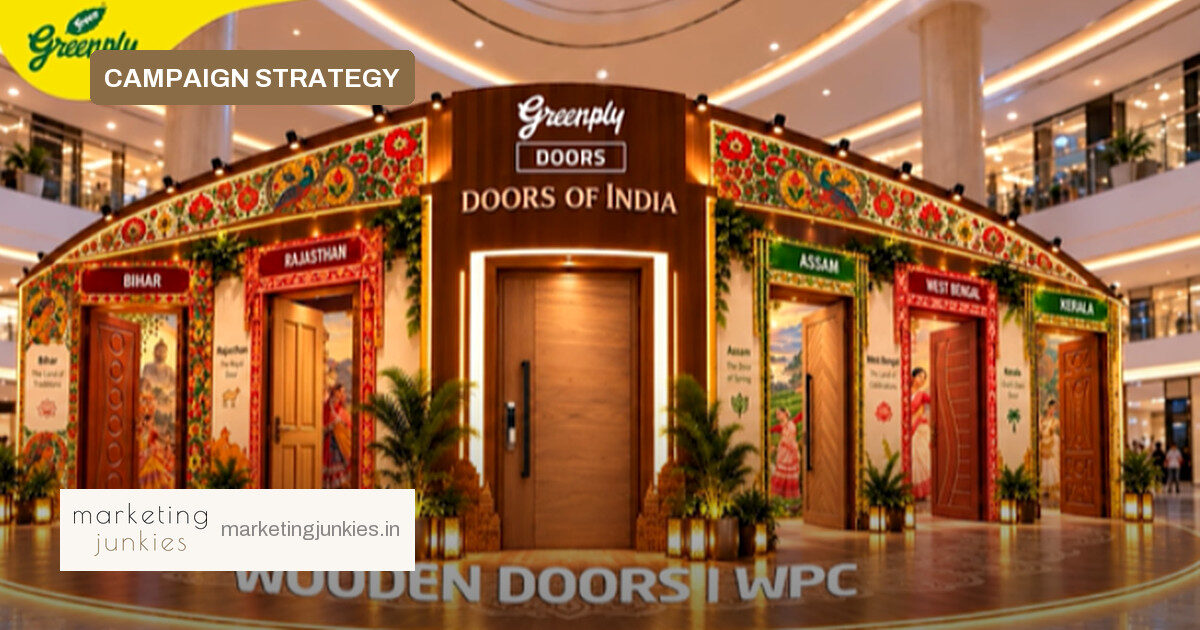
Greenply Industries has launched ‘Doors of India’, a new campaign for Greenply Doors that sets aside the usual category talk—durability, finish, security—and asks Indian households to see the door as a silent witness to the stories that make a house a home.
The premise is simple: doors are present for the moments people remember. The film moves through a child’s first steps, a daughter beginning a new journey after marriage, family celebrations and the everyday act of welcoming someone home. In every frame, the door is not an object in the background; it is the frame through which the memory lives.
From utility to emotional territory
Most door advertising competes on functional proof: thickness, lamination, locks, hinges. ‘Doors of India’ deliberately reverses that order. Greenply uses a means-end-chain style of positioning, skipping past product attributes and functional benefits to the emotional payoff—belonging, change, hope and togetherness.
The film also leans into India’s plurality. It showcases hand-carved wooden entrances in ancestral homes, sturdy doors in city apartments, brightly painted village entrances and contemporary designs in newly built homes. It brings interior doors into the story too—bedrooms, kitchens and pooja rooms—so the product promise covers the entire home, not just the front entrance.
Why it matters for marketers
The shift lands at a time when Indian consumers are treating home interiors as an expression of personal identity. For a considered purchase like a door, that changes the conversation. Feature claims can be compared across brands; an emotional association tied to family milestones is harder to replicate. This is not merely a creative choice. It is a strategy to strengthen awareness of Greenply Doors while differentiating from competitors still marketing wood panels and locks. For marketing professionals and students, the brief is a clean example of how to move a commodity-shaped conversation toward meaning without abandoning the product.
There is a usable lesson here for any brand in a functional category:
- Find the ritual, not the room. The door does not just close a space; it watches over arrivals, departures and celebrations.
- Make regional detail do the equity work. One national narrative feels local because the film shows many Indian door styles rather than one premium urban setting.
- Widen the category frame. Including bedrooms, kitchens and pooja rooms moves Greenply from a main-door brand to a whole-home brand.
What the brand says
Sanidhya Mittal, Joint Managing Director, Greenply Industries Limited, described the intent behind the campaign:
“A home is defined by much more than its physical structure. It is shaped by the relationships, experiences and memories that come together within its walls.”
For Greenply, the goal is to build a meaningful association with Indian homes rather than lead with product features alone.
What comes next
The campaign film was scheduled for release on October 21, 2026, supported by media outreach across national publications and relevant trade platforms. If the creative lands, it will give Greenply Doors a more distinctive memory structure in a category that has rarely been sold this way in India.
Source: MediaNews4U