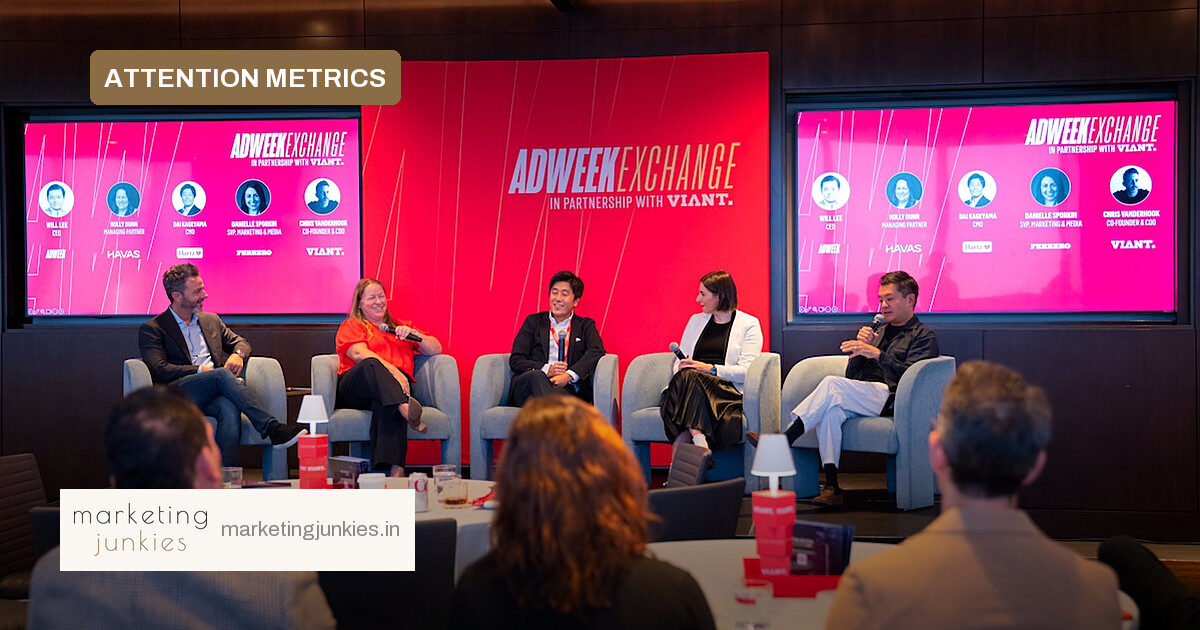
An ad can earn millions of impressions and still fail the only test that matters: did anyone actually watch it? That question anchored ADWEEK Exchange in New York, part of Viant and ADWEEK’s national roadshow on attention data.
The attention gap behind TV viewing
Yan Liu, CEO of TVision, put the problem in stark terms. Americans spend nearly four hours a day watching television, but only around nine minutes of that is genuine attention to commercials. Reach, viewability and completion rates, he argued, don’t reveal whether a person was looking at the screen. Attention measurement does.
What Coca-Cola’s AI ad showed
Liu used new data from Coca-Cola’s AI-generated ‘Holidays Are Coming’ film, which drew online criticism after its 2025 release. Despite the backlash, the ad generated a Creative Attention Score of 101 — just above Coca-Cola’s average of 100. TVision’s second-by-second tracking also found attention rose when the lights came on and the brand’s logo appeared.
“In general, the performance is on par, and sometimes it’s actually better than average creative,” Liu said. PJ Pereira, co-founder and creative chairman of SILVERSIDE and Pereira O’Dell, added that real-time creation is powerful, but making work resonate still takes experience, judgment and an understanding of storytelling. The data, he said, shows what happens when those disciplines meet.
From attention to action
Brand leaders said attention data is useful only if it moves decisions. Danielle Sporkin of Ferrero described a ‘creative umbrella’ approach — building major campaigns and then tailoring assets under that umbrella. For Kinder Joy, that means one message for grandparents and another for Harry Potter fans.
Dai Kageyama of Hartz said the company brought retail media planning, execution and reporting in-house after struggling to isolate what CTV actually contributed when several campaigns ran at once. Holly Dunn of Havas Media Network put the media buyer’s view simply: “Not every impression is equal.”
Chris Vanderhook, COO and co-founder of Viant, said marketers want two things: tie attention to outcomes, and don’t make them fight internally to activate it. Automating those decisions, he suggested, makes attention data easier to act on.
Tim Vanderhook, Viant’s CEO and co-founder, framed attention as a gateway rather than a final result. “Attention is not the outcome; it is the gate that opens up and allows the downstream outcomes to happen,” he said.
How to start using attention data
The closing advice was deliberately small and testable:
- Pick one campaign, one business KPI and one quarter.
- Benchmark creative against your brand’s own average, not an absolute score.
- Treat attention as a gate to outcomes, then compare results after changes.
Source: Adweek