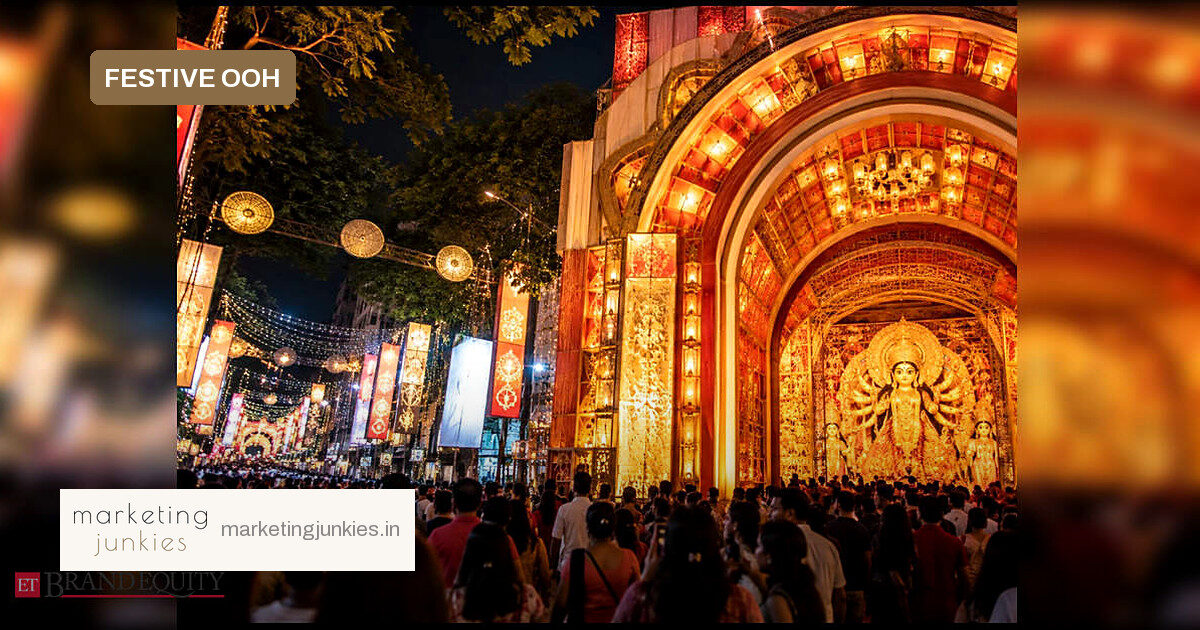
Kolkata’s Durga Puja has turned into one of India’s most expensive outdoor advertising stages this year. Industry estimates put festive OOH spending up 25-30 per cent over 2025, and some media planners see growth running as high as 30-40 per cent as brands chase pandal-hopping crowds across the city.
Bigger boards are winning the budget
The money is moving towards fewer, larger-format executions rather than a long tail of small sites. Emami’s snacking brand WeMe has covered more than 75,000 square feet across roughly 60 Kolkata locations with temporary outdoor media, sampling and food stalls. Eden Realty Group says its OOH investment is up tenfold year on year, while apparel brand SUTA has raised Kolkata spends by about 50 per cent and shifted from pole kiosks and station screens to prime large-format billboards.
Macaw Paints is running its biggest festive campaign yet with pandal branding, installations and a drone show, and BPL has put up a large-format billboard in Salt Lake themed on Dhunuchi Naach.
Why Puja works differently for OOH
Unlike routine commutes, pandal-hopping keeps people outdoors for hours, moving between neighbourhoods and social gatherings with a mindset built for discovery. Rashi Ray, director of Kolkata agency Response India, says that makes consumers unusually open to outdoor messages, which at their best, she said, “become another expression of the festival rather than a commercial interruption.”
Who is spending
The category mix is familiar but more intense this season:
- FMCG and food: snacks, biscuits, beverages, ice cream and spices lead the pack.
- Established sponsors: paints, cement and TMT brands hold steady.
- Festive shopping starters: jewellery, fashion and retail use Puja to open the festive season.
- Emerging spenders: real estate, consumer durables, e-commerce and beauty are growing fast.
Regional and local advertisers are also stepping up as neighbourhood pandals become more organised, giving smaller brands a route to compete with national players in their own catchments.
Campaigns that bought cultural codes
Sunfeast Mom’s Magic is putting real consumers on Kolkata billboards for its ‘Ei Pujo, Shine Koro’ campaign, alongside gate-arch branding at five pandals including Shree Bhumi and Ekdalia. Suraj Kathuria, VP and head of marketing for biscuits at ITC Foods, said the opportunity lies in understanding the cultural codes that shape consumer behaviour during moments like Pujo.
Yes Madam, which entered Kolkata last year, has installed a giant sindoor-dabbi at Singhi Park pandal, drawing on Sindoor Khela, complete with a photo spot and a playful disclaimer that its Korean Glow Facial cannot match the glow of sindoor.
The pricing and measurement catch
Premium inventory does not come cheap. OOH rates at prominent festive locations are up about 20-30 per cent, digital’s share of festive media has risen to roughly 50 per cent from around 40 per cent last year, and DOOH spending is expected to grow 25-30 per cent. A state grant cut to Rs 1 lakh per committee and a Rs 600-per-sq-ft Kolkata Municipal Corporation charge on pandal LED advertising have pushed committees to lean harder on sponsorships.
Yet most Puja OOH still lacks audited audience measurement. Agarwaal, whose proprietary PAM Model measures Presence, Attention and Memory, advises advertisers to judge these buys as brand association and consumer experience rather than relying on reach claims.
For marketers, that means weighing visibility, engagement and business impact together, and negotiating where the premium pressure is lighter. Smaller neighbourhood pujas offer more room to talk rates, while prime pandal routes are likely to stay firm through Kali Puja and Diwali.
Source: ETBrandEquity.com