
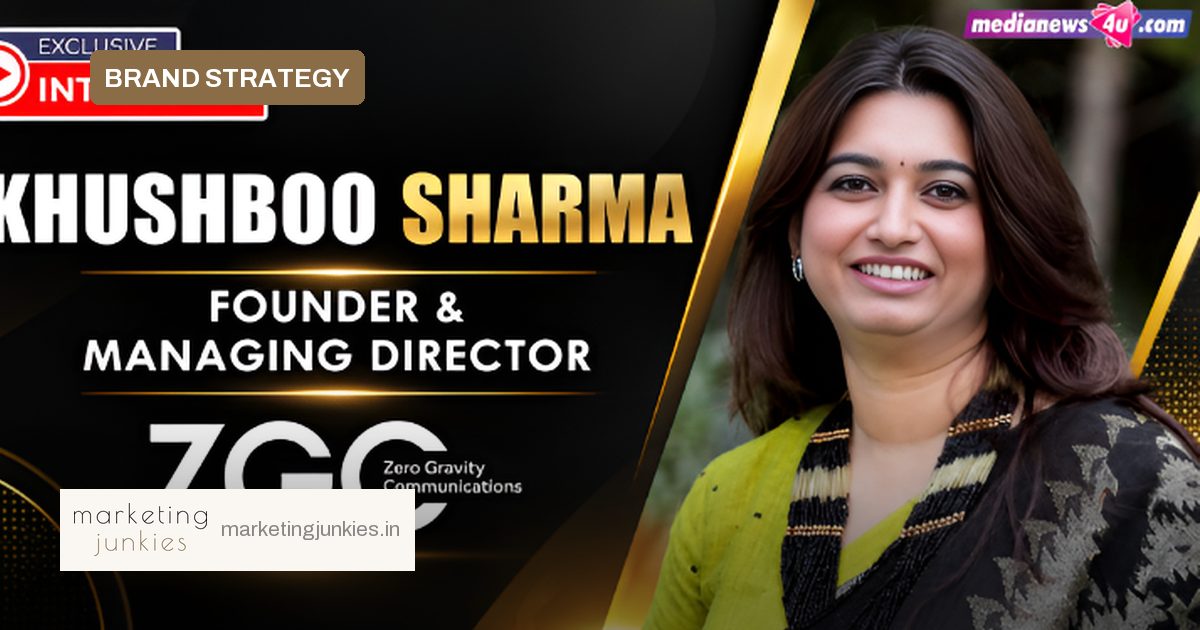
Zero Gravity Communications has grown from an Ahmedabad independent shop founded in 2014 into a 135-plus-person integrated agency serving more than 500 clients across 35-plus industries. The agency, which also has a Mumbai presence and Meta and Google Partner status, is part of a wave of Indian independents winning with speed and founder-led client relationships.
Founder and Director Khushboo Sharma recently outlined the agency’s view on AI, legacy brands and the changing shape of engagement. The central warning: as more teams use the same AI tools, “competent sameness” will spread—and that may reward brands with a distinctive human truth.
Legacy brands are excavating their story
According to Sharma, legacy Indian brands are changing because both their consumers and competitors have changed. Younger buyers have infinite choice and little patience for advertising that talks at them, while D2C challengers have reset expectations around voice, speed and intimacy.
The winning approach is not to abandon a heritage story but to excavate it. In menswear work, for example, the agency frames legacy as raw material rather than a museum piece. The task is to take an existing truth and retell it in a contemporary idiom.
Experiences create memory; ads only rent attention
Sharma draws a practical distinction: an ad interrupts, while an experience invites. As media costs rise, brands are asking harder questions about what an impression is worth. Experiences—whether an ambient installation or in-store live music—turn a brand into a memory and generate shareable content that feeds weeks of storytelling.
The shift also reflects a broader move from buying attention to earning it. Bought attention is rented; earned attention compounds.
AI should multiply a human idea, not replace it
Zero Gravity runs an internal Centre of AI Excellence. Its operating rule is that AI compresses the distance between idea and expression, but it cannot decide which option matters. Taste, cultural instinct and the courage to kill a safe idea remain human.
The risk Sharma highlights is important for marketers: if everyone prompts the same tools with the same category clichés, the result is a sea of average. In that environment, brave brands get cheaper distinctiveness. But originality still has to come from the business—founder story, product truth, community language—not from the model.
Campaigns and always-on are not the same job
Sharma uses a useful metaphor for teams trying to balance both: campaigns are fireworks; always-on is a fireplace. A campaign creates a spike of fame around a launch or season. Always-on is the daily practice of being useful, entertaining or interesting between spikes.
Frequency without an editorial spine, she cautions, is just noise. The stronger model is an annual brand platform with campaigns as peaks and always-on content as the connective tissue.
What marketers can do now
- Audit legacy truths before chasing new ones: find the real reason the brand mattered and retell it for a different buyer.
- Design for earned attention: create experiences that people photograph, share and remember.
- Use AI for expression, not judgment: speed up decks, mockups and options, but reserve the final call for human taste.
- Separate campaign peaks from always-on rhythm: keep a clear editorial spine between spikes.
The broader takeaway for marketing professionals is not anti-AI. It is a reminder that when production gets cheaper for everyone, the value shifts upstream—to insight, truth and the courage to be different.
Source: MediaNews4U