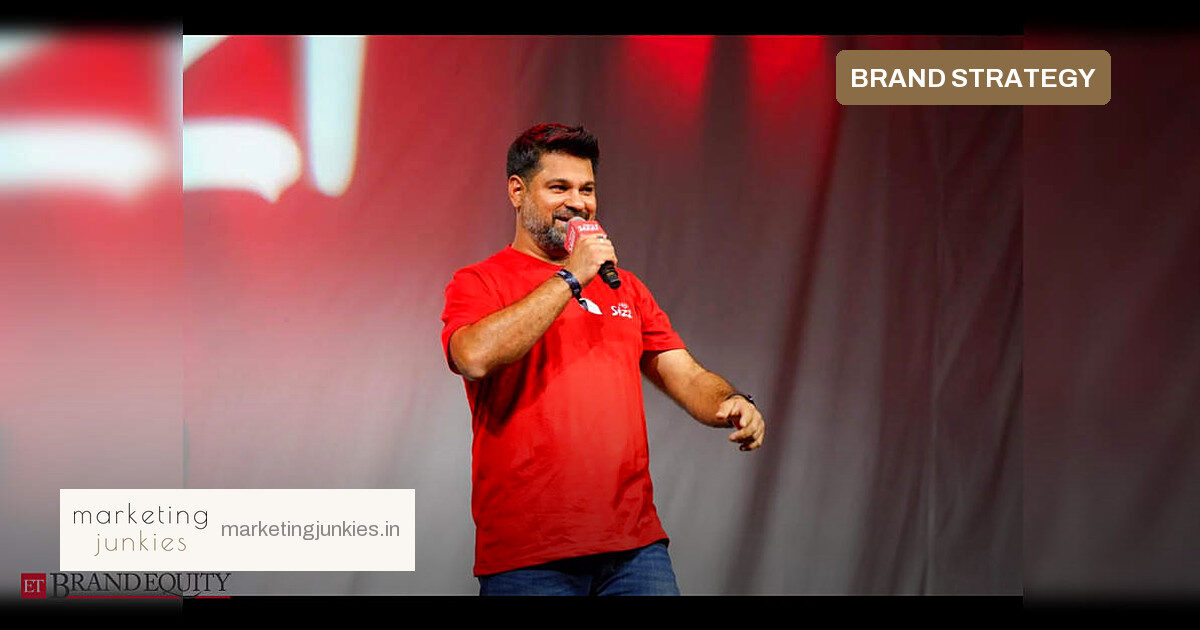
Licious is giving its heat-and-eat brand Sizzl a distinct identity, pushing it past the convenience-led positioning that usually defines ready-to-cook and ready-to-eat food. The meat and seafood brand, which has run Sizzl for around two years, is now using creators, entertainment tie-ups and on-ground experiences to make the range part of India’s food culture.
Culture before campaign
At a Mumbai launch, Licious brought together about 300 creators and celebrities, including Uorfi Javed, Rebel Kid, Ibrahim Ali Khan and Varun Dhawan. Varun Khanna, SVP – marketing at Licious, called the gathering a “cheat code” for building long-term relationships. Rather than sending briefs and products to creators one by one, the brand wanted them to taste the food and meet the founders.
“There is no way a piece of paper can be a replacement for actually coming, meeting the founders, meeting the team and spending a few hours with us,” Khanna said.
He added that the in-house ambition is to be on India’s tongue twice: once with food and once with talking about meat.
The product proof
The culture push did not start with a creative idea. It started with momos. Licious entered the momo market towards the end of last year, and Khanna said the range gained share quickly in the frozen momo category, especially online. The company then launched frozen jhol momos, which it describes as the only packaged offering of its kind in India.
That early traction helped convince the team that Indian consumers may not always have time to cook but still expect taste and quality. It also gave Licious the confidence to shift from conventional campaign marketing to a more participatory play.
What marketers can borrow
- Let product sales shape the strategy: the momo launch’s early numbers fast-tracked Sizzl’s cultural positioning.
- Immersion beats documentation: a shared creator experience can reduce fragmented messaging and lay the ground for two-to-three-year collaborations.
- Use distribution as media: a PVR tie-up places Sizzl momos in movie halls, putting the product in an entertainment moment.
Khanna said the event gave creators a chance to understand the brand in a way a written brief could not. Licious is now evaluating how to extend the format to other markets and involve loyal customers and creator followers.
The omnichannel prize
Licious is also connecting its fresh meat, quick-commerce and Sizzl convenience offerings to specific consumer needs. A consumer could order fresh meat on the Licious app, get faster delivery through quick commerce, or pick up specific cuts at a physical store.
The company has identified about 60 high-potential micro-markets; some could generate Rs 100-150 crore in annual revenue within a single locality. Khanna framed the wider ambition as organising a largely unorganised meat category estimated at $55 billion, with the momo market alone worth about Rs 30,000 crore, or $4 billion. Licious’s newer protein range, marketed without palm oil or preservatives, has recorded the highest retention on the platform.
For marketing teams, the takeaway is to prove demand with a product, then use creators and experiences to build a second, younger brand identity without diluting the core promise.
Source: ETBrandEquity.com