
The campaign
By the time Maruti Suzuki made “Kitna Deti Hai?” its own, Indian car buyers had been asking the question in showrooms for years. The campaign belongs to the early 2010s, when fuel prices were becoming a household concern and mileage claims were a battleground. Maruti Suzuki already stood for small, efficient, affordable cars. This work gave that reputation a catchphrase.
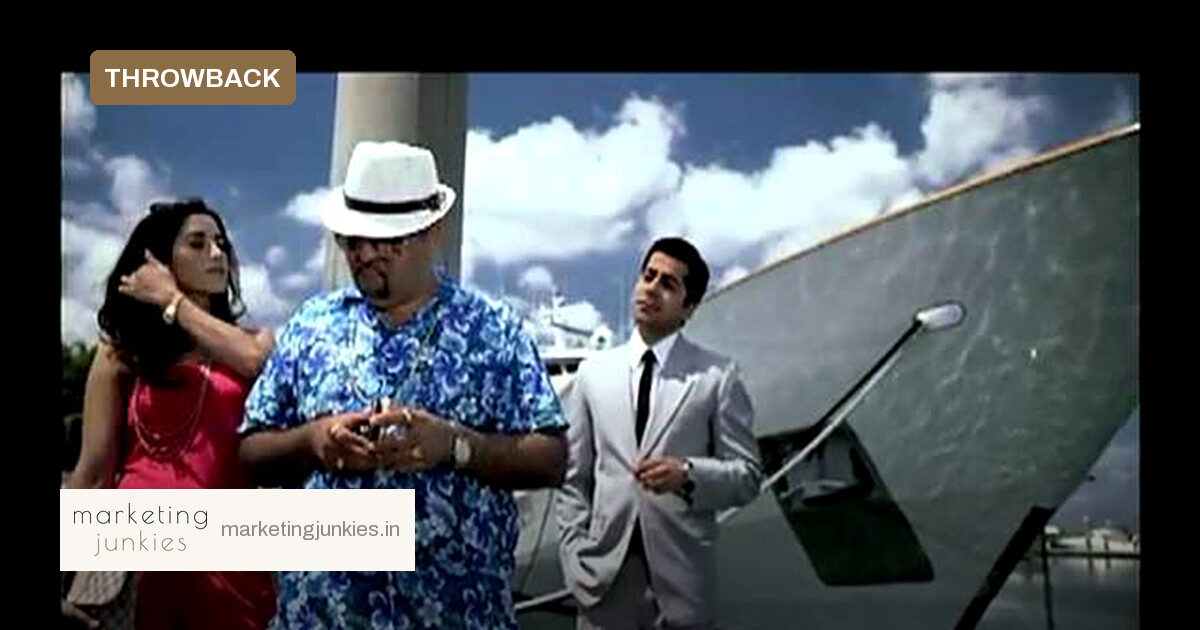
The yacht film became the campaign’s most memorable proof point. It did not need a technical story; it needed one familiar question placed where nobody expected it.
What the film said and how
The film makes its point through a single joke. A very Indian, very practical question is asked in a setting of obvious luxury, and the contrast does the work. The tagline lands at the end:
Kitna Deti Hai?
That restraint is the idea. The film does not list engine sizes or test figures. It communicates that fuel efficiency is so central to Maruti Suzuki that even in a yacht, the brand’s question follows you. In doing so, it treats mileage not as a spec but as a way of seeing every vehicle.
The response it got
The line crossed over. People used “kitna deti hai?” as shorthand for mileage in daily conversation, not just in showrooms. It became a reference point in other ads and in popular culture. For Maruti, the campaign sharpened an existing strength into something memorable and repeatable.
- The phrase became a conversational stand-in for fuel economy.
- It gave dealers and sales teams a simple closing line.
- It reinforced Maruti’s small-car leadership at a time of rising fuel prices.
Showroom teams leaned into the phrase because it needed no explanation. The line did the difficult job of turning a spec conversation into a brand memory.
What it changed in the category
After this campaign, mileage stopped being a technical afterthought in Indian car advertising. Competitors began foregrounding their own fuel-efficiency claims, often responding to the same buyer anxiety. The category shifted from status-led storytelling to ownership-cost storytelling, and the question became a benchmark.
- Mileage became a headline claim, not a footnote.
- Rivals rushed to compare kilometres per litre in their own copy.
- Car ads began speaking in buyer questions, not just brand promises.
It also proved that a consumer’s own words can be more powerful than an agency’s polished line. The brand borrowed a question people were already asking and returned it with a logo.
Where the brand and the idea are now
Maruti Suzuki still leans on fuel efficiency in its communication, though the exact line surfaces less often today. The insight remains alive: mileage is still among the first questions Indian buyers ask, and Maruti still builds its small-car promise around it.
The phrase reappears in social media conversations and marketing nostalgia lists, and it remains a shorthand for the moment Indian auto advertising learned to speak the buyer’s language.
Watch the original: Maruti Suzuki on YouTube