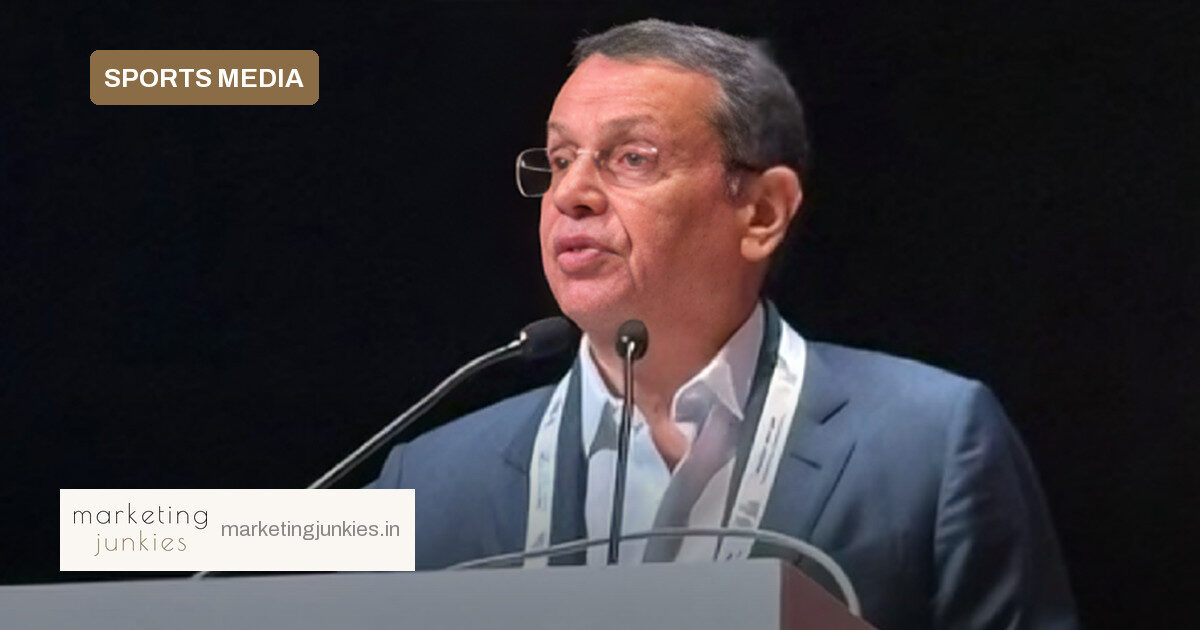
At APOS Sports Edge in Mumbai, JioStar Vice Chairman Uday Shankar made the case that India’s sports economy has reached a turning point. The audience side of the market is booming; the economics are not keeping up. His prescription: pricing discipline, fresh monetisation models and patient investment in sports properties, rather than an endless chase for premium content.
Rights costs face a sustainability test
Cricket shows the scale of the opportunity. Shankar cited an average IPL audience of about 650 million, and said the Pro Kabaddi League now reaches an estimated 400-450 million viewers. But audience growth has not translated into sustainable economics for broadcasters and streaming platforms.
The warning signs are structural. Shankar noted that the number of competitors bidding for sports rights has contracted sharply over the past 15-17 years, from four or five players to almost one in parts of the market. JioStar, he said, is already turning more cautious on certain premium rights.
“The real issue is that at some stage the economics of sport vs the excitement of sport need to align,” Shankar said. For the next IPL bidding cycle, his message was direct: the industry’s willingness to pay must be grounded in realistic commercial returns.
Monetisation has to move past ads and subscriptions
The gap between rights fees and revenue is widening from both sides. India has huge subscriber bases but relatively low value per subscriber, while advertising budgets are fragmenting across more digital platforms. Shankar was also blunt about the limits of conventional streaming subscriptions, which are often short-term and event-driven rather than reliable recurring revenue like legacy TV bundles.
That is why JioStar is testing new seams of demand. He cited JioHotstar’s integration with Swiggy, which lets cricket viewers discover restaurants and order food without leaving a live stream, as an early experiment in connecting attention with transactions. The test still has to become a repeatable business, but it points toward a wider goal: moving media from content-led economics to technology-led service economics.
“Content is the basic, the lifeblood of what we do, because otherwise people won’t come to us. However, that wasn’t going to be enough,” he said.
Fans, formats and the long game
Shankar’s fan-first principle extends to scheduling. The cricket calendar is crowded, but he argued the real problem is that fixtures are often not designed with the fan in mind. He also called for simpler engagement with cricket formats, noting that the T20 pace and excitement have driven much of the sport’s growth, particularly among younger audiences.
He flagged women’s sport as a major growth opportunity, arguing it has been held back more by federation attitudes than by talent. And on non-cricket properties, his case was that rights alone never build a sport.
Here is the path he laid out for the next decade:
- Anchor every rights bid to a realistic revenue model, starting with the next IPL cycle
- Diversify into commerce, connected TV and fan-data propositions instead of leaning only on ads and subscriptions
- Build sport ecosystems — talent, infrastructure and fan communities — with a long-term investor’s patience
His closing frame was simple: “You have to be an investor, a builder and an innovator. Once you do that, there is a lot of value to be created.”
For marketers and media buyers, the signal is worth noting. A disciplined rights market doesn’t mean cheaper inventory in the short term, but it does mean smarter packages, better audience data and more formats that connect attention to action. Over the next 10-15 years, Shankar expects India to become an increasingly exciting sports market — if the industry treats building, not bidding, as the core skill.
Source: MediaNews4U