

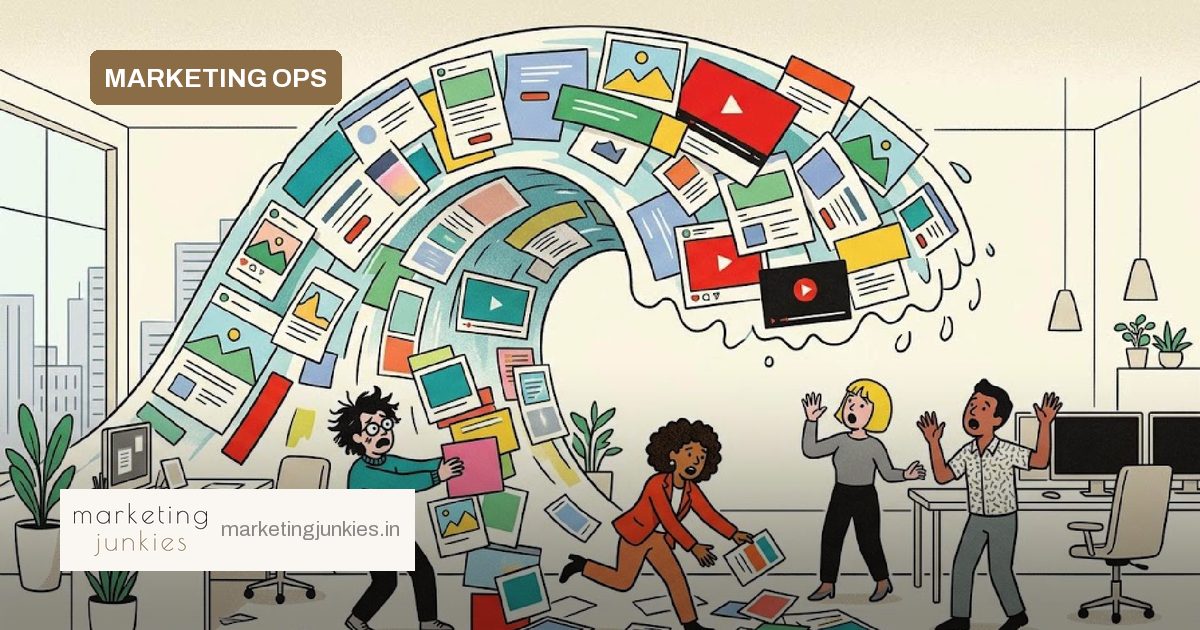
Generative AI has made it possible to turn a single brief into dozens of creative executions before lunch. But a new MarTech opinion piece argues that more output isn’t the same as better marketing performance, especially when approval and review workflows haven’t changed.
The approval bottleneck behind AI-driven volume
Adobe’s 2025 research, cited in the piece, surveyed more than 1,600 marketers and found that 89% said content passed through at least three approval stages. About 58% reported spending more than 40% of their time managing reviews and approvals. As the author puts it, “More output exposes the bottlenecks in your workflow.”
If a team currently reviews 20 assets a week, AI can easily produce 100. Without redesigned processes, that turns senior marketers into full-time reviewers or forces companies to hire extra reviewers, erasing the cost savings AI was supposed to create.
Separate creative exploration from creative approval
The article’s core recommendation is to keep exploration broad but approval narrow. Teams don’t need to review every variation. Before work enters a senior approval queue, someone should be able to explain who the asset is for, what it will accomplish and why it is better than existing options. That person should own the bottleneck deliberately, not by default.
Testing discipline matters too. Changing headline, image, offer and audience simultaneously may produce a better result, but it doesn’t tell you which change drove the lift. The author suggests isolating variables when the goal is learning, and accepting “we don’t know yet” instead of dressing up inconclusive results as confident recommendations.
Start with questions, not a new org chart
Rather than imposing one standard process, the piece recommends asking the same four questions across teams:
- What are we trying to achieve?
- Who owns the decision?
- Which information can we trust?
- Where does work wait, and what happens when someone disagrees?
These answers should shape a marketing operating system where work is requested, selected, approved, distributed and learned from. AI can help here by surfacing approved claims, showing existing content and saving teams from commissioning something again.
Fix one workflow before trying to change everything
The article suggests picking one recurring piece of work, such as a lifecycle email, and mapping what actually happens from brief to delivery. Count time spent creating, waiting and redoing. Then fix the specific problem: make assets easier to find, improve intake briefs or give someone authority to make the final call.
This matters commercially. In McKinsey’s March 2025 State of AI study, workflow redesign had the strongest relationship with self-reported generative AI earnings impact among the 25 attributes examined. The author argues that marketing leaders should show CFOs improved sales, lead quality or reduced real costs, not just a higher asset count.
For marketing professionals and students, the lesson is practical: before scaling AI output, scale the organization’s ability to decide. Otherwise, added volume simply moves the bottleneck downstream.
Source: MarTech