
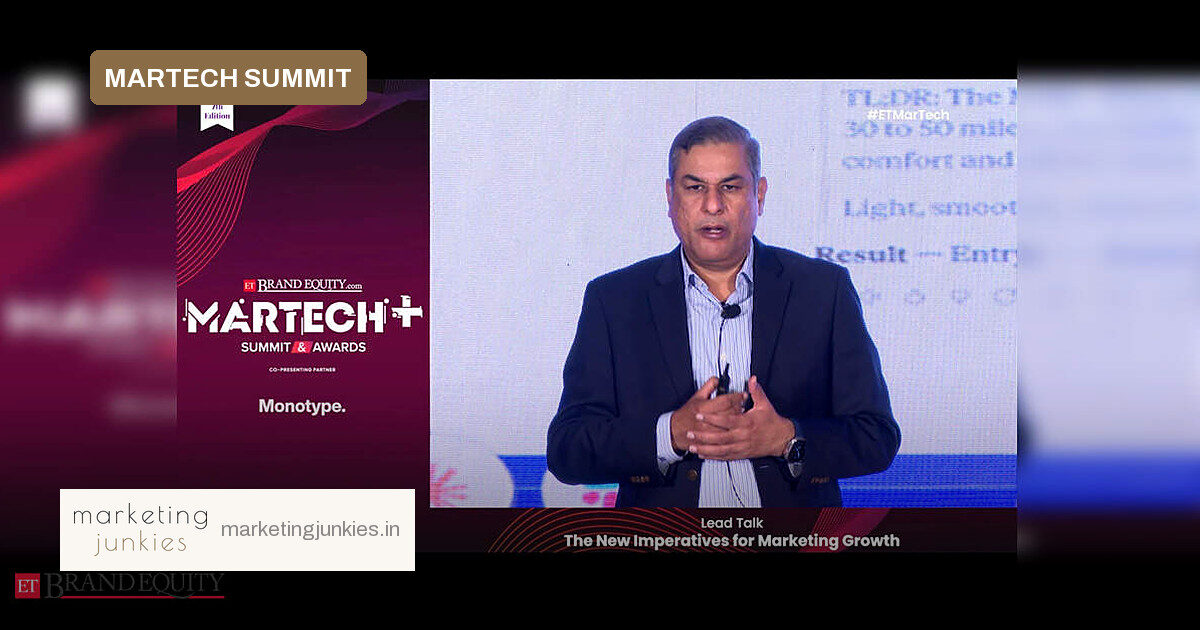
AI is moving marketing’s centre of gravity away from the funnel. At the ET MarTech Summit 2026, Nishant Kalra, VP, digital solutions, Salesforce South Asia, argued that marketers must stop designing only for search results and fixed customer journeys, because buyers are already taking a different route.
Discovery now happens inside AI tools
Kalra cited McKinsey data referenced during the session to make the point clear:
Up to 70% of consumers globally now utilise AI search tools for top-of-funnel discovery.
For marketers, that changes the top of the funnel. Visibility is no longer just about ranking on a search engine results page; it is about how large language models describe a category, a product and a brand when a buyer asks for a recommendation.
Salesforce pointed to Palmata, a tool that assesses brand perception across frontier LLMs, including mentions, sentiment and category positioning. If a model misreads a product feature, the marketer can generate and publish corrective content inside the cloud platform rather than letting the wrong answer stand.
Campaigns shift from fixed journeys to goals
The second imperative is about campaign operations. Kalra noted that traditional setup cycles often take six to ten weeks because of manual segmentation, rigid pathing and drawn-out approvals.
Marketing Cloud Next and Campaign Agents are Salesforce’s answer to that drag. A marketer can set a high-level goal, such as a revenue target within a defined budget, and leave the underlying execution to an AI agent. The agent watches conversion costs, flags bottlenecks and sends real-time alerts when performance drifts.
Speed-to-lead becomes a conversion issue
The third imperative targets the gap between buyer intent and sales engagement. Kalra said 93% of organisations fail to respond to active buyer enquiries within five minutes, which turns warm signals into lost pipeline.
Salesforce showcased two agents for this job: Piper handles inbound product enquiries, shares sales collateral and schedules meetings, while Hunter identifies prospects and starts personalised outbound outreach.
What marketing teams should do differently
For search-led and funnel-optimised teams, the implication is direct: the top of the funnel is moving to AI answers, and the gap between intent and response is now short enough to automate. The marketing team’s role shifts upward, with repetitive execution, brand perception management and real-time lead conversion moving to agentic AI, while people own strategy, positioning and business objectives.
- Audit how AI models perceive your brand, not just where your website ranks.
- Move campaign briefs from fixed journeys to budgeted goals an agent can execute.
- Treat the five-minute response window as a revenue metric, not only a service metric.
Source: ETBrandEquity.com