AI tools are now a default part of the creative production stack, but Luma’s first annual “State of Creative Professionals and AI: 2026” report suggests that adoption and effective integration are two very different things.
The adoption-integration gap
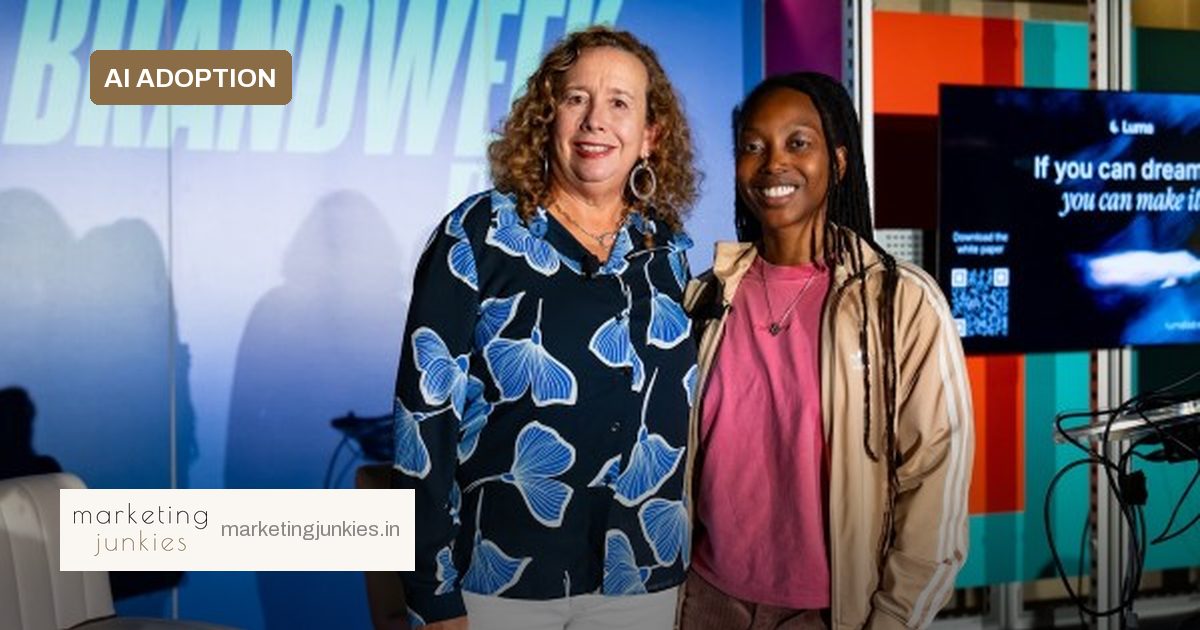
Speaking at a Brandweek 2026 workshop co-hosted by Luma, marketing research consultant Michele Madansky of Michele Madansky Consulting shared headline findings from the survey of 760 creative professionals. The standout number: 81% of creative professionals are using AI to create and release content.
But Madansky pointed to another data point as her favorite finding. On average, creative organizations evaluated 6.1 tools, adopted 4.3, and stopped using three. “This is churn,” she said. That pattern shows teams are experimenting heavily, often without lasting integration.
- 81% of creative professionals use AI to create and release content.
- 6.1 tools evaluated on average, with 4.3 adopted and 3 dropped.
- Agencies are ahead on AI adoption; freelancers are lagging.
- Written copy and image creation lead video, which remains harder to produce.
For marketing leaders, the implication is straightforward: piloting an AI tool is not the same as embedding it into the creative workflow. The organizations that win will be those that reduce churn by identifying use cases, defining ownership, and measuring whether a tool actually accelerates output.
What a hybrid AI workflow looks like
Alexia Adana, forward deployed creative lead at Luma, demonstrated how the company’s AI agents and platform are designed to address that integration challenge. She framed the agent as a pretrained interface that speaks to generative AI models on the user’s behalf.
“You do not need to be a technical prompter anymore to create these high-fidelity assets,” Adana explained. “You just need to be somebody with a great idea and really solid direction to give that agent to go execute.”
Brand DNA and digital twins
Luma’s workflow begins with building a “Brand DNA” by uploading brand guidelines, typefaces, logos, and past campaigns so the platform learns what has worked. It also offers digital twins of photographed models and product images, allowing marketers to generate mood boards and other assets from a creative brief.
In a workshop example with Oakley, owned by Luxottica, Adana showed how hybrid production could alter a test asset in minutes and speed up the creative process. Still, she was clear that the system remains human-driven.
“This is all rooted in human authorship, [the assets are] rooted in real photography, and going through a hybrid workflow,” Adana stated.
Why this matters for marketers
For marketing teams, the story is less about having more AI tools and more about having a clear routing system: what goes to AI, what needs human craft, and which tools deserve long-term investment. The survey’s churn metric is a useful early-warning sign that unfocused tool adoption can create workflow debt.
The creative leaders who move fastest will likely treat AI as a managed capability rather than a collection of point solutions. That means documenting success metrics, consolidating tools that overlap, and protecting the human authorship that keeps brand work distinctive.
Source: Adweek