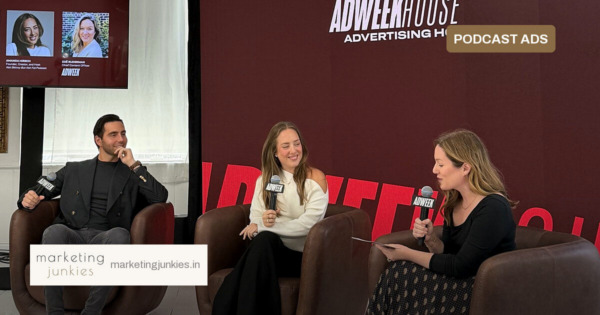

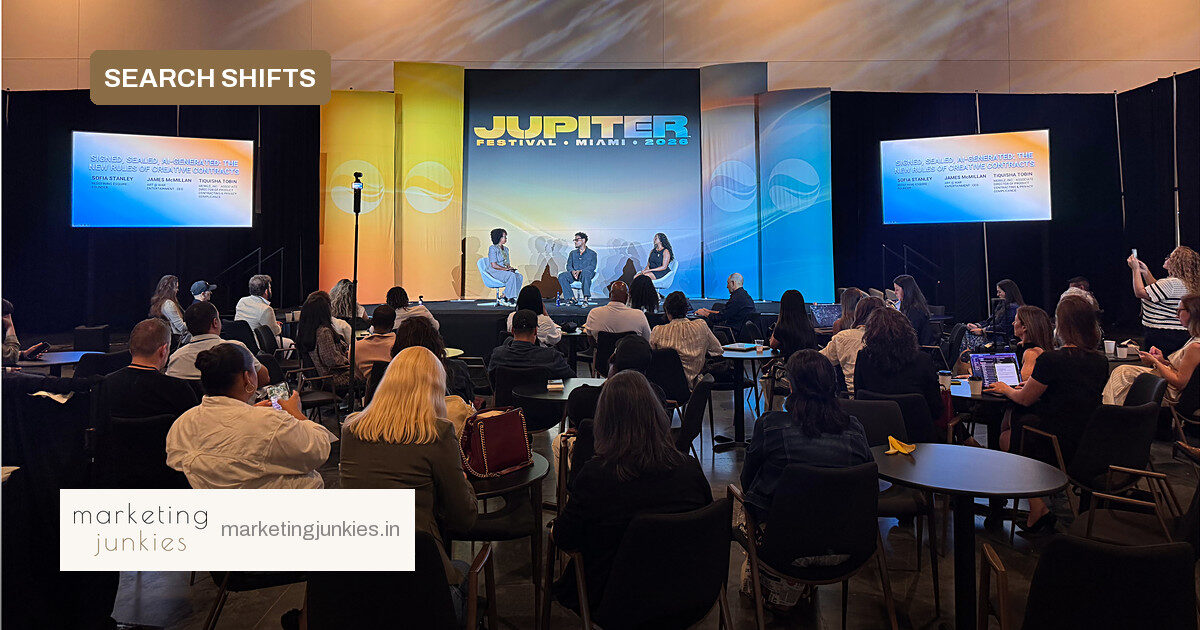
In New York, Advertising Week’s fourth Penn District run and the first Jupiter Festival in Miami produced a shared message: AI is redrawing discovery, buying and measurement. TikTok said it will extend its US ad reach off-platform and showed an AI shopping agent that can automate purchases from brand stores. Meta said it is testing an AI assistant that can plan and create campaigns, shift targeting and budgets, and recall past campaigns.
Jupiter Festival, backed by Art Basel parent MCH Group, IAB and BCG, was founded by William Mellis and Eric Markgraf. Its first programme moved from sparse morning sessions to standing-room-only talks on creators, live sports, AI creative and women’s sports. Deloitte projects women’s sports will top $3 billion in revenue this year, up 25% from 2025.
The number behind the open-web anxiety
BrightLocal data shared in the report shows how fragmented search has become. Among U.S. consumers, 52% started their most recent local business search on Google Search and another 9% on Google Maps. But in follow-up searches Google Search falls to 19%, behind Google Maps (24%) and social media (22%). Three-quarters of consumers used more than one channel, and over the full journey 30% turned to social, 23% to AI tools and 19% to review sites.
That shift is why executives at both events called the open web a critical juncture. As AI systems absorb publisher traffic, off-platform ad extensions and subscription strategies matter more, while the value of advertising outside walled gardens is under scrutiny.
Agentic ads and retail media are moving forward
- Agentic buying is real but early. One adtech leader said buyers can already use agents through an MCP plug-in, but request volumes are still low.
- Measurement is still stuck. Deduplication across platforms remains unsolved, and creator formats make comparison harder.
- Retail media is consolidating. McDonald’s and Delta launched media networks in September, joining Walmart, Amazon, Target, United, PayPal and The Home Depot.
In adjacent deal news, Paramount’s $110 billion takeover of Warner Bros. Discovery closed under the new Skydance name, and OpenAI is introducing visual ads in ChatGPT while testing brand safety controls with DoubleVerify and Integral Ad Science.
The takeaway: discovery is now a recommendation economy
For years, the marketing brief was built around capturing the click. Conference leaders in both cities argued that is no longer enough. Consumers are moving through fragmented paths: search, maps, social, AI tools and reviews. The brands that get cited in AI-generated answers—and can be bought through agents without friction—will capture the next wave of demand.
That does not mean abandoning search. It means treating Google as one stop in a multi-channel journey, not the whole journey, and building measurement that reflects that.
What marketers should do now
If the funnel is dead and clicks don’t matter, the practical brief changes. Executives at the events said what matters now is getting recommended inside AI answers, not just ranking in a search box. That means testing generative engine optimization tools, feeding AI systems accurate brand and product data, and measuring answer share as a new KPI.
For media buying, start small agentic pilots before scaling. For retail brands, the bar is rising: controlling one piece of the purchase journey is no longer enough; own the data and the inventory, or partner deliberately. And for measurement, accept that no single apples-to-apples standard exists yet, so triangulate campaign impact across media mixes and creator formats.
“How do you value a 20-minute YouTube integration compared to a 30-second Super Bowl ad?” one ad industry insider asked at Jupiter Festival. That question now sits at the centre of every budget conversation.
Source: Adweek