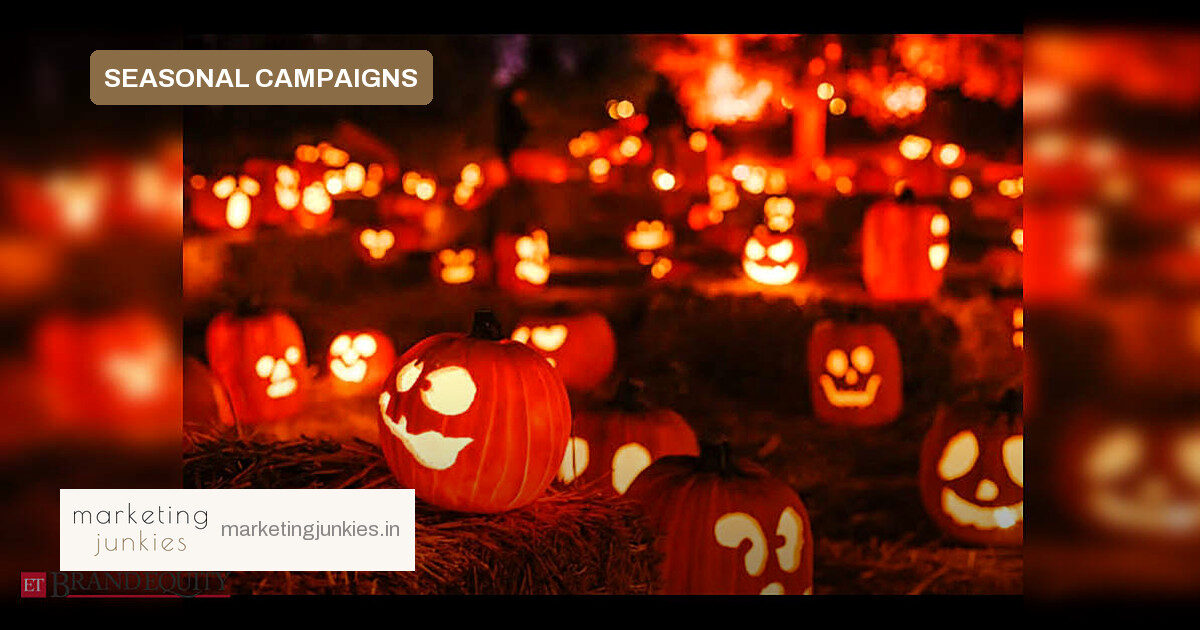
The 2026 Halloween season shows a shift: brands are moving beyond pumpkins and borrowed jump-scares to make the festival work as a cultural, digital and even data-led marketing moment. From quick-commerce screens to desi ghost characters, the best activations are turning a Western import into local relevance and measurable engagement.
Culture first, horror later
Social’s Ghosted Halloween Party gave modern dating a spooky spin: guests dressed as their biggest dating “red flag” for a free beer, while an online contest asked people to share reasons they would ghost a “green flag.” The concept extended to custom cocktails like Love Bomber, Ick or Treat and Disappearing Act.
ITC’s Candyman took the localisation route with its Sourzzz range, assigning homegrown ghost characters such as Tangy Tantrik and Sour Sundari to individual candies. Its campaign film uses the line “Darr sirf bhagane ke liye nahi, logon ko paas lane ke liye bhi hota hai” to reframe fear as a way to bring people together. The “Desi Halloween” idea adapts familiar horror tropes to an Indian context instead of importing them.
Fanta continued building its Haunted Universe with Grail, introducing four original characters and bringing its Ghost Face variant to India. It also took the experience offline with Haunted Photobooths in Mumbai, Delhi and Bengaluru, aiming to link digital reach with Gen Z footfall.
Products, screens and data as media
Quick commerce entered the season too. Flipkart Minutes worked with the Ramsay Brothers to create The Last Delivery, a three-part horror series of 10-minute episodes that runs on the app’s order-tracking screen. It gives waiting customers something native to watch—without leaving the transaction flow.
McDonald’s UK reimagined six dipping sauces as “Spooky Sauces” face paints for creator content, while Popeyes India hosted a Haunted Sauce party around its new black sauce menu. KitKat kept it light with a ghost-shaped cutout pack, using packaging as a collectible rather than conventional horror imagery.
Reese’s used a data-led approach: it combined candy and costume sales data with census metrics to identify 150 US neighbourhoods with strong trick-or-treating potential. Its Halloween Council, featuring Christina Ricci and Kathy Najimy, invited audiences to help pick the country’s “Trick-or-Treatiest Street.”
Experiences that scale
Imagicaa reimagined its Bhangarh attraction as an after-dark haunted experience with themed decor and a Halloween Night Parade. Khooni Monday scaled the theme into HorrorCon India, a Delhi pop-culture festival featuring Seedhe Maut, Hell Energy Drink and Digitek, plus cosplay, gaming, storytelling and more than 500 creators.
What marketers can take from 2026
The common thread: Halloween works when it is localised, embedded in existing products or platforms, and tied to communities that already care. The festival becomes less about decoration and more about distribution—where the brand shows up, what it lets people do, and how the participation is measured.
- Localise the monster. Indian ghost stories and dating anxieties beat imported pumpkins.
- Use owned real estate. Order-tracking screens, packaging and menus can carry content without extra media spend.
- Partner with the fandom. Creators, horror communities and festivals bring reach and credibility faster than a standalone campaign.
- Measure what the season moves. Footfall, repeat visits, social mentions and sales lift, not just impressions.
Source: ETBrandEquity.com